

TL;DR:
- Omega-3 fatty acids reliably reduce triglycerides and modestly raise HDL cholesterol. Their effect on LDL depends on formulation, with EPA lowering non-HDL but DHA potentially raising LDL. Whole fatty fish is the preferred source, while supplements should be chosen carefully based on content and medical guidance.
Omega-3 fatty acids are defined as essential polyunsaturated fats that lower triglycerides and positively influence cholesterol levels, making them one of the most studied nutrients in cardiovascular health. The ability of omega-3 to lower cholesterol, specifically triglycerides, is supported by clinical evidence and recognized in the 2026 ACC/AHA guidelines on dyslipidemia management. Their effect on LDL cholesterol, however, depends heavily on formulation. EPA-only products behave differently from mixed EPA/DHA supplements, and that distinction matters for your lipid profile. Whether you get omega-3s from fatty fish or a quality supplement like those offered by Nutribliss, understanding how these fats work gives you a real advantage in managing your heart health. #nutribliss
How do omega-3 fatty acids affect cholesterol and triglyceride levels?
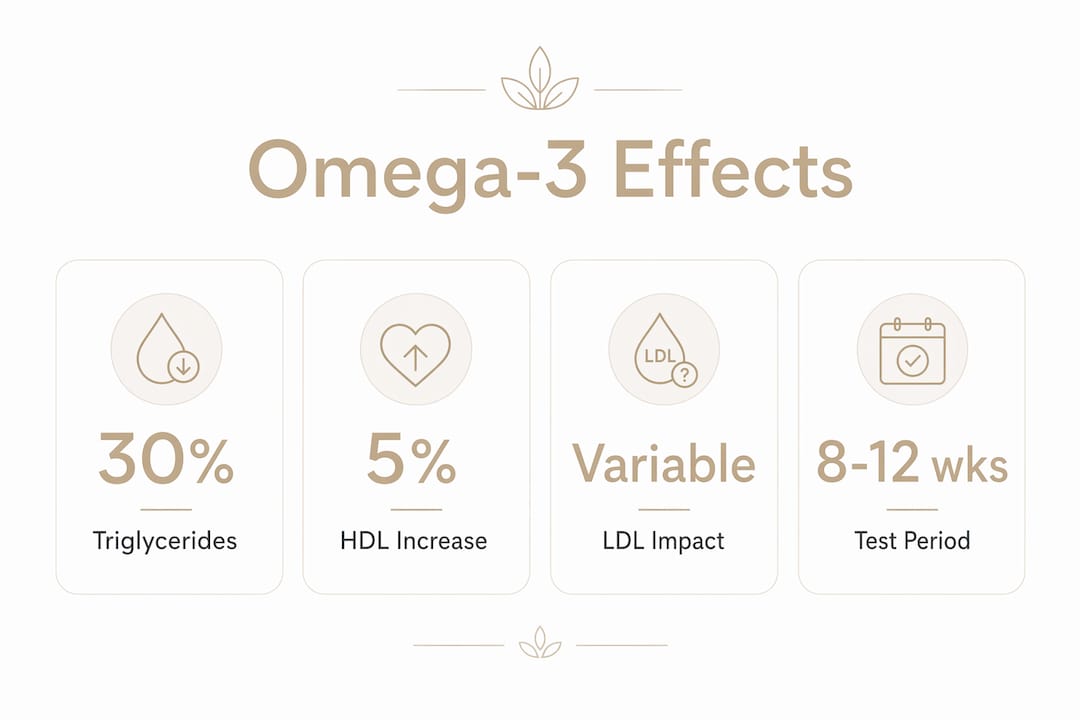
Omega-3 fatty acids produce measurable changes in your lipid profile, but not all changes are equal. The strongest and most consistent effect is on triglycerides. A meta-analysis of supplementation trials found triglycerides reduced by 17.5 mg/dL and LDL-C decreased by 9.4 mg/dL in people with ischemic heart disease. Those numbers represent a clinically meaningful shift in cardiovascular risk.
HDL cholesterol, the “good” kind, also rises modestly with omega-3 intake. This matters because higher HDL is associated with lower risk of arterial plaque buildup. The effect is modest, not dramatic, but it moves the needle in the right direction.
The LDL picture is more complicated. EPA lowers non-HDL cholesterol and triglycerides, while DHA can raise LDL cholesterol in some people. That means a mixed EPA/DHA supplement could actually increase LDL in certain individuals, even while lowering triglycerides. This is why formulation selection is not a minor detail.
| Lipid Marker | Typical Effect with Omega-3 | Notes |
|---|---|---|
| Triglycerides | Significant reduction | Most consistent effect across trials |
| HDL cholesterol | Modest increase | Positive but not dramatic |
| LDL cholesterol | Variable | EPA may lower; DHA may raise |
| Non-HDL cholesterol | Reduced with EPA | Less clear with mixed EPA/DHA |
Pro Tip: Get a full lipid panel before starting omega-3 supplementation and retest after 8–12 weeks. This tells you exactly how your body is responding, especially if you are taking a mixed EPA/DHA product.
What omega-3 sources are best for cholesterol management?
Whole food sources of omega-3 remain the gold standard for cardiovascular prevention. The American Heart Association recommends at least two servings of fatty fish per week for heart health. Salmon, trout, herring, mackerel, and sardines are the most concentrated dietary sources. That recommendation is grounded in decades of population data, not just lab results.

Whole fish delivers more than omega-3s. Fish also provides selenium and arginine, two nutrients that support blood vessel health and are absent from isolated supplements. This nutrient matrix effect is one reason dietary omega-3 tends to outperform supplements in primary prevention studies.
Supplements fill the gap when dietary intake falls short. Over-the-counter fish oil products vary widely in purity, potency, and the ratio of EPA to DHA. Prescription-grade icosapent ethyl, a pure EPA product, has a different clinical profile than standard fish oil capsules. The REDUCE-IT trial demonstrated cardiovascular benefit with pure EPA supplementation, while mixed EPA/DHA trials have produced less consistent results.
Foods high in omega-3 to prioritize:
- Salmon (wild-caught): one of the highest EPA/DHA concentrations per serving
- Herring and sardines: affordable, widely available, and rich in omega-3s
- Trout: a freshwater option with strong omega-3 content
- Mackerel: high in omega-3 but also high in sodium when canned; choose fresh when possible
- Walnuts and flaxseeds: plant-based ALA omega-3, which the body converts to EPA/DHA at a low rate
- Chia seeds: another ALA source useful for those avoiding fish
For a detailed breakdown of how dietary and supplemental omega-3 sources compare, the nutritional benefits of fish oil guide at Nutribliss covers the evidence clearly.
Pro Tip: When choosing an over-the-counter fish oil supplement, look for third-party testing certification (such as USP or IFOS) and a product that lists EPA and DHA content separately. A label that only says “fish oil 1,000 mg” tells you almost nothing about actual omega-3 content.
How do clinical guidelines recommend using omega-3s for heart health?
The 2026 ACC/AHA guidelines are specific about where omega-3 therapy fits in clinical practice. Prescription omega-3 is indicated primarily for severe hypertriglyceridemia, defined as triglycerides at or above 500 mg/dL, as an adjunct to dietary changes. This is not a general cholesterol-lowering recommendation. Omega-3s are not a replacement for statins or other LDL-lowering therapies.
For high-risk individuals with elevated triglycerides who are already on statin therapy, prescription icosapent ethyl is the formulation with the strongest evidence. Prescription-grade EPA differs significantly from mixed EPA/DHA supplements in both its lipid effects and its cardiovascular risk reduction profile. That distinction is why the guidelines do not treat all omega-3 products as interchangeable.
Knowing your cardiovascular risk score before starting any omega-3 therapy is the right starting point. Lipid numbers and risk scores determine whether omega-3 supplementation is appropriate, what dose makes sense, and which formulation to use. Self-prescribing high-dose fish oil without that context can produce unintended lipid changes.
| Omega-3 Type | Indication | Target Population |
|---|---|---|
| Dietary omega-3 (fatty fish) | General cardiovascular prevention | All adults, especially those at moderate risk |
| Over-the-counter fish oil | Mild triglyceride elevation, general wellness | Adults with suboptimal dietary intake |
| Prescription EPA (icosapent ethyl) | Severe hypertriglyceridemia (≥500 mg/dL) | High-risk patients already on statins |
One caution the guidelines flag: high-dose fish oil can paradoxically raise LDL in some patients, particularly those with very high triglycerides. Medical supervision during supplementation is not optional for this group. People with a history of atrial fibrillation also face additional considerations, as some trials have noted a signal for increased AF risk with high-dose omega-3.
How to integrate omega-3 into your lifestyle for cholesterol control
Omega-3 supplementation works best as part of a broader plan, not as a standalone fix. Weight management, regular exercise, and overall diet are critical alongside omega-3 in controlling cholesterol. Cutting saturated fat, increasing soluble fiber, and maintaining a healthy weight each contribute independently to better lipid profiles.
Dietary patterns matter more than single nutrients. Omega-3s are one component of a heart-healthy diet that also includes fiber-rich foods, lean proteins, and minimal processed fats. Relying on a fish oil capsule while eating a diet high in saturated fat and refined carbohydrates will not move your cholesterol numbers meaningfully.
Your healthcare provider should be part of the plan. Lipid monitoring every 3–6 months when making dietary or supplement changes gives you real data on what is working. That feedback loop is more valuable than any single supplement decision.
Practical steps to support omega-3 benefits:
- Eat fatty fish at least twice per week as your primary omega-3 source
- Reduce saturated fat intake from red meat and full-fat dairy products
- Add soluble fiber from oats, beans, and fruits to lower LDL independently
- Exercise at moderate intensity for at least 150 minutes per week
- Maintain a healthy body weight, since excess weight raises triglycerides directly
- Work with your doctor to track lipid panels and adjust your plan based on results
- If supplementing, choose a product with verified EPA and DHA content and third-party testing
For additional strategies on reducing inflammation alongside cholesterol management, the guide on reducing inflammation naturally at Nutribliss offers practical, evidence-based approaches.
Key takeaways
Omega-3 fatty acids lower triglycerides reliably, raise HDL modestly, and affect LDL in ways that depend entirely on formulation, making informed product selection and medical oversight the two most important factors in using them effectively.
| Point | Details |
|---|---|
| Triglycerides respond most | Omega-3s reduce triglycerides more reliably than any other lipid marker. |
| EPA vs DHA matters | EPA lowers non-HDL cholesterol; DHA may raise LDL in some people. |
| Whole fish beats supplements | Fatty fish provides selenium and arginine that isolated supplements do not. |
| Guidelines target high triglycerides | The 2026 ACC/AHA guidelines reserve prescription omega-3 for triglycerides at or above 500 mg/dL. |
| Lifestyle is foundational | Diet, exercise, and weight management amplify omega-3 benefits and cannot be replaced by supplementation. |
Why I think most people misunderstand omega-3 and cholesterol
Most people start taking fish oil expecting it to lower their LDL cholesterol. That expectation is understandable, but it is wrong for a large share of the population. Omega-3s are not LDL drugs. They are primarily triglyceride drugs, and the distinction changes everything about how you should use them.
What I have seen repeatedly is people taking a generic mixed EPA/DHA supplement, getting their lipid panel back, and being confused when their LDL has not dropped or has actually risen slightly. That is not a supplement failure. That is a formulation mismatch. If LDL is your primary concern, omega-3s are an adjunct at best. Statins, dietary changes, and fiber intake do the heavy lifting on LDL.
The other misconception I keep encountering is that more omega-3 is always better. High-dose fish oil without medical supervision is not a safe default. The same dose that helps someone with severe hypertriglyceridemia could raise LDL in someone with a different lipid profile. The REDUCE-IT trial showed real cardiovascular benefit, but it used pure EPA at prescription doses, not the mixed supplements most people buy off the shelf.
My honest recommendation: get your full lipid panel first, know your triglyceride number, and then decide whether omega-3 supplementation makes sense for your specific profile. Whole fish twice a week is the right starting point for almost everyone. Supplements are a useful tool when dietary intake is genuinely insufficient, but they work best when you know exactly what problem you are trying to solve.
— GAURAV
Nutribliss omega-3 supplements for heart health
Quality matters when you choose an omega-3 supplement for cholesterol and triglyceride support. Nutribliss offers an Omega-3 Fish Oil supplement formulated to deliver meaningful EPA and DHA content per serving, designed for people who want a reliable option to complement their dietary intake.

For those looking to support cardiovascular wellness more broadly, the science behind superfoods collection at Nutribliss pairs well with omega-3 as part of a heart-healthy supplement routine. Each product is built around evidence-backed ingredients, so you know exactly what you are putting in your body and why it belongs there.
FAQ
Does omega-3 lower LDL cholesterol?
Omega-3’s effect on LDL cholesterol is variable and depends on formulation. EPA tends to lower non-HDL cholesterol, while DHA may raise LDL in some people, so mixed EPA/DHA supplements do not reliably reduce LDL.
How much omega-3 do you need to lower triglycerides?
Clinical trials typically use doses of 2–4 grams of EPA and DHA per day to achieve significant triglyceride reduction. Doses below 1 gram per day produce minimal lipid effects.
What are the best food sources of omega-3 for heart health?
Salmon, herring, sardines, mackerel, and trout are the highest dietary sources of EPA and DHA. The American Heart Association recommends at least two servings of fatty fish per week for cardiovascular prevention.
Is fish oil safe for everyone with high cholesterol?
High-dose fish oil can raise LDL in some patients and may increase atrial fibrillation risk at very high doses. Medical supervision is advised, especially for people with complex lipid profiles or existing heart conditions.
What is the difference between prescription omega-3 and over-the-counter fish oil?
Prescription icosapent ethyl is pure EPA and has demonstrated cardiovascular risk reduction in high-risk patients with elevated triglycerides. Over-the-counter fish oil contains mixed EPA and DHA and has not shown the same consistent cardiovascular benefit in clinical trials.