

Nootropics spark heated debates across student dorms, boardrooms, and biohacking forums, yet most people misunderstand what they actually are. Many assume these cognitive enhancers are simply caffeine pills or dangerous stimulants, missing the nuanced science behind substances designed to optimize brain function. In 2026, over 72% of nootropic users report measurable cognitive gains, spanning improved focus, memory retention, and creative problem solving. This guide cuts through the confusion by exploring nootropic types, mechanisms, evidence-backed benefits, safety considerations, and practical usage strategies. Whether you’re a student tackling complex coursework, a professional managing demanding projects, or a biohacker optimizing mental performance, understanding nootropics empowers smarter decisions about cognitive enhancement.
Table of Contents
- What Are Nootropics? Understanding Cognitive Enhancers
- Types Of Nootropics And How They Work
- Benefits And Risks Of Nootropics: What Science Says
- How To Use Nootropics Safely And Effectively
- Explore Quality Nootropic Supplements At NutriBliss
- Frequently Asked Questions About Nootropics
Key takeaways
| Point | Details |
|---|---|
| Nootropics defined | Substances that may enhance mental functions like memory, creativity, and motivation without severe side effects |
| Multiple categories exist | Natural herbs, synthetic compounds, and dietary supplements each work through different brain mechanisms |
| Benefits require balance | Improved focus and memory come with potential risks including side effects and unclear long-term impacts |
| Safe use demands strategy | Proper dosing, cycling, and professional consultation maximize benefits while minimizing harm |
| Quality matters significantly | Science-backed supplements from trusted sources ensure effectiveness and safety in cognitive enhancement |
What are nootropics? Understanding cognitive enhancers
The term nootropic originates from Greek words meaning “mind” and “bend,” coined in 1972 by Romanian psychologist Corneliu Giurgea. He established criteria distinguishing true nootropics from simple stimulants: they must enhance learning and memory, protect the brain from physical or chemical injury, improve neuronal firing control, and produce minimal side effects. Nootropics are defined as substances that may enhance mental functions such as memory, creativity, or motivation in healthy individuals.
People turn to nootropics for cognitive boost seeking diverse mental improvements. Students want sharper focus during exam preparation. Professionals need sustained concentration through long workdays. Creative workers seek enhanced problem solving and innovative thinking. Older adults hope to maintain memory and processing speed as they age.
Crucial distinctions separate nootropics from other substances many confuse them with:
- Stimulants like amphetamines provide temporary alertness but carry addiction risks and crash effects
- General multivitamins support overall health without targeting specific cognitive pathways
- Prescription medications treat diagnosed conditions rather than enhancing normal function
- Energy drinks deliver caffeine and sugar spikes without sustained cognitive benefits
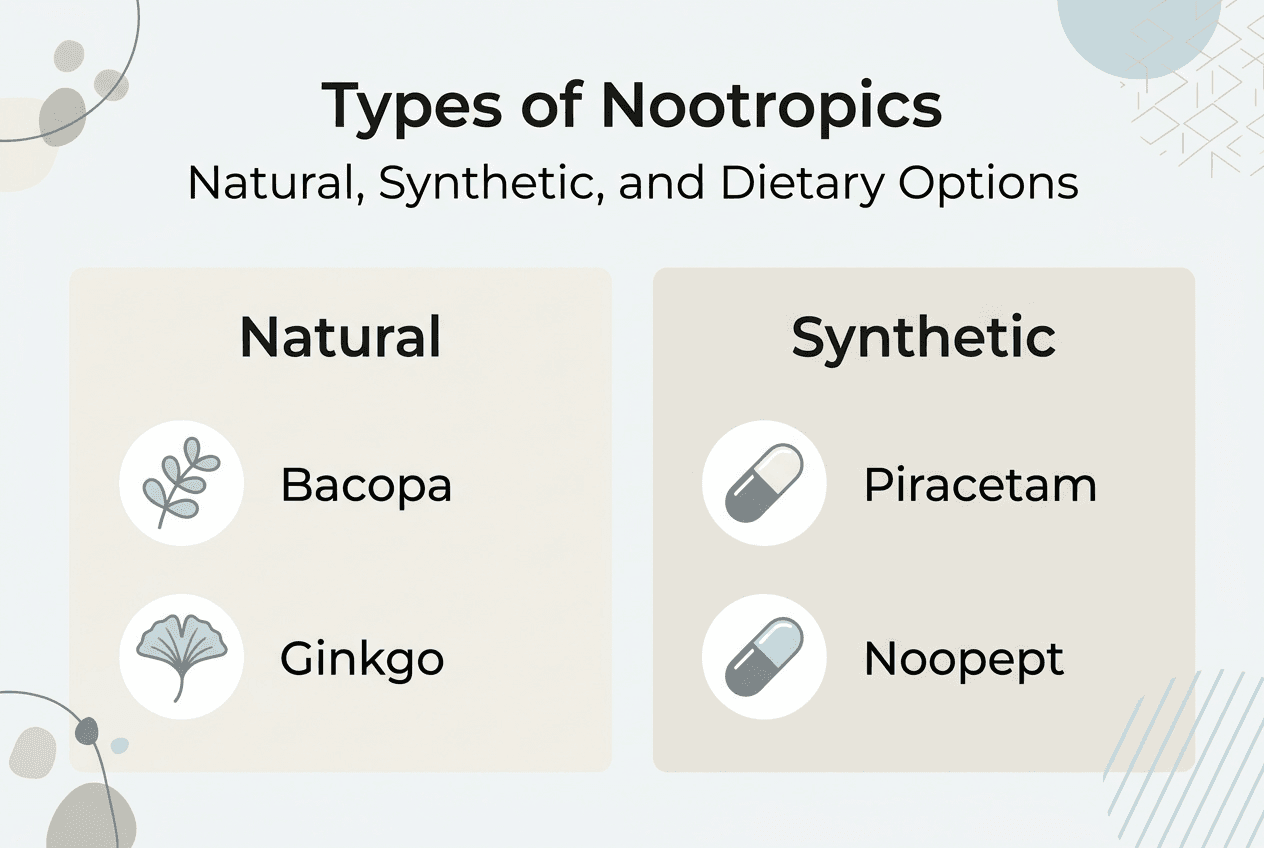
Nootropics span a spectrum from natural to synthetic origins. Natural options include herbs like Bacopa monnieri, used in Ayurvedic medicine for centuries to support memory, and Ginkgo biloba, which may improve blood flow to the brain. Synthetic nootropics encompass racetams, a family of compounds like piracetam that modulate neurotransmitter systems. Some everyday substances qualify as nootropics too, including caffeine when used strategically for focus rather than just wakefulness, and L-theanine from green tea that promotes calm alertness.
Understanding these fundamentals prevents unrealistic expectations. Nootropics won’t transform average intelligence into genius overnight. They optimize existing cognitive capacity, helping your brain function closer to its potential under challenging conditions. Think of them as tune-ups for mental performance rather than complete engine replacements.
Types of nootropics and how they work
Nootropics operate through multiple brain mechanisms, each targeting different aspects of cognitive function. Recognizing these categories helps you match specific compounds to your mental performance goals. Nootropics include natural herbs, synthetic compounds, and dietary supplements that support brain health and function through distinct pathways.
Natural nootropics derive from plants and herbs with centuries of traditional use. Bacopa monnieri enhances memory formation by supporting neurotransmitter systems and protecting neurons from oxidative stress. Ginkgo biloba improves circulation to the brain, potentially boosting processing speed and attention. Lion’s mane mushroom stimulates nerve growth factor production, supporting brain cell health and cognitive longevity. Rhodiola rosea acts as an adaptogen, helping the brain resist stress-related performance decline.

Synthetic nootropics are laboratory-created compounds designed for specific cognitive effects. Racetams like piracetam and aniracetam modulate acetylcholine receptors, enhancing communication between brain cells. Modafinil, originally developed for narcolepsy, promotes wakefulness and sustained focus without traditional stimulant side effects. Noopept amplifies nerve growth factor and brain-derived neurotrophic factor, supporting neuroplasticity and learning.
Dietary nootropics include common substances with cognitive benefits. Caffeine blocks adenosine receptors, reducing fatigue signals and increasing alertness. L-theanine promotes alpha brain wave activity associated with relaxed focus. Creatine, known for muscle energy, also fuels brain cell metabolism during demanding mental tasks. Omega-3 fatty acids from fish oil support cell membrane integrity and neurotransmitter function.
| Nootropic | Origin | Primary Effects | Common Uses | | — | — | — | | Bacopa monnieri | Natural herb | Memory enhancement, neuroprotection | Long-term cognitive support, learning | | Caffeine + L-theanine | Dietary compounds | Alert focus without jitters | Immediate concentration needs | | Piracetam | Synthetic racetam | Enhanced learning, verbal fluency | Academic performance, communication | | Lion’s mane | Natural mushroom | Nerve growth, brain health | Cognitive longevity, neuroprotection | | Modafinil | Synthetic eugeroic | Sustained wakefulness, focus | Extended work sessions, shift work |
These substances work through several key mechanisms:
- Neurotransmitter modulation alters chemical messenger levels like acetylcholine for memory or dopamine for motivation
- Increased cerebral blood flow delivers more oxygen and nutrients to brain tissue
- Neuroprotection shields neurons from oxidative damage and inflammation
- Enhanced neuroplasticity supports formation of new neural connections for learning
- Optimized brain energy metabolism ensures adequate fuel for demanding cognitive tasks
Pro Tip: Start with single-ingredient nootropics at low doses before trying complex stacks. This approach lets you identify which substances produce noticeable effects for your unique brain chemistry. Keep a simple log noting the compound, dose, timing, and mental performance changes you observe over several days. Individual responses vary dramatically, so what works brilliantly for others might do little for you, and vice versa.
The mechanisms behind nootropics reveal why they differ fundamentally from crude stimulants. Rather than simply forcing the brain into overdrive, quality nootropics support natural cognitive processes, helping your mind function efficiently under stress or during extended mental effort.
Benefits and risks of nootropics: what science says
Scientific research on nootropics presents a mixed landscape of promising benefits tempered by legitimate safety concerns. Understanding both sides enables informed decisions about whether cognitive enhancement aligns with your health priorities and risk tolerance.
Documented benefits from nootropic use include measurable improvements across multiple cognitive domains. Focus and attention span increase, helping users maintain concentration during complex tasks that normally trigger mental fatigue. Memory formation and recall strengthen, particularly for verbal and working memory needed in learning environments. Processing speed accelerates, enabling faster decision making and information integration. Motivation and mental energy rise, reducing procrastination and supporting goal-directed behavior. Mood regulation improves in some cases, with certain nootropics showing mild anxiolytic or antidepressant effects.
Research quality varies significantly across nootropic types. Natural compounds like Bacopa monnieri have decades of clinical trials demonstrating memory benefits with consistent use over 8 to 12 weeks. Caffeine and L-theanine combinations show reliable improvements in attention and task switching in numerous controlled studies. Synthetic nootropics like racetams have mixed evidence, with some studies showing benefits while others find minimal effects beyond placebo.
While many users report positive cognitive effects, concerns remain about supplement safety, side effects, and regulation. Potential risks include:
- Headaches and digestive upset, particularly common when starting racetams without adequate choline intake
- Sleep disruption if stimulating nootropics are taken too late in the day
- Tolerance development, requiring increasing doses for the same effects
- Interaction risks with medications, especially those affecting neurotransmitter systems
- Quality control issues, as supplements face less stringent testing than pharmaceuticals
- Unknown long-term impacts, since many synthetic nootropics lack decades of safety data
The regulatory landscape complicates safety assessment. Understanding supplement regulation helps consumers make safer choices in nootropic use. In the United States, dietary supplements including most nootropics don’t require FDA pre-market approval for safety or effectiveness. Manufacturers bear responsibility for ensuring their products are safe, but enforcement occurs primarily after problems emerge. This regulatory gap means consumers must research carefully and choose reputable brands with third-party testing.
Prescription nootropics like modafinil undergo rigorous clinical trials and FDA review, providing stronger safety data but requiring medical supervision. Over-the-counter options offer easier access but demand more personal due diligence.
“Nootropics represent a frontier in human performance optimization, but they’re not magic pills. The most effective cognitive enhancement still comes from foundational health practices like quality sleep, regular exercise, stress management, and proper nutrition. Nootropics work best as supplements to these fundamentals, not replacements for them. Anyone considering nootropics should consult healthcare providers, especially those with existing health conditions or taking medications.”
The risk-benefit calculation shifts based on individual factors. Healthy young adults seeking modest performance edges face different considerations than older individuals hoping to slow cognitive decline. Students using nootropics for academic advantage navigate ethical questions about fairness and pressure. Professionals relying on cognitive enhancers for competitive advantage must weigh short-term gains against potential long-term unknowns.
Responsible nootropic use requires honest assessment of your baseline cognitive health, realistic expectations about potential improvements, and commitment to monitoring effects over time. The science supports cautious optimism for certain compounds while demanding humility about our incomplete understanding of brain optimization.
How to use nootropics safely and effectively
Maximizing nootropic benefits while minimizing risks demands systematic approach to selection, dosing, monitoring, and adjustment. Following evidence-based protocols helps you navigate the cognitive enhancement landscape safely.
Begin your nootropic journey with these foundational steps:
- Establish cognitive baselines by tracking your current mental performance for one week before starting any supplements, noting focus duration, memory recall, mood, and energy levels
- Research thoroughly by reading clinical studies on your chosen nootropic, checking for contraindications with any medications or health conditions you have
- Select quality sources by choosing brands with third-party testing certificates, transparent ingredient lists, and manufacturing standards like GMP certification
- Start with single ingredients rather than complex stacks so you can identify which compounds produce effects and which cause problems
- Begin at minimum effective doses, typically the lower end of research-supported ranges, to assess your individual response and sensitivity
- Time administration strategically, taking stimulating nootropics early in the day and calming compounds in the evening to avoid sleep disruption
- Monitor systematically by keeping a daily log of dosage, timing, cognitive performance, mood, side effects, and any notable changes in mental state
- Adjust gradually by increasing doses slowly only after several days at each level, never jumping to maximum doses immediately
Cycling nootropics and combining supplements responsibly reduces risk and improves outcomes. Cycling involves taking breaks from nootropics to prevent tolerance buildup and allow your brain’s natural neurochemistry to reset. Implement cycling by using nootropics for 4 to 6 weeks, then taking 1 to 2 weeks off before resuming. This pattern maintains effectiveness while reducing dependency risk.
Some nootropics require different cycling approaches. Adaptogens like Rhodiola rosea often work best with continuous use for several weeks before benefits plateau. Stimulating compounds like caffeine need more frequent breaks to prevent tolerance. Neuroprotective substances like Lion’s mane may support long-term use without cycling since they work through structural brain support rather than acute neurochemical changes.
Combining nootropics amplifies benefits but increases complexity and risk. How to mix supplements safely naturally involves understanding synergistic and antagonistic interactions. Caffeine pairs well with L-theanine because the latter smooths stimulant jitters while preserving alertness. Racetams often combine with choline sources like Alpha-GPC since they increase acetylcholine demand. Avoid mixing multiple stimulants simultaneously, as this magnifies side effects and cardiovascular stress.
Pro Tip: Create a simple spreadsheet tracking your nootropic experiments with columns for date, compound, dose, timing, subjective focus rating (1 to 10), memory performance (tested with simple recall tasks), mood, side effects, and sleep quality. After 30 days, patterns emerge showing which nootropics genuinely improve your cognition versus those producing placebo effects or problems. This data-driven approach prevents wasting money on ineffective supplements while identifying your personal cognitive enhancers.
Recognize warning signs that indicate you should stop or adjust nootropic use immediately. Persistent headaches, especially with racetams, often signal inadequate choline intake or excessive dosing. Sleep problems including difficulty falling asleep or poor sleep quality suggest timing adjustments or stimulant reduction. Mood changes like increased anxiety or irritability indicate neurochemical imbalance requiring dose reduction or discontinuation. Digestive issues including nausea or stomach discomfort may reflect sensitivity to specific compounds or need for food co-administration.
Consult healthcare professionals before starting nootropics if you have existing health conditions, take prescription medications, are pregnant or nursing, or have a history of mental health disorders. Doctors can identify potential interactions and contraindications that aren’t obvious from supplement labels. They can also help distinguish whether cognitive complaints stem from treatable medical issues like thyroid dysfunction or sleep apnea rather than needing nootropic intervention.
Remember that nootropics enhance cognitive function within your genetic and physiological limits. They won’t compensate for chronic sleep deprivation, poor nutrition, or sedentary lifestyle. View them as optimization tools that work best when foundational health practices are solid. The most effective cognitive enhancement strategy combines quality sleep, regular exercise, stress management, social connection, and mental challenges with strategic nootropic use.
Explore quality nootropic supplements at NutriBliss
Now that you understand nootropic fundamentals, mechanisms, and safe usage practices, finding reliable sources for quality cognitive enhancers becomes your next priority. NutriBliss offers science-backed brain health supplements designed to support mental performance through carefully selected ingredients and rigorous quality standards.

Our commitment to transparency means every product includes detailed ingredient lists, dosage information, and third-party testing results. We prioritize the science behind superfoods and evidence-based formulations over marketing hype. Whether you’re seeking natural cognitive support through adaptogens and nootropic herbs or exploring targeted compounds for specific mental performance goals, our curated selection helps you make informed choices aligned with your cognitive enhancement objectives. Explore our full range of NutriBliss supplements and discover how quality nootropics can complement your journey toward optimized brain function. Visit our science page to learn more about the research backing our formulations.
Frequently asked questions about nootropics
What should I expect from using nootropics?
Expect subtle improvements in focus, memory, or mental energy rather than dramatic overnight transformations. Most nootropics produce noticeable effects within 30 minutes to 2 hours for acute compounds like caffeine, while others like Bacopa require consistent use over 8 to 12 weeks before benefits emerge. Individual responses vary significantly based on brain chemistry, so what works powerfully for others might produce minimal effects for you.
Are nootropics safe for long-term use?
Safety depends entirely on the specific nootropic and individual health factors. Natural compounds like Bacopa monnieri and Lion’s mane have centuries of traditional use and decades of modern research supporting long-term safety when taken at recommended doses. Synthetic nootropics lack extensive long-term human studies, making their safety profile less certain beyond several years of use. Always cycle nootropics periodically and consult healthcare providers for personalized guidance.
Do nootropics require prescriptions?
Most nootropics are available as dietary supplements without prescriptions, including natural herbs, amino acids, and some synthetic compounds like racetams. However, certain cognitive enhancers like modafinil and Adderall require prescriptions because they’re classified as controlled substances due to abuse potential and side effect profiles. Over-the-counter availability doesn’t guarantee safety, so research thoroughly before using any nootropic.
Can nootropics replace sleep and exercise for cognitive performance?
Absolutely not. Nootropics optimize brain function within the constraints of your overall health status, but they cannot compensate for sleep deprivation, sedentary lifestyle, or poor nutrition. Quality sleep remains the most powerful cognitive enhancer, supporting memory consolidation, toxin clearance, and neural repair. Regular exercise increases brain-derived neurotrophic factor and neuroplasticity more effectively than any supplement. View nootropics as performance optimizers that work best alongside, not instead of, foundational health practices.
How do I choose the right nootropic for my specific needs?
Match nootropics to your primary cognitive goals and start with well-researched compounds. For memory enhancement, consider Bacopa monnieri or Alpha-GPC. For focus and attention, try caffeine with L-theanine or Rhodiola rosea. For neuroprotection and long-term brain health, explore Lion’s mane or omega-3 fatty acids. Begin with single ingredients at low doses, monitor effects systematically for at least two weeks, and adjust based on your response. Consulting healthcare providers helps identify options compatible with your health status and medications.