

Nootropics aren’t just caffeine pills or unproven supplements. They span from prescription medications to dietary supplements with widely varying safety and effectiveness profiles. This guide clarifies definitions, biological mechanisms, scientific evidence, regulatory frameworks, and safe use practices to help you make informed decisions about cognitive and athletic enhancement in 2026.
Table of Contents
- Introduction To Nootropics: Definitions And Categories
- How Nootropics Work: Biological Mechanisms Behind Cognitive Enhancement
- Effectiveness And Evidence: What Science Says About Nootropics
- Regulations, Safety, And Risks Of Nootropics In The U.S.
- Common Misconceptions And Marketing Realities
- Comparing Nootropics: Pharmaceuticals Vs Dietary Supplements
- Practical Guidance: Choosing And Using Nootropics Safely
- Summary And Next Steps For Health-Conscious Consumers
- Frequently Asked Questions About Nootropics
Key Takeaways
| Point | Details |
|---|---|
| Nootropic categories | Include prescription drugs, OTC medications, unapproved substances, and dietary supplements with distinct regulatory oversight. |
| Brain chemistry targets | Affect acetylcholine for memory, dopamine for motivation, glutamate and GABA for neural balance, and serotonin for mood. |
| Evidence strength | Prescription drugs show strongest scientific support; most dietary supplements lack conclusive proof of benefits. |
| FDA regulation | Prescription and OTC nootropics undergo evaluation; dietary supplements escape full safety and effectiveness oversight. |
| Safe use requires | Informed evaluation, healthcare consultation, realistic expectations, and verified product sources. |
Introduction to Nootropics: Definitions and Categories
Nootropics are substances designed to enhance memory, learning, attention, and mental energy. Romanian psychologist Corneliu Giurgea coined the term in 1972, establishing five criteria emphasizing cognitive enhancement with low toxicity. These original standards required compounds to boost learning, protect the brain under stress, improve neuronal function, minimize side effects, and lack sedative or stimulant properties.
Today’s market reality looks different. Modern nootropics span four distinct categories with separate regulation and evidence profiles:
- Prescription drugs: FDA approved medications like modafinil and methylphenidate for specific conditions such as ADHD or narcolepsy
- Over-the-counter drugs: Accessible stimulants like caffeine with moderate scientific backing
- Unapproved substances: Compounds like piracetam not approved in the U.S. but available elsewhere
- Dietary supplements: Herbal and nutrient products such as Bacopa monnieri, Ashwagandha, and Ginkgo biloba
Each category operates under different regulatory frameworks. Prescription and OTC drugs require FDA approval demonstrating safety and effectiveness. Unapproved substances exist in legal gray areas. Dietary supplements face minimal premarket scrutiny, relying instead on manufacturer responsibility.
Understanding these categories and regulation of nootropics helps you navigate marketing claims and set realistic expectations. A prescription medication undergoes years of clinical trials. A dietary supplement might reach shelves with limited human testing. This distinction matters when evaluating products for cognitive or athletic goals.
Pro Tip: Always verify which category a nootropic belongs to before purchase, as this determines the level of regulatory oversight and scientific validation behind it.
How Nootropics Work: Biological Mechanisms Behind Cognitive Enhancement
Nootropics affect brain function by targeting specific neurotransmitter systems and neurobiological processes. Understanding these mechanisms helps you evaluate claims and anticipate effects.
Key neurotransmitters modulated by nootropics include:
- Acetylcholine: Supports memory formation and learning. Compounds like Alpha GPC and citicoline boost acetylcholine availability.
- Dopamine: Drives motivation, focus, and reward processing. L-tyrosine and certain prescription drugs enhance dopamine signaling.
- Glutamate and GABA: Balance excitatory and inhibitory brain signals. Racetams may modulate glutamate receptors while L-theanine affects GABA.
- Serotonin: Regulates mood, sleep, and cognitive flexibility. Some adaptogens influence serotonin pathways.
Beyond neurotransmitters, nootropics employ additional mechanisms. Some increase cerebral blood flow, delivering more oxygen and nutrients to brain tissue. Others enhance neuroplasticity, the brain’s ability to form new neural connections. A few may support neurogenesis, the creation of new neurons in specific brain regions.

Caffeine provides a straightforward example. It blocks adenosine receptors, reducing drowsiness signals. This creates the familiar alertness boost without directly increasing neurotransmitter production. Modafinil works differently, affecting dopamine reuptake and promoting wakefulness through complex pathways.
Biological effects vary dramatically by compound type and individual brain chemistry. Your genetic makeup, baseline neurotransmitter levels, and health status influence responses. What works for one person might produce minimal effects in another.
This biological understanding grounds realistic expectations. No nootropic rewrites your brain overnight. Effects typically involve modest enhancements or support for existing cognitive processes. The neurotransmitter targets of nootropics operate within your body’s natural regulatory systems.
Effectiveness and Evidence: What Science Says About Nootropics
Scientific support for nootropics varies wildly across categories. Prescription medications show the strongest evidence because FDA approval requires rigorous clinical trials.
Modafinil demonstrates clear wakefulness promotion in sleep disorders. Methylphenidate improves attention in diagnosed ADHD. These prescription nootropics carry FDA-approved effectiveness claims backed by multiple controlled studies. Their benefits come with trade-offs including side effects and misuse potential.
OTC stimulants like caffeine occupy middle ground. Decades of research confirm caffeine’s alertness and focus benefits. Effects are modest but reliable. Combining caffeine with L-theanine may smooth out jitters while maintaining cognitive boost.
Dietary supplements present a different picture. Most herbal nootropics lack conclusive proof of efficacy. Bacopa monnieri shows promise for memory in some trials but results remain inconsistent. Ginkgo biloba research yields mixed outcomes. Ashwagandha may reduce stress-related cognitive impairment in specific populations.
The evidence gap stems from regulatory differences. Supplement manufacturers don’t need FDA approval before marketing products. Many compounds reach consumers with limited human testing. Small, poorly designed studies dominate the supplement literature.
Individual variability in nootropic response is significant and expected. Your brain chemistry, genetics, diet, sleep quality, and stress levels all influence outcomes. A compound working in clinical trials might not benefit you personally.
“The lack of FDA-approved evidence for most dietary supplement nootropics means consumers often experiment without knowing if benefits will materialize or how their unique biology will respond.”
Manage expectations realistically. Nootropics aren’t limitless pills. They provide subtle support rather than dramatic transformation. Prescription options offer stronger effects but require medical supervision. Supplements may help some users while doing nothing for others.
Interested in broader cognitive health strategies? Explore supplements and cognitive health for evidence-based approaches beyond isolated compounds.
Research scientific evidence on nootropic effectiveness before committing to any regimen. Look for multiple high-quality studies, not manufacturer-funded research or anecdotal testimonials.
Regulations, Safety, and Risks of Nootropics in the U.S.
Regulatory oversight determines safety guarantees and consumer protections. Understanding these frameworks helps you assess risk.
FDA regulation differs dramatically across nootropic categories. Prescription drugs undergo extensive premarket evaluation including clinical trials demonstrating safety and effectiveness. OTC drugs face less stringent but still meaningful requirements. Dietary supplements escape this scrutiny entirely, regulated as food products rather than drugs.
This regulatory gap creates real risks:
- Quality inconsistency: Supplements may contain inaccurate ingredient amounts or undisclosed contaminants
- Unverified claims: Marketing statements often exceed scientific evidence
- Unknown interactions: Limited data on how supplements interact with medications or health conditions
- Long-term safety gaps: Most nootropics lack studies tracking effects over years or decades
Common side effects vary by compound. Insomnia, dependence, nausea, and anxiety appear across multiple nootropic types. Prescription stimulants carry higher risks including cardiovascular stress and addiction potential. Methylphenidate dependence and misuse risks are well-documented.
Unapproved substances pose additional concerns. Piracetam and similar racetams aren’t FDA-approved, creating legal ambiguity and safety uncertainty. Purchasing from international sources introduces contamination and mislabeling risks.
Some individuals face elevated dangers. Pregnant or nursing women should avoid most nootropics due to unknown fetal or infant effects. People with cardiovascular conditions risk complications from stimulant-based compounds. Those taking psychiatric medications might experience dangerous interactions.
Pro Tip: Always consult a healthcare provider before starting any nootropic, especially if you take medications or have health conditions. Buy only from reputable vendors with third-party testing certificates.
Navigating supplement regulation in the U.S. requires understanding these limitations. The system prioritizes consumer access over premarket safety validation. You bear responsibility for researching products and assessing personal risks.
Verify FDA regulatory differences for nootropics before assuming any product is safe simply because it’s legally sold. Legal availability doesn’t guarantee effectiveness or safety.
Common Misconceptions and Marketing Realities
Nootropic marketing often misleads consumers through half-truths and exaggerated claims. Recognizing these patterns protects you from wasted money and potential harm.
Myth: Natural or widely available nootropics are automatically safe. Reality: Many plant compounds carry side effects or interact with medications. Availability doesn’t indicate safety evaluation. Ephedra was widely sold before being banned due to cardiovascular risks.
Myth: FDA approval applies to dietary supplement nootropics. Reality: Supplements don’t require FDA approval before sale. Manufacturers self-regulate under loose guidelines. The FDA intervenes only after problems emerge.
Myth: Clinical studies prove all marketed nootropic benefits. Reality: Many supplement labels cite irrelevant research or extrapolate beyond study conclusions. A single rat study becomes “clinically proven” in marketing copy.
FDA and FTC regularly warn about fraudulent advertising and unsubstantiated claims for nootropic supplements. Enforcement remains limited, allowing questionable products to persist.
Key marketing red flags include:
- Promises of dramatic IQ increases or photographic memory
- Claims to cure or prevent diseases (illegal for supplements)
- Reliance on proprietary blends hiding ingredient amounts
- Testimonials replacing scientific evidence
- Comparisons to prescription drugs without medical supervision warnings
Some products contain undisclosed pharmaceutical ingredients. Testing occasionally reveals supplements spiked with prescription medications or synthetic compounds. This practice is illegal but difficult to detect without laboratory analysis.
Unverified products sold through unregulated channels pose contamination risks. Heavy metals, bacteria, and incorrect ingredients appear in some imported supplements.
Pro Tip: Read labels critically and verify claims using scientific databases like PubMed or government sources. If marketing sounds too good to be true, it probably is.
Understanding science and marketing claims in supplements helps you separate evidence from hype. Look for specific study citations, realistic benefit descriptions, and transparent ingredient disclosure.
Check regulatory warnings on nootropic marketing periodically. Enforcement actions often target repeat offenders making egregious claims.
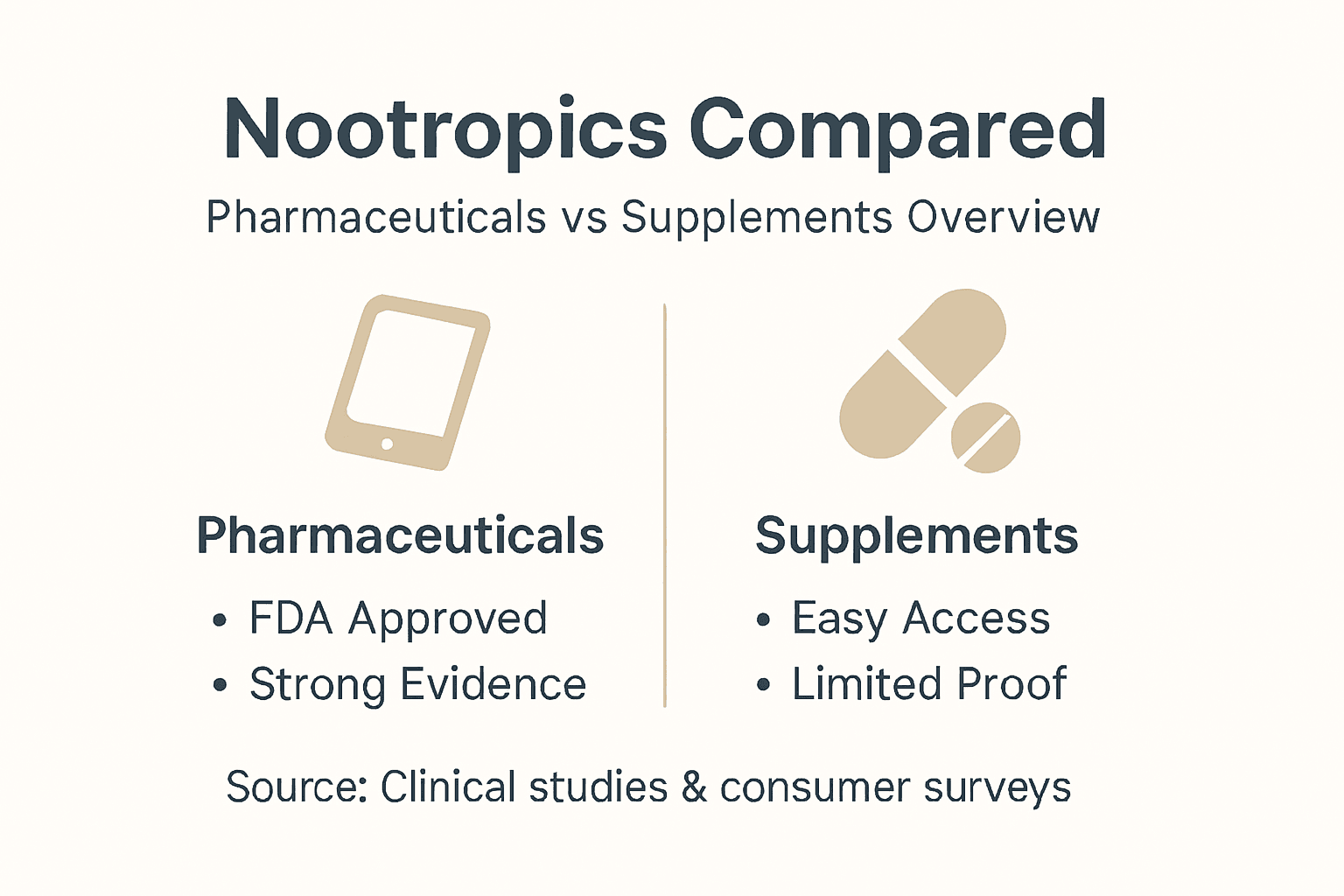
Comparing Nootropics: Pharmaceuticals vs Dietary Supplements
Direct comparison clarifies meaningful differences across nootropic categories:
| Category | FDA Status | Evidence Strength | Common Side Effects | Misuse Risk | Best For |
|---|---|---|---|---|---|
| Prescription | Approved for specific conditions | Strong clinical trial data | Insomnia, dependence, cardiovascular stress | High without supervision | Diagnosed conditions under medical care |
| OTC Drugs | Approved or recognized as safe | Moderate research support | Jitters, sleep disruption, tolerance | Low to moderate | Occasional alertness boost |
| Unapproved | Not approved in U.S. | Variable, often limited | Unknown long-term effects | Moderate due to quality uncertainty | Experimental use with caution |
| Dietary Supplements | Minimal regulation | Weak or inconsistent | Varies widely, often understudied | Low but quality varies | Supporting overall wellness |
Prescription nootropics offer the strongest effects and evidence but require medical diagnosis and monitoring. Benefits come with real risks including potential dependence on stimulants. Insurance may cover costs for approved conditions.
OTC options like caffeine provide accessible, affordable cognitive support. Effects are modest but predictable. Tolerance develops with regular use, reducing effectiveness over time.
Unapproved substances exist in regulatory limbo. Piracetam shows interesting research but lacks U.S. approval. Sourcing becomes problematic, with quality and purity varying across suppliers.
Dietary supplements offer easiest access but weakest evidence. Some compounds like Bacopa show promise in specific studies. Others lack any meaningful human research. Quality control depends entirely on manufacturer integrity.
Your choice depends on goals, risk tolerance, and health status. Athletes seeking legal performance edges might explore caffeine and creatine. Individuals with diagnosed attention deficits need prescription options. Health enthusiasts interested in long-term brain support could consider evidence-backed supplements.
None of these categories provides risk-free cognitive enhancement. Even well-studied compounds affect individuals differently. Starting with lower-risk, better-researched options makes sense for most users.
Practical Guidance: Choosing and Using Nootropics Safely
Safe nootropic use requires systematic evaluation and cautious implementation. Follow these steps:
- Identify the category: Determine if a compound is prescription, OTC, unapproved, or a dietary supplement.
- Understand biological effects: Learn which neurotransmitters or mechanisms the nootropic targets.
- Review evidence and legality: Check for clinical studies and verify legal status in your location.
- Consult healthcare providers: Discuss plans with a doctor, especially if taking medications or managing health conditions.
- Start with low-risk compounds: Begin with well-researched options like caffeine or Bacopa before trying experimental substances.
- Monitor effects and side effects: Track cognitive changes, physical responses, and any adverse reactions.
- Adjust responsibly: Modify doses or discontinue use based on observed outcomes and professional guidance.
Safety tips:
- Avoid unapproved substances unless you thoroughly understand risks and can verify product quality
- Buy only from vendors providing third-party testing certificates and transparent ingredient disclosure
- Never combine multiple nootropics without professional advice, as interactions remain poorly studied
- Respect recommended dosages; more isn’t better and may increase side effects
Cycling strategies help reduce dependence risks with stimulant-based nootropics. Take regular breaks allowing your brain to reset. This prevents tolerance buildup and maintains effectiveness.
Pro Tip: Keep a journal tracking daily nootropic use, cognitive performance metrics, mood, sleep quality, and side effects. This data reveals patterns and helps assess whether benefits justify continued use.
Prioritize foundational health practices before adding nootropics. Quality sleep, regular exercise, stress management, and balanced nutrition provide more cognitive benefit than any supplement. Nootropics work best supporting already-healthy lifestyles.
Athletes should explore choosing nootropics for athletes to understand sport-specific applications. Consider cycling nootropics for safe use to prevent tolerance. Understanding micronutrition and cognitive function provides context for how nutrients support brain health.
Summary and Next Steps for Health-Conscious Consumers
Nootropics encompass diverse categories from prescription medications to dietary supplements. Each type operates under different regulatory frameworks with varying evidence levels. Understanding these distinctions helps you make informed decisions.
Key points to remember:
- Brain chemistry targets include acetylcholine, dopamine, glutamate, GABA, and serotonin
- Scientific evidence strength decreases from prescription drugs to dietary supplements
- FDA regulation applies fully only to prescription and OTC categories
- Individual responses vary significantly based on genetics and health status
- Safety requires professional consultation, verified products, and realistic expectations
Manage expectations about nootropic benefits. Most compounds provide modest cognitive support rather than dramatic transformation. Prescription options offer stronger effects but carry higher risks and require medical supervision.
Continue learning through trusted sources about supplements and cognitive health. Scientific understanding evolves as new research emerges. Stay updated on regulatory actions and safety alerts.
Integrate nootropics as one component of comprehensive health and athletic practices. Sleep, nutrition, exercise, and stress management form the foundation. Supplements support but don’t replace these fundamentals.
Consult healthcare providers before starting any nootropic regimen. Professional guidance helps navigate risks, interactions, and personalized considerations.
Explore NutriBliss Supplements to Support Your Cognitive and Athletic Goals
Now that you understand nootropic categories, mechanisms, and safe usage, consider how quality supplements fit your wellness strategy. NutriBliss offers science-backed products designed to support brain health and athletic performance through evidence-based formulations.

Our specialized supplements align with the principles discussed throughout this guide. We prioritize transparent ingredient disclosure, third-party testing, and realistic benefit communication. Whether you’re an athlete seeking performance optimization or a health-conscious individual exploring cognitive support, our product line provides options matching various goals and risk tolerances.
Explore detailed guides on sports supplement benefits and sports nutrition for athletes to understand how proper supplementation complements training and recovery. Our expert guide to dietary supplements helps you navigate choices with confidence.
Visit NutriBliss.us to discover products supporting your cognitive and athletic ambitions safely and effectively.
Frequently Asked Questions About Nootropics
What are nootropics and how do they differ from regular supplements?
Nootropics specifically target cognitive functions like memory, attention, and learning through neurotransmitter modulation and brain chemistry effects. Regular supplements might support general health or fill nutritional gaps without directly enhancing mental performance.
Are nootropics safe to use without medical supervision?
Safety depends on category and individual health. OTC options like caffeine carry relatively low risks for healthy adults. Prescription nootropics require medical supervision due to side effects and dependence potential. Always consult healthcare providers before starting any nootropic, especially with existing health conditions or medications.
Which nootropics have the strongest scientific evidence?
Prescription medications like modafinil and methylphenidate show the most robust clinical evidence for cognitive enhancement in specific conditions. Caffeine has decades of research supporting alertness benefits. Most dietary supplements lack conclusive proof despite marketing claims.
Can nootropics improve athletic performance as well as cognition?
Some nootropics may support athletic performance through enhanced focus, motivation, and stress management. Caffeine improves endurance and reaction time in many athletes. Creatine supports both muscle function and cognitive performance. Effects vary by compound and individual response.
How should I start using nootropics for best results?
Begin with well-researched, low-risk compounds like caffeine. Consult healthcare providers to assess safety for your situation. Start with low doses and monitor effects carefully. Keep a journal tracking cognitive changes and side effects. Prioritize sleep, nutrition, and exercise as foundations before adding nootropics.