

Recovery starts within minutes of match point, not back at the hotel. Rehydrate with a volume of sodium-containing fluid proportional to body weight lost, eat an appropriate amount of carbohydrate and protein within the first hour, and layer on cold-water immersion at 10 to 15°C, compression for 3 to 4 hours, and consistent sleep hygiene whenever the schedule allows. Food comes first; a scoop of something from Nutribliss fills the gap when a proper meal isn’t sitting courtside. #nutribliss
TL;DR:
- Rehydration requires 1 to 1.5 liters of sodium-containing fluid per kilogram of body weight lost, and water alone is insufficient for proper recovery.
- Consuming a carbohydrate and protein-rich snack within an hour after a match accelerates glycogen replenishment and muscle repair, especially when matches are close together.
- Cold-water immersion at 10 to 15°C for 10 to 15 minutes effectively reduces muscle soreness and maintains technical sharpness during consecutive match days.
- Wearing compression garments on the lower body for 3 to 4 hours after play, especially when layered with cold exposure, enhances soreness reduction and lower-body power.
- Prioritizing sleep hygiene with a consistent routine, cool dark environment, and avoiding screens significantly improves recovery, even during hectic tournament schedules.
Table of Contents
- Why Recovery Matters for Tennis Players
- What Should You Eat and Drink in the First Hour After a Match?
- Does Cold Water Immersion Actually Help Tennis Players Recover?
- When Should Tennis Players Wear Compression Garments?
- How Should Players Use Active Recovery, Stretching, and Foam Rolling?
- How Much Sleep Do Tennis Players Need for Recovery?
- Sample Recovery Routines You Can Use Today
- When Do Food-First Recovery Plans Need a Supplement?
- How Do You Manage Recovery on the Road During Tournaments?
- How Should Players Monitor Inflammation After Matches?
- What Mental Recovery Techniques Help Tennis Players Reset?
- Do Massage Guns and Electrical Stimulation Actually Speed Up Recovery?
- What Are the Warning Signs of Overtraining in Tennis?
- Publisher Perspective: Why We Push Food First at Nutribliss
- A Practical Complement for Recovery on the Road
- Sources
- FAQ
Why Recovery Matters for Tennis Players
Tennis is not a steady-state sport. It’s a stop-start grind of explosive sprints, sudden direction changes, and short rest windows that draw on every energy system the body has, from stored phosphocreatine to aerobic fat oxidation. That mix burns through muscle glycogen fast and taxes the nervous system in ways that show up as slower reaction time and sloppier footwork well before the legs feel tired. A review of recovery interventions for tennis identifies four practical recovery levers that address exactly this: temperature-based methods, compression garments, targeted nutrition, and (with more mixed evidence) electrical modalities.
The stakes are higher than casual players assume. A 2 to 3% dip in movement speed or shot accuracy sounds trivial, but across a five-set match or a week-long tournament draw, that margin decides who’s still standing in the quarterfinal. This is why elite programs build periodized recovery plans that shift based on the calendar:
- Heavy training blocks call for deeper nutritional and sleep investment.
- Tournament weeks demand faster, more portable recovery routines between matches.
- Off-season stretches allow for more aggressive load and less recovery urgency.
Recovery isn’t a reward for finishing a match. It’s the mechanism that determines how well the next one goes.
What Should You Eat and Drink in the First Hour After a Match?
The first 30 to 60 minutes after stepping off the court is the highest-leverage recovery window a player gets. WTA Tennis nutrition guidance recommends rehydrating with 1 to 1.5 liters of fluid per kilogram of body mass lost during play, and that fluid needs sodium to actually get absorbed and retained rather than passing straight through.
Statistic Callout: Players who lose 2 liters of sweat during a long match need roughly 2 to 3 liters of sodium-containing fluid to fully rehydrate, not the 2 liters they lost. Water alone doesn’t cut it because sodium drives fluid retention.
Refueling matters just as much as rehydrating. The same guidance calls for about 1 gram of carbohydrate per kilogram of body weight immediately post-match, alongside 15 to 25 grams of high-quality protein to kickstart glycogen resynthesis and start repairing muscle tissue. When matches are packed close together, with less than 8 hours between sessions, the recovery literature pushes that carbohydrate target higher, to 1.0 to 1.2 g/kg right after exercise, repeated hourly for several hours. During heavy tournament stretches, daily carbohydrate needs can climb to 6 to 10 g/kg.
Here’s how that translates to something you can actually grab out of a bag:
- Low-fat chocolate milk or a ready-made protein shake, easy to drink between matches.
- A banana with a cup of Greek yogurt, portable and requiring no prep.
- A carbohydrate bar paired with an electrolyte sachet mixed into water.
- A turkey or hummus wrap for players who can access real food within the hour.
Food should always be the first option. Supplements earn their place only when appetite is shot from adrenaline and heat, or when there’s simply no real meal within reach between matches. One practical habit that removes the guesswork: weigh yourself before and after a session. The PMC review on tennis recovery notes this is the simplest field method for estimating sweat loss and individualizing fluid targets instead of guessing. Tracking hydration this way over a season also pairs well with the broader approach covered in hydration strategies for athletes.
Does Cold Water Immersion Actually Help Tennis Players Recover?
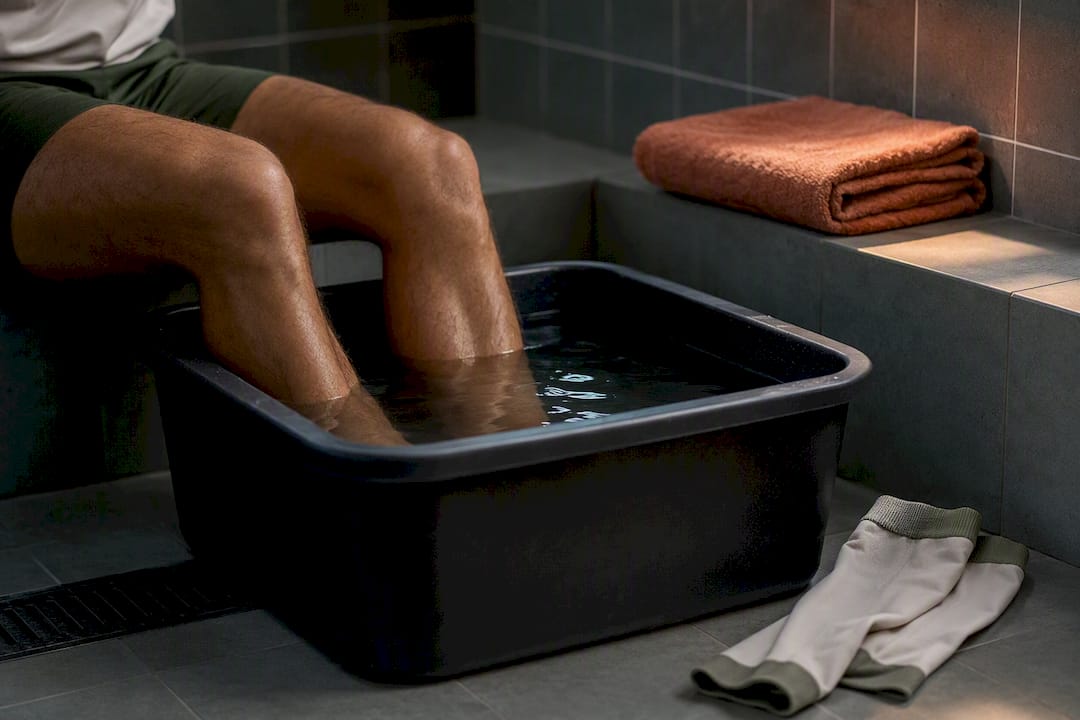
Yes, when the temperature and timing are right. Cold-water immersion between 10 and 15°C for 10 to 15 minutes is the most consistently supported cold protocol in the research on athlete cold exposure, which found this method attenuates delayed-onset muscle soreness and helps players maintain technical sharpness across back-to-back match days. Adoption among professional athletes runs high precisely because it’s simple to apply between sessions.
Whole-body cryotherapy, the enclosed chamber version of cold exposure, works on a similar principle but at far colder air temperatures for much shorter exposure. It’s not something most clubs or traveling players have access to, and the equipment cost puts it out of reach for most programs. A cold tub, an ice-filled trash can, or a cold shower does the job for a fraction of the price.
Cold therapy isn’t risk-free. Keep these cautions in mind:
- Skip immersion if you have a cardiovascular condition without medical clearance first.
- Never submerge open wounds, blisters, or fresh cuts.
- Re-warm gradually afterward. Do not go straight from a cold tub into a hot shower.
- Watch for dizziness or numbness that lingers past a few minutes after getting out.
There’s also a timing nuance worth knowing. Cold exposure is excellent for short-term soreness relief during a tournament, but using it constantly during an off-season strength block may blunt the muscle adaptations you’re training for. Save the aggressive icing for competition weeks, not the gym phase.
Pro Tip: No tub available? Repeated cold showers on the legs for 60 to 90 seconds at a time, followed immediately by compression socks, gets you most of the soreness-reduction benefit without needing a single piece of equipment. A wellness partner resource on cold exposure covers the broader physiological case for why cold works so well after intense exertion.
When Should Tennis Players Wear Compression Garments?
Wear compression gear for about 3 to 4 hours immediately after a match or hard training session. That window comes directly from a mixed-method recovery trial that combined cold-water immersion, compression garments, and sleep-hygiene coaching after repeated on-court sessions and found measurable improvements in perceived soreness and lower-body power output.
For tennis, compression on the lower body is particularly beneficial, as these muscles bear most of the physical load. A few practical notes:
- Choose graduated compression tights or socks, tighter at the ankle and looser moving up the leg, rather than uniform-pressure garments.
- Fit matters more than brand. If it leaves deep red marks or cuts off circulation, size up.
- Compression works best layered right after cold-water immersion, not as a replacement for it.
- On multi-match tournament days, compression socks can be worn between matches and even during travel to reduce swelling on long car or plane rides.
Combining cold exposure with compression produces a stronger effect than either used alone, according to the same IJSPP trial, which is why most professional recovery protocols stack the two rather than picking one.
How Should Players Use Active Recovery, Stretching, and Foam Rolling?
Light movement beats sitting still. A 10 to 20 minute active cooldown, easy jogging, cycling, or a relaxed hit against a wall, keeps blood flowing to fatigued muscles and helps clear metabolic byproducts faster than a static rest ever will. Save deep static stretching for after this light movement, once muscles are still warm but no longer under load.
A simple foam-rolling sequence covers the areas tennis hammers hardest:
- Calves and Achilles, 60 seconds per leg, since these absorb repeated ballistic loading on every split step.
- Hamstrings and glutes, 90 seconds per side, given how much hip extension power drives the serve and groundstrokes.
- Forearms and wrist flexors, 30 seconds per arm, an area most players ignore until tendinitis shows up.
- Upper back and shoulders, 60 seconds, especially for players with heavy serve volume.
Combined recovery approaches that blend active recovery, stretching, and alternating cold and warm immersion have been shown in research on junior tennis players to meaningfully reduce muscle soreness measured 48 hours after play. That’s a longer horizon than most single-method interventions can claim.
Massage helps too, but know the line between self-care and a real problem. A tight, achy muscle responds well to a foam roller or a massage gun. Sharp, localized pain, swelling that doesn’t go down, or pain that changes how you walk are signs to see a physical therapist or sports medicine doctor, not signs to roll harder. For a deeper breakdown of sequencing these techniques across a training week, see this guide on improving muscle recovery.
Pro Tip: Do your foam rolling and static stretching at night, not right before a match. Rolling cold, unwarmed muscle for extended periods before play can temporarily reduce power output.
How Much Sleep Do Tennis Players Need for Recovery?
Sleep is the cheapest, most underused recovery tool a player has. Structured sleep-hygiene coaching, dropping the room to around 19°C, dimming lights an hour before bed, cutting screen time, and holding a consistent bedtime, produced measurable gains in both total sleep time and next-day perceived soreness in the same mixed-method recovery trial referenced above for cold and compression.
Statistic Callout: In that trial, the group receiving sleep-hygiene coaching alongside cold-water immersion and compression reported lower next-day soreness scores than groups using only the physical recovery methods, pointing to sleep as a real multiplier rather than a passive afterthought.
Tournaments make good sleep harder, not easier. Late match finishes, early practice slots, and unfamiliar hotel rooms all work against you. A few adjustments make a real difference on the road:
- Pack an eye mask and earplugs; hotel rooms are rarely as dark or quiet as home.
- Request a room away from elevators, ice machines, and street noise when checking in.
- Take a 20 to 30 minute nap if a late match pushed bedtime past midnight, but avoid napping longer than that so it doesn’t wreck the next night’s sleep.
- Keep the same wind-down routine (shower, stretch, phone away) whether you’re home or three time zones away.
Run through this nightly: room cool and dark, screens off 30 minutes before lights out, consistent bedtime within a 30-minute window, and hydration topped off but not so much you’re up at 3 AM.
Sample Recovery Routines You Can Use Today
Three time-ordered protocols cover almost every situation a competitive player faces.
Routine A: Standard post-match (60 to 90 minutes)
- Weigh in and rehydrate immediately with sodium-containing fluid, targeting 1 to 1.5 L per kilogram lost.
- Eat a carbohydrate-and-protein combination within 30 to 60 minutes (roughly 1 g CHO/kg, 15 to 25 g protein).
- Cold-water immersion for 10 to 15 minutes at 10 to 15°C.
- Compression garments on for 3 to 4 hours.
- Light stretching or foam rolling before bed.
Routine B: Short tournament turnaround (under 8 hours between matches)
- Rehydrate and snack within 15 minutes of leaving the court, prioritizing liquid calories that go down fast.
- Skip full cold immersion if time is tight; use a cold towel on the neck and legs instead.
- Compression socks on immediately and worn through the next match.
- A 20 minute rest with feet elevated, not a nap, unless more than 3 hours remain before the next match.
Routine C: Overnight full recovery
- Full nutrition and hydration protocol as in Routine A.
- Cold-water immersion followed by compression for the full 3 to 4 hour window.
- Sleep-hygiene checklist executed fully, cool room, dark, consistent bedtime.
- Light mobility work the next morning before practice resumes.
| Player Type | Key Adjustment |
|---|---|
| Juniors | Shorter cold exposure (5 to 10 min); heavier emphasis on sleep duration over intensity of methods |
| Older players | Extended warmup before mobility work; longer compression windows |
| Wheelchair players | Focus soft-tissue work on shoulders and forearms rather than legs; adjust hydration targets for seated exertion |
When Do Food-First Recovery Plans Need a Supplement?
Expert bodies across the sport, including ITF, WTA, and ATP guidance, are consistent on this point: recovery nutrition should be food-first, with a qualified sports nutritionist tailoring the plan to the individual. Supplements step in when circumstances make food genuinely impractical, long travel days, appetite suppressed by heat and adrenaline, or a tournament schedule that leaves no real meal window between matches.
When that gap opens up, a few categories consistently show up in the evidence base:
- Electrolyte mixes with sodium, useful for hitting fluid-replacement targets when plain water isn’t cutting it.
- Whey or plant-based protein powders, a fast way to reach the 15 to 25 gram protein target without needing a full meal.
- Carbohydrate powders or bars, practical for hitting the roughly 1 g/kg carbohydrate window right after play.
Quality matters more than marketing claims here. Look for third-party lab testing, a transparent ingredient panel with no vague “proprietary blend” language, and clear sourcing. Players managing any medical condition, or juniors whose nutrition needs differ from adults, should loop in a registered dietitian or sports medicine physician before adding anything new. For a closer look at where these products fit into a broader plan, this breakdown of recovery supplements covers the categories in more depth.
How Do You Manage Recovery on the Road During Tournaments?
Tournament travel is where good recovery habits usually fall apart, not because players don’t know what to do, but because the tools aren’t in reach. A compact recovery kit solves most of that:
- Electrolyte sachets, easy to mix into any water bottle courtside.
- Single-serve protein packets or ready-to-drink shakes that don’t need refrigeration.
- A compact travel foam roller.
- Compression sleeves or socks packed in the match bag, not left in a hotel drawer.
- A small sleep kit: eye mask, earplugs, and a phone charger that isn’t also the alarm clock keeping you up.
Coordinating meals in unfamiliar cities is its own challenge. Many players genuinely struggle to eat well while traveling, which is exactly why a food-first approach still means planning ahead, calling ahead to hotels about kitchen access, scouting a grocery store near the venue, or packing shelf-stable protein and carbohydrate options rather than hoping the tournament food tent has something usable.
Multiple matches in a single day compress every recovery window described above. When rest between matches drops under two hours, prioritize fluid and a small carbohydrate hit over a full meal, and save the deeper recovery work, cold immersion, extended compression, for whenever the schedule finally opens up.
How Should Players Monitor Inflammation After Matches?
You don’t need a lab to track inflammation, though the signals are real and worth paying attention to. Persistent joint swelling, a muscle that stays tender well past 48 to 72 hours, or stiffness that doesn’t loosen up with a normal warmup are the practical, at-home signs that recovery isn’t keeping pace with training load.
A simple daily log works better than guessing. Track morning resting heart rate, a subjective soreness rating from 1 to 10, and sleep quality each night. A resting heart rate that creeps up several beats above your normal baseline over multiple days, paired with soreness scores that aren’t trending down, usually means the body needs an easier day before the next hard session.
Localized swelling around a joint, especially the wrist, elbow, or knee, deserves more caution than general muscle soreness. General muscle fatigue responds to the recovery tools already covered here: cold exposure, compression, and sleep. Joint swelling that doesn’t improve within a couple of days, or that comes with sharp pain on specific movements, is a signal to get evaluated rather than push through with more ice and rest.
Coaches tracking a full roster benefit from simple shared spreadsheets logging these same markers across the team. Spotting a pattern, three players reporting elevated soreness scores the same week, often flags a training load issue before anyone gets hurt. Reactive icing treats the symptom. Watching the trend catches the cause.
What Mental Recovery Techniques Help Tennis Players Reset?
Physical fatigue gets most of the attention, but the mental load of competitive tennis, the isolation of no teammates to lean on mid-match, the swings of a tight third set, adds up just as fast. Recovery plans that ignore this piece are incomplete.
Simple breathing exercises, four seconds in, hold for four, four seconds out, repeated for five minutes after a match, lower heart rate and help shift the nervous system out of competition mode faster than just sitting around scrolling a phone. Progressive muscle relaxation, tensing and releasing muscle groups from feet to head, works well as part of a wind-down routine before sleep, especially after a match that ran late.
Visualization has value beyond pre-match prep. Spending a few quiet minutes reviewing what worked well during a match, rather than replaying every unforced error, helps process the outcome and move on faster. Players who ruminate on mistakes tend to carry that tension into the next day’s practice.
A five-minute check-in after every match, win or lose, asking what felt good physically and mentally, catches burnout signals early. Supporters and coaches play a role here too: a rushed “get over it” after a tough loss shuts down honest reflection. Space to actually process the match, even briefly, is part of the recovery protocol, not separate from it.
Do Massage Guns and Electrical Stimulation Actually Speed Up Recovery?
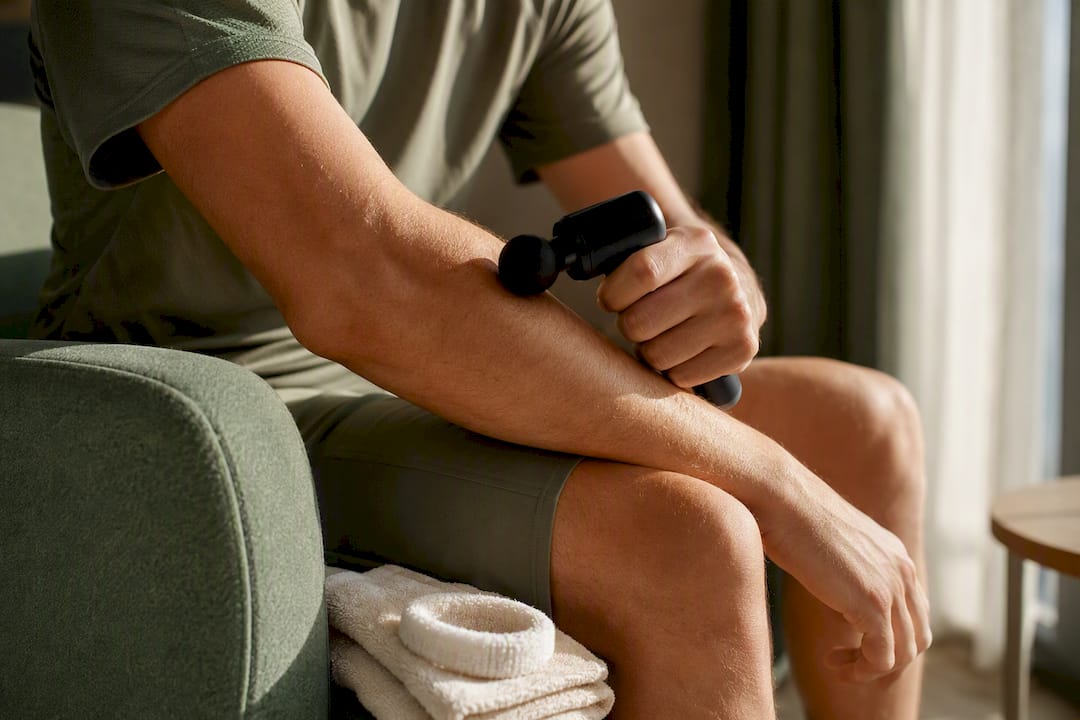
Massage guns have become standard gear in a lot of players’ bags, and for good reason: they’re portable, require no setup, and deliver localized percussive pressure that can loosen tight calves or forearms in a few minutes between matches. The evidence supporting them is mostly about perceived soreness and short-term muscle relaxation rather than dramatic performance restoration.
Electrical stimulation, often marketed as EMS or NMES devices, shows more mixed results. Comprehensive reviews of tennis-specific recovery classify electrical modalities as having inconsistent evidence compared to the more reliably effective methods like cold exposure and compression. That doesn’t make them useless, but it means they belong in the “nice extra” category, not the core protocol.
Both tools work best as add-ons layered onto the fundamentals rather than replacements for them. A massage gun on tight forearms after a heavy serving session is a reasonable five-minute habit. Skipping rehydration or sleep because you used a massage gun instead is trading a proven lever for an unproven one.
What Are the Warning Signs of Overtraining in Tennis?
Overtraining rarely announces itself with one dramatic symptom. It shows up as a slow accumulation: performance that plateaus or drops despite training harder, resting heart rate that stays elevated for several consecutive mornings, irritability or flat motivation that wasn’t there a few weeks ago, and sleep that feels unrefreshing even when the hours are there.
Persistent soreness that doesn’t respond to the recovery tools covered throughout this guide, cold exposure, compression, sleep, is one of the clearest red flags. If a player is doing everything right on the recovery side and still feels worn down match after match, the issue usually isn’t recovery technique. It’s training volume outdated for the player’s current capacity.
The fix is an actual rest day, not a lighter practice. A true recovery day means no hitting, no hard conditioning, just the low-intensity restoration work: sleep, nutrition, mobility. Coaches managing junior or amateur players should build at least one full rest day into any week with more than four hard sessions, and adjust that upward for players returning from injury or managing a heavier academic or work schedule alongside training.
Publisher Perspective: Why We Push Food First at Nutribliss
Recovery advice online loves a shortcut. Cold plunge influencers, recovery gadget ads, supplement stacks with ten ingredients nobody can pronounce. None of that replaces sodium in your water bottle and protein on your plate within the hour. That’s the boring truth the research keeps confirming, and it’s why Nutribliss builds its Athlete Recovery & Performance line to complement real food, not substitute for it.
Products with transparent ingredient panels and third-party lab testing can help ensure quality and safety. If you’re managing a medical condition or building a plan for a junior player, consult a qualified nutrition or medical professional before adding new supplements. This guide gives you the framework; a qualified professional tailors it to your body.
— GAURAV
A Practical Complement for Recovery on the Road
There are plenty of ways to hit your post-match protein and electrolyte targets, from a grocery run to a blender at home. What Nutribliss gives you is the version that fits in a match bag when neither of those options is available between two matches on the same court.

The Athlete Recovery & Performance collection is built around exactly the targets covered in this guide, protein formulated to hit that 15 to 25 gram post-match window and electrolyte blends with real sodium content, not just flavored water. Every product lists its full ingredient panel and third-party testing results, so you know what’s actually in the scoop before match day. If food is within reach, eat first. When it isn’t, whether you’re between matches on a tournament court or three time zones from your own kitchen, this is the backup plan worth packing. For help building a full routine around these targets, the guide on building a supplement routine for recovery walks through it step by step. Check the current lineup and start building your travel kit today.
Sources
- Nutrition and Hydration: Recovery Nutrition (WTATennis guidance)
- Recovery From Repeated On-Court Tennis Sessions: CWI, Compression and Sleep interventions (IJSPP)
- Recovery interventions and strategies for improved tennis performance (PMC review)
- Frontiers: cold exposure and athlete recovery (review)
FAQ
How Do Tennis Players Recover So Quickly Between Matches?
Fast recovery comes from stacking methods rather than relying on one trick: immediate rehydration with sodium-containing fluid, a carbohydrate and protein snack within the first hour, and cold exposure or compression when the schedule allows. Professional players also train their bodies over years to handle repeated match loads more efficiently than recreational players.
What Should You Drink for Muscle Recovery After Tennis?
A sodium-containing fluid works better than plain water because sodium helps the body retain what it drinks rather than losing it through urine. WTA guidance recommends 1 to 1.5 liters per kilogram of body weight lost, and pairing that fluid with a carbohydrate and protein source, like low-fat chocolate milk, covers both hydration and glycogen replenishment at once.
What Is the Most Common Injury Tennis Players Get?
Shoulder and wrist overuse injuries, along with lower-body issues like ankle sprains and patellar tendinitis, show up most often in competitive tennis due to the repeated overhead serving motion and constant lateral movement. Consistent mobility work, proper warmup, and adequate recovery between sessions are the main levers for reducing this risk, since fatigue and poor recovery are common contributors to overuse patterns.
Can Supplements Replace Food for Tennis Recovery?
No. A food-first approach remains the standard, with supplements filling gaps only when a real meal isn’t accessible, such as during tight tournament turnarounds or long travel days. Nutribliss positions its recovery products as a complement to food, not a substitute, with transparent ingredient panels and third-party testing for players who need a portable option.
How Long Should You Wear Compression Garments After a Match?
Around 3 to 4 hours post-match is the window supported by recovery research combining cold immersion and compression, where players reported reduced perceived soreness and improved lower-body power. Lower-body compression matters most for tennis, given how much load the legs absorb during a match.