

The most reliable way to protect your vision is to combine a Mediterranean-style diet rich in leafy greens and oily fish with quitting smoking, wearing UV protection, keeping blood sugar and blood pressure in check, and getting eye exams on schedule. Targeted supplements like AREDS2 help a specific group of people with diagnosed intermediate AMD, not everyone. None of this reverses nearsightedness or other refractive errors. It works by slowing damage, not undoing it.
TL;DR:
- Eating leafy greens and oily fish regularly supports retinal blood flow and provides key antioxidants like lutein, zeaxanthin, and omega-3s that slow AMD progression.
- Quitting smoking, managing blood sugar and blood pressure, and ensuring proper sleep are critical lifestyle changes that significantly reduce the risk of age-related retinal damage.
- Supplementation with AREDS2 is effective only for people diagnosed with intermediate AMD and should be discussed with an eye specialist, especially if you smoke or have health concerns.
- Proper screen habits, including frequent breaks, increased distance, and UV-rated sunglasses outdoors, help prevent digital eye strain and protect against cumulative outdoor UV damage.
- Dietary patterns like the Mediterranean or DASH diet outperform single ‘superfoods’ and build a sustainable foundation for long-term eye health.
Table of Contents
- Why Nutrition and Lifestyle Matter for Your Eyes
- Foods and Nutrients to Prioritize
- Lifestyle Habits That Influence Vision Risk
- Supplements and Clinical Evidence: AREDS2 and Sensible Use
- How to Reduce Screen Strain and Protect Your Eyes Day to Day
- When to Get an Eye Exam and Red Flags That Need Urgent Care
- Our Editorial Standards and Approach
- Natural Remedies and Home Practices for Dry Eyes
- Environmental Factors That Affect Your Eyes and How to Manage Them
- Managing Screen Time to Prevent Digital Eye Strain
- A Realistic Take on Natural Eye Care
- Where Nutribliss Fits Into Your Daily Nutrition
- Sources and Further Reading
- FAQ
Why Nutrition and Lifestyle Matter for Your Eyes
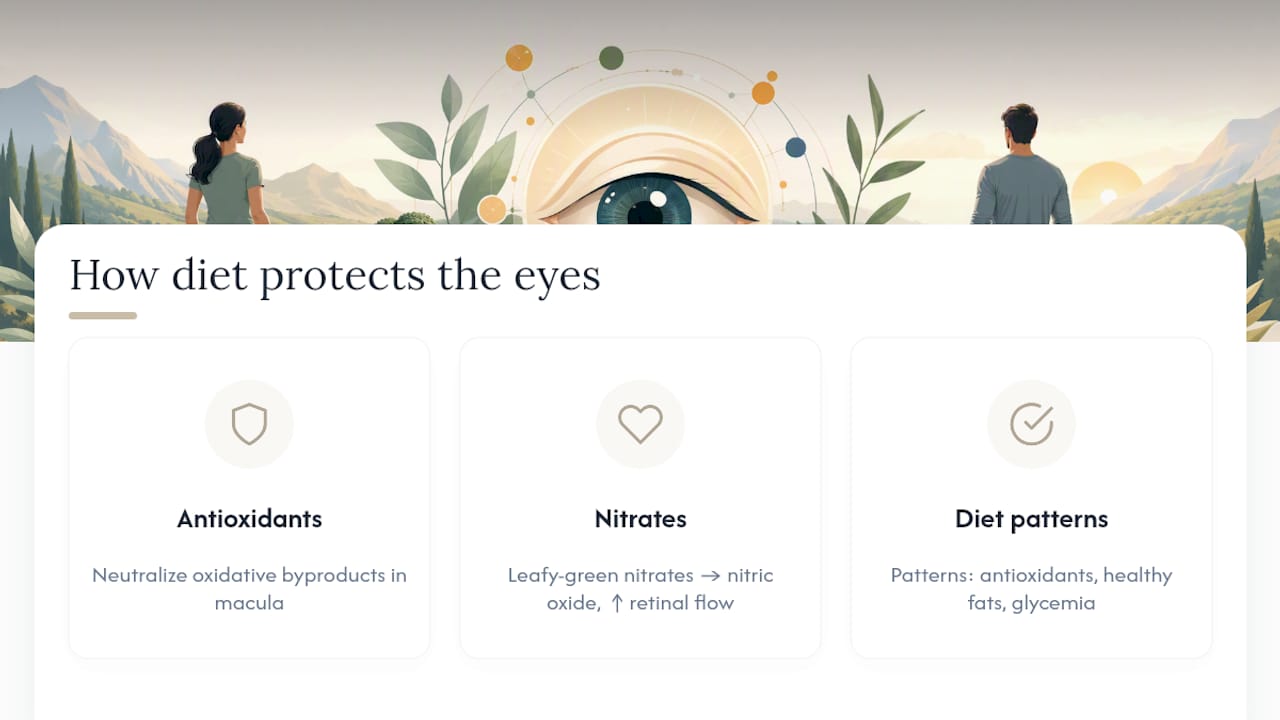
Your retina burns through oxygen faster than almost any other tissue in your body, and that metabolic pace generates a steady stream of oxidative byproducts. Left unchecked, that oxidative stress damages the light-sensing cells in your macula and contributes to age-related macular degeneration (AMD), along with chronic low-grade inflammation that worsens dry eye and retinal breakdown over time.
Blood flow matters just as much as antioxidants. Nitrates from leafy greens convert into nitric oxide in your body, which relaxes blood vessels and improves perfusion to the optic nerve and retina. That vascular mechanism is one reason researchers keep finding lower rates of glaucoma among people who eat greens regularly, according to a review of vascular and lifestyle mechanisms in glaucoma.
Pattern matters more than any single nutrient. People who score higher on Mediterranean or Healthy Eating Index diets show consistently lower odds of late AMD and diabetic retinopathy in prospective studies, according to research linking dietary patterns to eye disease. The likely reason: these diets deliver antioxidants, healthy fats, and better blood sugar control all at once, rather than one isolated compound doing the heavy lifting.
Foods and Nutrients to Prioritize
Five nutrient groups do most of the protective work in the eye, and each has an obvious grocery-list translation.
Lutein and zeaxanthin concentrate directly in your macula, filtering high-energy blue light and acting as localized antioxidants. Get them from:
- Kale, collard greens, and spinach, cooked lightly to soften cell walls
- Egg yolks, which offer a more absorbable form than raw greens alone
- Orange bell peppers and corn, both surprisingly rich in zeaxanthin
Omega-3 fatty acids support tear film quality and reduce inflammation tied to dry eye and AMD progression. Salmon, sardines, and mackerel twice a week cover this well; walnuts and chia seeds help on non-fish days.
Vitamin C and vitamin E neutralize oxidative damage in the lens and retina. Citrus fruit, bell peppers, and strawberries handle vitamin C; almonds and sunflower seeds cover vitamin E.
Zinc helps transport vitamin A from your liver to your retina, where it is essential for night vision. Oysters, pumpkin seeds, and lentils are practical sources for most diets.
Polyphenols from berries, dark chocolate, and green tea add a broader antioxidant layer that mechanistic reviews link to reduced inflammatory signaling in ocular tissue, according to a narrative review of bioactive compounds and eye health.
One absorption detail most people miss: carotenoids like lutein are fat-soluble. Eating spinach with a splash of olive oil, or pairing carrots with hummus, meaningfully increases how much your body actually absorbs versus eating those foods dry or fat-free.
If you eat mostly plant-based, omega-3s and preformed vitamin A are the two nutrients worth watching, and a plant-based supplementation guide can help you spot the gaps.
Pro Tip: Build one “eye plate” a week, a simple template of salmon or sardines, a big pile of sautéed greens finished with olive oil, and a handful of berries on the side. Repetition beats variety when you’re trying to make a habit stick.
Think in patterns, not single foods. A diet built around the Mediterranean or DASH template will outperform any “superfood” you add to an otherwise inconsistent diet.
Lifestyle Habits That Influence Vision Risk
Diet does a lot of the work, but a handful of daily habits move the needle just as much, sometimes more.
- Quit smoking. Smokers face a dramatically elevated AMD risk compared to nonsmokers, and cessation is consistently named among the single most effective lifestyle changes available for slowing AMD progression, per a review of modifiable AMD risk factors.
- Move daily. Regular aerobic activity improves blood flow to the optic nerve and retina, the same vascular pathway that leafy greens support through nitric oxide.
- Protect your sleep. Poor sleep quality is tied to elevated intraocular pressure and worse metabolic regulation, both of which stress the retina over time.
- Manage blood sugar and blood pressure. Diabetes and hypertension are two of the most direct drivers of retinal vascular damage, making glucose and pressure control a frontline defense for your eyes, not just your heart.
Small, specific triggers beat vague intentions. Instead of “exercise more,” try “a 15-minute walk after lunch.” Instead of “sleep better,” try “phone off the nightstand by 10:30.” Micro-goals attached to an existing routine are far more likely to survive past week two.
Supplements and Clinical Evidence: AREDS2 and Sensible Use
The AREDS2 trial tested a specific formula (500 mg vitamin C, 400 IU vitamin E, 80 mg zinc, 2 mg copper, 10 mg lutein, and 2 mg zeaxanthin) and found it reduced the risk of progressing from intermediate to advanced AMD in people with qualifying retinal findings, according to the AREDS2 trial data.
That’s a narrow population: people already diagnosed with intermediate AMD by an eye specialist. It is not a general prevention supplement for healthy eyes, and it will not correct nearsightedness, farsightedness, or astigmatism.
- The original AREDS formula used beta-carotene, which raised lung cancer risk in smokers and former smokers.
- AREDS2 swapped beta-carotene for lutein and zeaxanthin, removing that risk while preserving the protective effect.
- A network meta-analysis found lutein and zeaxanthin paired with fatty acids ranked favorably for improving macular pigment density, though the researchers flagged mixed evidence quality across trials, according to this systematic review on antioxidant supplementation.
Key figure to remember: the AREDS2 formulation contains 10 mg of lutein and 2 mg of zeaxanthin, roughly the ratio found naturally in a generous serving of cooked kale, plus zinc and vitamin C/E at doses well above typical multivitamin levels.
If you smoke, have kidney issues, or take blood thinners, talk to your ophthalmologist before starting AREDS-level zinc or vitamin E doses. A supplement safety checklist is a useful starting point for spotting interactions before you buy anything.
How to Reduce Screen Strain and Protect Your Eyes Day to Day
- Follow the 20-20-20 rule: every 20 minutes, look at something 20 feet away for 20 seconds. It resets focusing muscles and cuts down on the burning, dry feeling that builds up during long screen sessions.
- Blink on purpose. Screen focus cuts blink rate nearly in half, so set a visual reminder if you tend to forget.
- Run a humidifier in dry indoor air and keep a glass of water at your desk.
- Wear sunglasses rated for 100% UVA/UVB protection outdoors, and swap to safety glasses for yard work, woodworking, or anything that throws debris.
Pro Tip: If dryness or blurriness persists after a week of consistent breaks and blinking, that’s your cue to see a clinician rather than keep adjusting screen settings on your own.
When to Get an Eye Exam and Red Flags That Need Urgent Care
Healthy adults with no risk factors generally do well with a baseline eye exam in their 20s and 30s, then every one to two years after 40. If you have diabetes, a family history of AMD, or existing eye disease, your ophthalmologist will likely want to see you annually or more often.
Some symptoms cannot wait for a routine slot. Sudden vision loss, a shower of new floaters or flashes of light, or sudden severe eye pain all warrant same-day care, since they can signal retinal detachment, acute glaucoma, or a vascular event in the eye.
When you go in, bring your current supplement list, mention any family history of AMD or glaucoma, and ask whether your retinal exam findings warrant AREDS2-level supplementation. That conversation, backed by imaging, is the only way to know if you’re actually a candidate.
Our Editorial Standards and Approach
Nutribliss.us builds its content around published clinical trial data, NEI patient guidance, and peer-reviewed nutrition reviews, not trends. This article is prevention and support focused; it is not a substitute for diagnosis or treatment from an eye care professional. If you have diagnosed eye disease, work with your ophthalmologist before changing your supplement routine. Author: GAURAV.
Natural Remedies and Home Practices for Dry Eyes
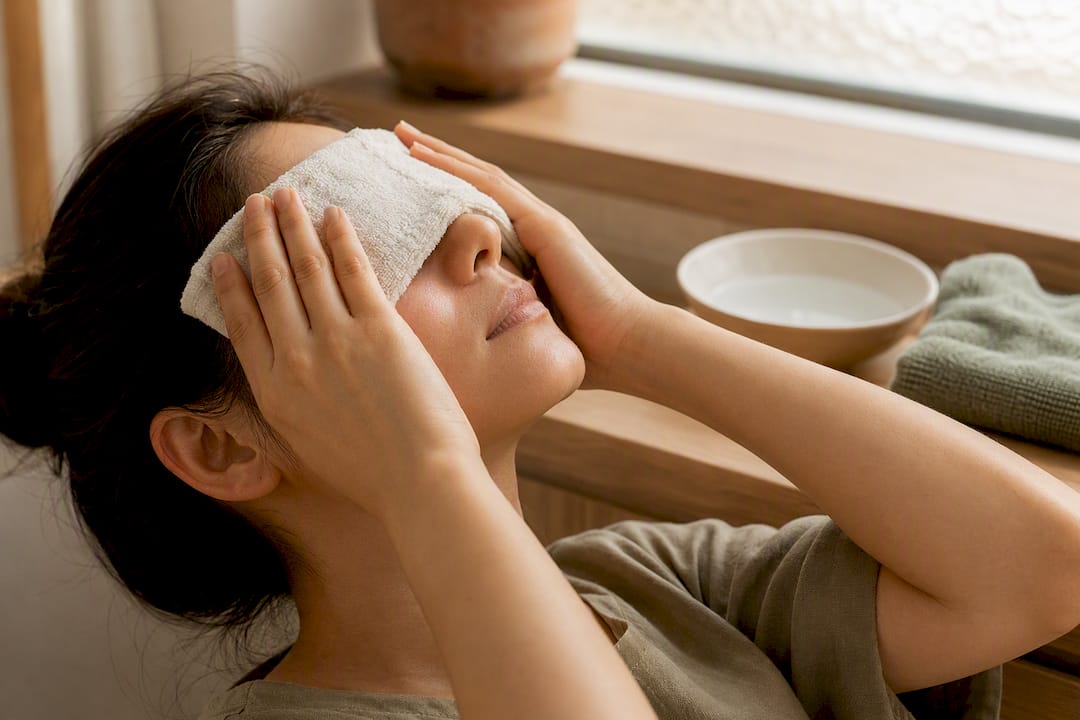
Warm compresses are one of the simplest, most effective home tools for dry eye. Applying a warm, damp cloth over closed eyelids for five to ten minutes helps loosen thickened oil in your meibomian glands, the tiny structures along your eyelid margin that keep tears from evaporating too fast.
Omega-3 intake shows up again here. The same fatty acids that support retinal health also improve tear film stability, which is why salmon, sardines, and walnuts get recommended for dry eye almost as often as they do for AMD prevention.
Preservative-free artificial tears are worth keeping on hand, especially if you wear contacts or spend long hours in air-conditioned or heated rooms. Blinking exercises, deliberately closing your eyes fully and holding for two seconds every few minutes during screen work, help redistribute your natural tear film instead of just adding moisture on top of a poor spread.
Eyelid hygiene matters more than most people realize. A gentle cleanse with diluted baby shampoo or a commercial lid scrub removes debris and bacteria that contribute to blepharitis, a common but under-diagnosed cause of chronic dryness and irritation.
If dryness persists despite these steps for more than two or three weeks, or if you notice light sensitivity or blurred vision that clears with blinking, it’s time to see an eye doctor rather than keep cycling through home remedies.
Environmental Factors That Affect Your Eyes and How to Manage Them
Lighting quality shapes eye strain more than most people account for. Harsh overhead fluorescent lighting and glare off glossy screens force your eyes to work harder to maintain focus, while dim rooms paired with bright screens create a contrast your pupils constantly have to adjust to. Position your screen so light comes from the side rather than behind or directly in front of you, and match your room lighting roughly to your screen brightness.
Air quality plays a quieter but real role. Dry, dusty, or smoke-heavy air accelerates tear evaporation and irritates the ocular surface, which is part of why wildfire smoke and heavy air conditioning both trigger dry eye flare-ups.
UV exposure is cumulative outdoor damage that adds up over decades, not just a sunny-day concern. Clouds don’t block UV the way they block visible light, so wearing UV-rated sunglasses on overcast days still matters if you’re outside for extended periods.
Altitude and dry climates deserve a mention too. Both reduce ambient humidity and increase evaporative tear loss, so if you’re relocating or traveling somewhere arid, packing preservative-free drops and a travel humidifier is worth the extra bag space.
Managing Screen Time to Prevent Digital Eye Strain
Total screen hours matter less than how those hours are structured. Two people can both log ten hours a day, and the one who takes regular breaks will end the day with far less eye fatigue than the one who stares straight through.
Build breaks into your calendar rather than relying on willpower. A recurring reminder every 20 minutes, tied to the 20-20-20 rule, works better than a vague intention to “take breaks when I remember.”
Screen distance and size matter more than brightness settings alone. Keep monitors at least an arm’s length away, and increase text size rather than leaning in closer, since leaning in forces your eye muscles into sustained near-focus for hours at a stretch.
Night mode and blue light filters help some people sleep better, but the research on them preventing actual eye damage is thin. Treat them as a comfort adjustment, not a protective shield, and prioritize the break schedule and screen distance instead.
If you notice a pattern of headaches, blurred vision, or eye fatigue that consistently worsens by afternoon, that’s a signal worth mentioning at your next eye exam rather than something to just push through.
A Realistic Take on Natural Eye Care
Diet and habits genuinely slow damage; they don’t erase it, and no amount of kale reverses a lens prescription. What works is layering small, boring, repeatable choices, greens on your plate, a walk after lunch, sunglasses in the car, and letting your ophthalmologist confirm when supplements actually apply to your case. If you’re building better habits, tag your progress with #nutribliss, consistency over years is what actually moves the needle.
— GAURAV
Where Nutribliss Fits Into Your Daily Nutrition
Eating salmon twice a week and a pile of greens every day is the goal, but most people miss that mark more often than they hit it. Supplements designed to fill nutritional gaps left by a typical diet, offered without subscription requirements.
The Daily Foundations line covers the multinutrient basics, vitamin C, vitamin E, and zinc among them, for days when your plate doesn’t quite hit the mark. If you’re leaning into more plant-forward eating, the Superfood Collection concentrates antioxidant-rich botanicals that support the same dietary pattern discussed above. Neither is a substitute for an AREDS2-level clinical dose. If your eye doctor has diagnosed intermediate AMD and recommended that specific formulation, that conversation stays between you and your ophthalmologist. For everyday nutritional insurance, browse Nutribliss’s Daily Foundations collection and see which formula matches the gaps in your current diet.
Sources and Further Reading
Key references to include the AREDS2 trial and AMD lifestyle review, a network meta-analysis on antioxidant supplementation, dietary pattern research on eye disease risk, and NEI healthy vision guidance.
FAQ
What Is the Worst Food for Vision Loss?
No single food causes vision loss on its own, but diets heavy in refined sugar and trans fats are consistently linked to worse metabolic control, which drives diabetic retinopathy and accelerates AMD progression. Cutting back on sugary drinks and fried, processed snacks does more for long-term vision than avoiding any one “bad” food.
Which Foods Improve Your Eyesight?
Leafy greens like kale and spinach, oily fish like salmon and sardines, eggs, citrus fruit, and nuts all support eye health through lutein, zeaxanthin, omega-3s, and vitamin C, according to NEI healthy vision guidance. These foods support and protect vision rather than sharpening it beyond your natural baseline.
What Drink Is Good for Eyesight?
Water is the most underrated one, since even mild dehydration worsens dry eye symptoms. Green tea and fresh vegetable juices high in leafy greens also contribute polyphenols and nitrates that support the same vascular and antioxidant pathways involved in retinal health.
Can Your Eyesight Get Better Again Naturally?
Diet and lifestyle changes can slow disease progression and support overall eye function, but they cannot reverse refractive errors like nearsightedness or astigmatism, according to clinical commentary on natural vision correction claims. Think of natural approaches as protecting what you have, not restoring a prescription-free lens.