

TL;DR:
- Supplements are essential for vegans to prevent deficiencies in vitamin B12, vitamin D, and omega-3 fatty acids. Blood testing guides personalized nutrient intake, ensuring safety and effectiveness. Choosing third-party certified products and practicing proper timing improve supplement absorption and health outcomes.
Knowing how to supplement on a plant-based diet starts with three non-negotiable nutrients: vitamin B12, vitamin D, and long-chain omega-3 fatty acids. Plant foods simply do not provide reliable amounts of these, regardless of how varied or well-planned your meals are. Supplements fill that gap. They do not replace a whole-food diet, but they protect against deficiencies that can quietly damage nerve function, bone density, and immune health over months or years. Clinical testing, quality products, and consistent habits are what separate effective plant-based supplementation from guesswork.
Which key nutrients require supplementation on a plant-based diet?
Vitamin B12 is the one supplement every person on a strict plant-based diet must take. No plant food produces B12 reliably. The nutrient is made by microorganisms, and without animal products in your diet, your body has no consistent source. Nerve function, red blood cell formation, and DNA synthesis all depend on it. The standard maintenance dose is 250 mcg daily, or 2,500 mcg weekly in a high-dose format.
Vitamin D is the second non-negotiable for most plant-based eaters, especially those living in northern states or spending limited time outdoors. A daily dose of 800–1,000 IU supports bone health and immune function, with an upper safe limit of 4,000 IU. Vegan D3, sourced from lichen, absorbs better than D2 and keeps your supplement fully plant-derived.
Long-chain omega-3 fatty acids, specifically EPA and DHA, are scarce in plant foods. Flaxseeds and walnuts provide ALA, but your body converts only a small fraction of ALA into EPA and DHA. Algae-based omega-3 supplements solve this directly. They are the same source fish get their omega-3s from, making algae oil the most logical vegan option.
Beyond the core three, several nutrients require individual assessment rather than automatic supplementation:
- Iodine: Plant diets often fall short. Iodized salt or a supplement covers the gap safely. Seaweed works but needs careful preparation.
- Iron: Deficiency is common, especially in people who menstruate heavily. Ferritin testing confirms whether supplementation is needed.
- Calcium: Most plant-based eaters meet needs through fortified foods and leafy greens, but absorption varies.
- Zinc: Plant sources contain zinc, but phytates in grains and legumes reduce how much your body absorbs.
| Nutrient | Primary Risk | Recommended Action |
|---|---|---|
| Vitamin B12 | Deficiency in all strict plant-based diets | Supplement daily or weekly |
| Vitamin D | Deficiency in low-sunlight regions | Supplement 800–1,000 IU daily |
| Omega-3 (EPA/DHA) | Low conversion from ALA | Take algae-based omega-3 |
| Iodine | Variable intake from plant foods | Use iodized salt or supplement |
| Iron | Deficiency risk, especially with heavy periods | Test ferritin before supplementing |
Blood tests for B12, vitamin D, ferritin, and thyroid function should come before you add any situational supplement. Over-supplementing iron, for example, causes real harm. Testing removes the guesswork and protects you from both deficiency and excess.
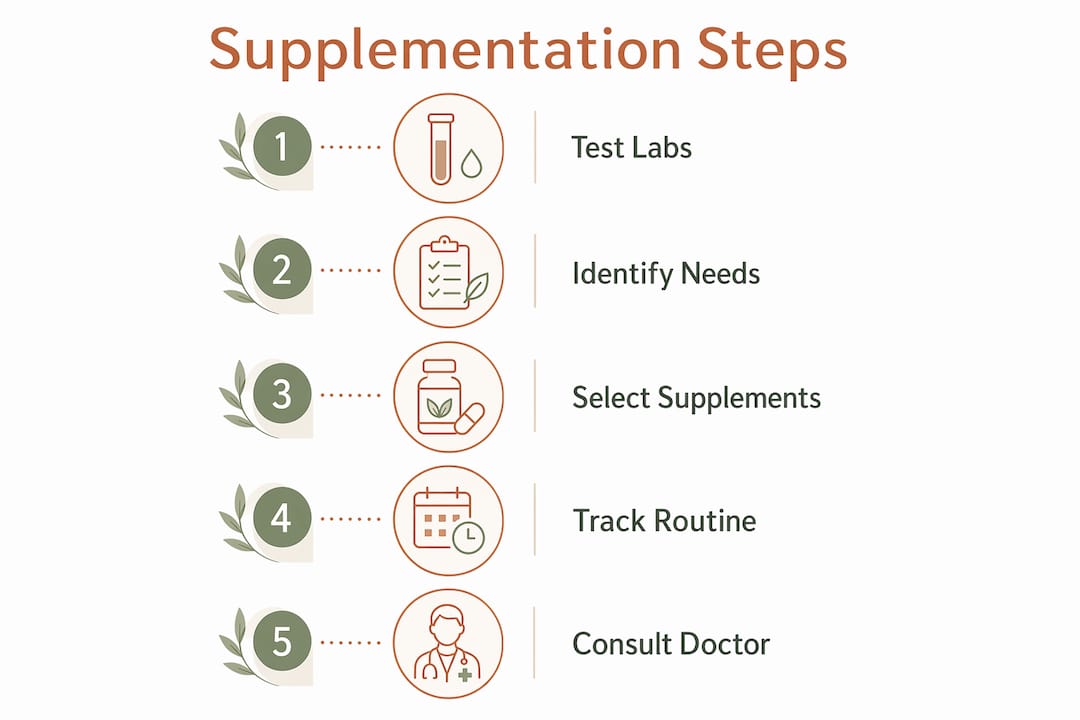
Pro Tip: Ask your doctor for a full panel that includes serum B12, 25-OH vitamin D, ferritin, and a thyroid function test. These four results tell you exactly where your gaps are.
How do you personalize your plant-based supplement plan?
A personalized supplement plan starts with lab results, not a shopping cart. The recommended tests before building your plan include a complete blood count (CBC), ferritin, a vitamin D panel, B12 markers, and a thyroid panel to assess iodine status. Each result points to a specific action, not a general one.

A registered dietitian who specializes in plant-based nutrition interprets these results in context. Your ferritin level means something different if you also have heavy menstrual periods or a history of gut inflammation. Your B12 level reads differently if you take a proton pump inhibitor, since PPIs reduce B12 absorption regardless of diet. A professional connects those dots.
Once you have your results, build your plan in this order:
- Address confirmed deficiencies first. If your ferritin is low, add iron bisglycinate before anything else. If your vitamin D is below optimal, increase your dose.
- Add the non-negotiables. B12 and vitamin D belong in every plant-based supplement routine, confirmed deficiency or not.
- Assess situational needs. Add iodine, zinc, or calcium only if your diet and test results indicate a gap.
- Adjust for season. Vitamin D needs increase in winter months when sun exposure drops. Revisit your dose each fall.
- Retest every 6–12 months. Your needs shift with diet changes, life stage, and health conditions.
Seasonal eating also affects your nutrient intake in ways that matter. A seasonal plant-based menu that rotates vegetables and legumes throughout the year naturally covers more micronutrient ground than a repetitive diet. Supplements then fill a smaller, more specific gap.
Multivitamins are not a shortcut here. Multis typically contain nutrients plant-based eaters already get in abundance, while providing insufficient B12 doses. A targeted approach costs less and works better.
Pro Tip: Track your supplement routine in a simple notes app or spreadsheet. Log what you take, when, and at what dose. This record becomes invaluable when you revisit your plan with a clinician.
What are the best practices for choosing and taking supplements safely?
Quality matters more than price when selecting plant-based supplements. Third-party testing seals from USP, NSF, or ConsumerLab confirm that a product contains what the label claims and nothing harmful. Without that verification, you are trusting marketing copy.
Timing and pairing affect how much of each supplement your body actually uses. Here are the practices that make the biggest difference:
- B12: Take it daily rather than relying on sporadic high doses. Consistent daily dosing absorbs more efficiently because the body’s intrinsic factor pathway saturates quickly at high single doses.
- Vitamin D: Take it with your largest meal of the day. Fat in food increases absorption significantly.
- Iron: Pair iron-rich foods or supplements with a vitamin C source. Vitamin C enhances iron absorption while tea and coffee consumed within an hour of eating reduce it.
- Calcium: Split doses across two meals rather than taking it all at once. The body absorbs smaller amounts more effectively.
- Iodine from seaweed: Soak or blanch seaweed before eating to reduce its iodine content to a safe level. Raw dried seaweed can contain dangerously high amounts.
For vitamin D specifically, choose vegan D3 from lichen over D2. Lichen-sourced D3 absorbs better than D2 and maintains your vegan standards, since conventional D3 comes from lanolin, a sheep byproduct.
The most common mistakes plant-based eaters make with supplements are taking too much of a single nutrient, choosing products without third-party certification, and ignoring how food and supplement timing interact. Fixing those three things alone improves your results significantly.
Pro Tip: Set a daily phone reminder at the same time each day for your B12 and vitamin D. Habit consistency matters more than perfect timing.
What additional supplements support specific plant-based health needs?
Beyond the core nutrients, certain supplements serve specific goals or life stages. They are not universal recommendations. They apply when your health status, activity level, or clinical results point to a clear need.
- Iron bisglycinate: This form causes less digestive upset than ferrous sulfate and absorbs well. Use it only when ferritin tests confirm deficiency.
- Plant-based protein powders: Pea, soy, and rice protein blends fill protein gaps on high-training days or when appetite is low. They are not necessary if your whole-food diet covers your protein target.
- Creatine: Plant-based eaters have lower muscle creatine stores than omnivores because creatine comes almost exclusively from meat. Supplementing with 3–5 grams daily supports strength and cognitive performance.
- Magnesium: Many adults fall short of magnesium regardless of diet. It supports sleep quality, muscle recovery, and blood sugar regulation. Magnesium glycinate or citrate absorbs better than oxide forms.
- Probiotics: A diverse plant diet feeds beneficial gut bacteria naturally, but a targeted probiotic can support digestive and immune health during periods of stress or after antibiotic use.
- Zinc: Take zinc supplements away from iron supplements, as the two compete for absorption. Evening dosing on an empty stomach works well for most people.
Herbal supplements and high-dose single nutrients require medical guidance before use. Fat-soluble vitamins like A, D, E, and K accumulate in tissue and can reach toxic levels with over-supplementation. Water-soluble vitamins like B12 are safer at higher doses, but that does not make unlimited dosing harmless. For a deeper look at plant-based supplement options for both wellness and fitness goals, the Nutribliss blog covers the clinical reasoning behind each category.
Key Takeaways
Effective plant-based supplementation requires B12, vitamin D, and algae-based omega-3s as non-negotiables, with all other nutrients added only after clinical testing confirms a personal gap.
| Point | Details |
|---|---|
| B12 is non-negotiable | Supplement 250 mcg daily or 2,500 mcg weekly; no plant food provides it reliably. |
| Test before you add | Blood tests for B12, vitamin D, ferritin, and thyroid function prevent both deficiency and over-supplementation. |
| Choose certified products | Look for USP, NSF, or ConsumerLab seals to confirm label accuracy and product safety. |
| Pair nutrients strategically | Take iron with vitamin C and vitamin D with a fat-containing meal to maximize absorption. |
| Avoid the multivitamin trap | Multivitamins rarely provide adequate B12 or D doses; targeted supplements outperform them for plant-based needs. |
What I’ve learned from years of watching people supplement wrong
The most common mistake I see is people reaching for a multivitamin and calling it done. It feels responsible. It is not. Multivitamins are designed for a general population that eats animal products. The B12 dose is almost always too low for someone who gets none from food, and the formula often packs in nutrients plant-based eaters already get plenty of from vegetables and legumes.
The second mistake is adding supplements without testing first. I have talked to people taking high-dose iron for months because they felt tired, only to find out their ferritin was already in the normal range. Fatigue on a plant-based diet has multiple causes. Iron is one of them. Vitamin D, B12, and poor sleep are others. Testing tells you which one you are actually dealing with.
What actually works is a short, targeted list. B12 every day. Vitamin D every day, especially from october through march if you live north of Atlanta. An algae-based omega-3 three to four times a week. Everything else gets added only when a blood test says it should. That approach is less expensive, less confusing, and more effective than a cabinet full of supplements you are not sure you need.
I also want to push back on the idea that a plant-based diet is inherently deficient. It is not. It requires more attention to specific nutrients, but so does every dietary pattern. The goal is not to compensate for a flawed diet. The goal is to support an already strong one. Use supplements as a tool, not a crutch. Pair them with nutrient-dense whole foods and you will feel the difference within weeks.
Track what you take. Retest every six to twelve months. Adjust when the data says to. That is the whole system. And if you want a shorthand for where to start, #nutribliss covers the essentials without the noise.
— GAURAV
How Nutribliss supports your plant-based nutrition goals
Plant-based eaters need supplements that are actually vegan, clinically dosed, and third-party verified. Nutribliss builds its product line around exactly those standards.
The Nutribliss supplement collection includes vegan-friendly vitamins, minerals, and performance supplements designed for people who take their nutrition seriously. From B12 and vitamin D to algae-based omega-3s and plant protein, each product is grounded in the same evidence this article covers. The science behind Nutribliss superfoods is publicly available for anyone who wants to read the research before buying. Browse the full range and build the short, targeted supplement stack your plant-based diet actually needs.
FAQ
What supplements are essential on a plant-based diet?
Vitamin B12, vitamin D, and algae-based omega-3s are the three supplements every plant-based eater needs. Iodine, iron, calcium, and zinc may be needed depending on individual blood test results.
How much B12 should a vegan take daily?
The standard maintenance dose is 250 mcg daily. A weekly high-dose option of 2,500 mcg also works, but daily dosing absorbs more consistently due to how the body processes B12.
Do I need to test my blood before taking supplements?
Yes. Tests for B12, vitamin D, ferritin, and thyroid function confirm where your actual gaps are and prevent over-supplementation of nutrients like iron, which can cause harm at excess levels.
Is vegan D3 better than D2?
Vegan D3 sourced from lichen absorbs more effectively than D2 and maintains plant-based standards. It is the preferred form for anyone on a plant-based diet who needs to supplement vitamin D.
Can plant protein powders replace whole food protein?
Plant protein powders like pea, soy, or rice blends supplement protein intake on high-demand days but do not replace whole food sources. Use them as a backup, not a primary strategy.