

DPA (docosapentaenoic acid) supports cardiovascular health and helps resolve inflammation, mainly through its role feeding specialized pro-resolving mediators and limiting platelet clumping. The strongest evidence comes from animal and cell studies; human randomized trials on purified DPA remain scarce. Most people already get some DPA through standard fish oil, and total marine omega-3 intake still matters more than isolating this one fatty acid.
TL;DR:
- Human evidence on DPA mainly shows correlations with lower triglycerides and inflammation markers, but lacks large randomized trials for definitive effects.
- DPA supplementation in animals reduces cholesterol levels and improves blood vessel function, but human data translate these findings more cautiously.
- Most people get DPA through regular fish oil and fatty fish; specialty oils like seal or krill oil have higher DPA content but are less common.
- DPA acts as a metabolic bridge between EPA and DHA, with unique stability and tissue retention properties distinct from other omega-3s.
- For health benefits, focusing on total marine omega-3 intake with high-quality sources remains more important than isolating DPA.
Table of Contents
- What Are the DPA Omega-3 Benefits and How Do They Work?
- What Does Human Research Actually Show About DPA?
- DPA’s Effects on Triglycerides, Cholesterol, and Vascular Function
- Where Does DPA Omega-3 Come From in Food?
- DHA vs DPA Omega-3: What Actually Separates Them?
- How Much DPA Should You Take, and Is It Safe?
- Does DPA Omega-3 Support Brain Health and Cognition?
- Can DPA Omega-3 Help Regulate Immune Function?
- Does DPA Support Joint and Musculoskeletal Health?
- Could DPA Affect Mood and Mental Health?
- How Much DPA Do You Need Daily?
- The Publisher’s Take on DPA Omega-3 Research
- Get More From Your Omega-3 Routine With Nutribliss
- Sources
What Are the DPA Omega-3 Benefits and How Do They Work?
DPA sits between EPA and DHA on the omega-3 metabolic pathway, and that in-between position is exactly why it does what it does. Once your body absorbs it, DPA gets built into cell membranes throughout the vascular system, immune cells, and connective tissue. From there, it feeds into several biological processes that matter for long-term health.
The clearest mechanism involves specialized pro-resolving mediators, or SPMs. These are lipid-derived signaling molecules that actively shut down inflammation rather than just blocking it. DPA serves as a direct precursor for a subset of these SPMs, including certain resolvins and protectins, and preclinical research has mapped out this conversion pathway in detail. A review of long-chain omega-3 effects on the brain identifies DPA-derived SPMs as biologically active in preclinical models, with pro-resolving effects distinct from what EPA or DHA alone produce.
Beyond inflammation resolution, DPA appears to interfere with platelet aggregation, the clumping process that drives clot formation. Animal and in vitro studies also point to a role in endothelial repair. The cells lining blood vessels migrate and regenerate faster in the presence of DPA in several experimental models, which matters because a damaged endothelium is one of the earliest steps toward atherosclerosis.
One quirk worth knowing: DPA resists oxidation better than EPA and DHA and tends to stay in tissue longer once deposited. That relative stability may explain why circulating DPA levels correlate so consistently with health markers across observational studies, even though intake is comparatively small.
Key mechanistic actions identified in preclinical research:
- Serves as a substrate for resolvins and protectins involved in shutting down chronic inflammation
- Reduces platelet aggregation in cell and animal models, a factor tied to clot risk
- Promotes endothelial cell migration and repair in vascular injury models
- Shows greater oxidative stability than EPA or DHA, supporting longer tissue retention
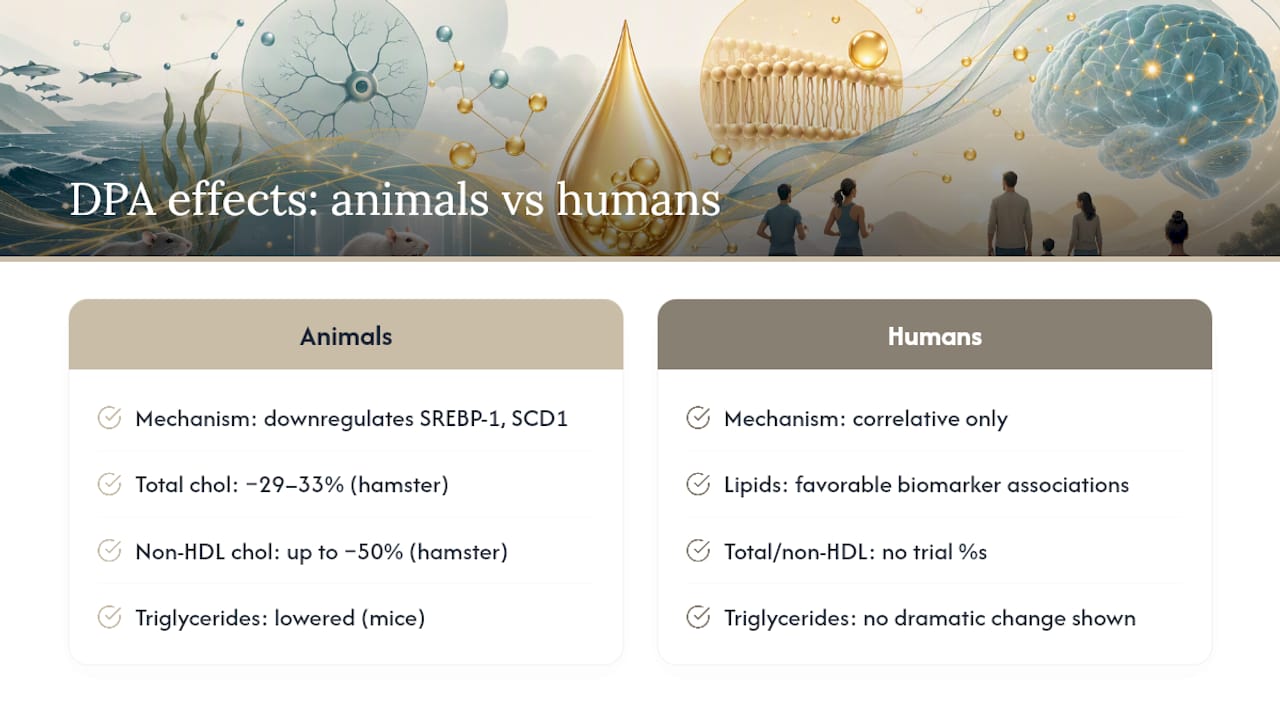
Statistic to know: Animal studies on DPA supplementation report total cholesterol reductions of 29 to 33 percent and non-HDL cholesterol reductions of up to 50 percent in hamster models fed a high-cholesterol diet. Those numbers come from controlled animal experiments, not human trials, so they signal a mechanism worth studying, not a result you should expect on a lipid panel.
What Does Human Research Actually Show About DPA?
Here’s where the story gets more careful. Most human evidence on DPA comes from observational biomarker studies, not controlled trials, and that distinction changes how confidently you can interpret the findings.
Cohort studies measuring DPA levels in red blood cells have found a consistent pattern: people with higher circulating DPA tend to have lower triglycerides, lower C-reactive protein, and in some cohorts, lower cardiovascular disease risk. Research comparing dietary DPA, DHA, and EPA effects on plasma lipids found DPA independently associated with favorable lipid and inflammatory profiles, separate from EPA and DHA’s contributions.
That inverse relationship between DPA and CRP shows up often enough in the literature that researchers treat it as a genuine signal, though nobody has proven DPA causes the drop in inflammation rather than simply tracking alongside it.
The intervention side of the evidence base is thinner. A human trial using near-pure DPA supplementation found something unexpected and mechanistically important: DPA supplementation raised not just DPA levels but also plasma EPA and DHA. This finding, documented in a review of DPA’s dietary sources and nutritional role, confirmed for the first time in humans that DPA retroconverts to EPA and elongates to DHA. That single trial remains one of the few purified-DPA human studies on record, and its sample size was small, which limits how far you can generalize the biomarker shifts it produced.
Attribution of specific benefits to DPA alone has been complicated for years because researchers historically studied omega-3s as a class rather than isolating EPA, DPA, and DHA separately. DPA-specific randomized trials remain limited, which makes clean causal claims about DPA’s independent effects genuinely hard to make with confidence.
Confounding is the recurring problem across this research. DPA rarely appears alone in food or supplements. Fatty fish, fish oil capsules, and krill oil all deliver DPA alongside EPA and DHA in varying ratios, so when a cohort study finds a benefit tied to DPA levels, isolating DPA’s independent contribution from its traveling companions is difficult.
What separates strong from weak evidence in the DPA research base:
- Animal and in vitro studies show mechanistic plausibility but don’t establish human effect sizes
- Observational cohort data show real correlations between DPA biomarkers and health outcomes, without proving causation
- The one notable purified-DPA human trial demonstrated retroconversion but was too small to establish clinical endpoints
- No large randomized controlled trial has tested purified DPA against hard cardiovascular outcomes in humans
A broader review evaluating individual long-chain omega-3 fatty acids concluded that while EPA and DHA carry stronger evidence for cardiovascular endpoints, DPA likely contributes complementary benefits. The same review flagged the absence of dedicated randomized trials on purified DPA as the field’s biggest open question.
DPA’s Effects on Triglycerides, Cholesterol, and Vascular Function
Lipid metabolism is where DPA’s animal data looks most impressive, and where the translation gap to humans is widest.
In mice, a DPA-rich oil diet lowered plasma triglycerides and total cholesterol while downregulating SREBP-1 and SCD1, two genes central to hepatic fatty acid synthesis. That gene-expression data gives researchers a plausible mechanism: DPA may work partly by turning down the liver’s own lipid-manufacturing machinery, not just by displacing other fats in the diet.
The hamster studies referenced earlier showed similarly striking numbers, with DPA supplementation cutting total cholesterol by roughly 29 to 33 percent and non-HDL cholesterol by up to 50 percent, alongside measurable improvements in aortic function. Improved aortic function in these models means the blood vessel tissue itself responded better to vasodilation signals after DPA supplementation, a marker tied to lower atherosclerosis risk.
Human data doesn’t offer numbers this dramatic, and that gap matters. Observational studies do link higher circulating DPA to more favorable carotid artery measurements and lower markers associated with atherosclerosis progression, but these are correlations drawn from population data, not results from a controlled feeding trial. Rodent lipid metabolism runs faster and differently than human metabolism, so a 30 to 50 percent shift in a hamster is a mechanistic clue about DPA’s biological activity, not a preview of what a blood panel would show after months of supplementation in a person.
The honest summary: DPA has real, reproducible effects on lipid genes and vascular tissue in animal models, and human biomarker data points in the same direction. Nobody has yet run the large human trial needed to put a confident number on it.
Where Does DPA Omega-3 Come From in Food?
DPA shows up in a narrower set of foods than EPA and DHA, which is part of why most people have never heard of it despite eating it regularly.
Primary dietary sources of DPA:
- Fatty fish such as herring, mackerel, and salmon, though usually in smaller amounts than EPA or DHA
- Krill and krill oil, which carry a distinct omega-3 profile worth understanding if you’re evaluating krill oil supplements
- Seal oil and other marine mammal oils, which carry unusually high DPA-to-EPA ratios but limited commercial availability
- Grass-fed ruminant meat and dairy, where DPA appears at levels tied to the animal’s pasture-based diet
- Human breast milk, where DPA concentrations run comparable to DHA
Most standard fish oil capsules contain DPA even when the label doesn’t mention it. A typical 1 gram fish oil softgel formulated for EPA and DHA may still carry somewhere in the range of 20 to 50 milligrams of DPA as a background component, according to industry guidance on how DPA differs from EPA and DHA. Labels rarely break this out separately because DPA wasn’t historically considered a headline ingredient.
If you’re eating fatty fish two to three times a week, you’re already getting meaningful background DPA alongside EPA and DHA. For anyone specifically chasing higher DPA ratios, specialty oils like seal oil deliver more per serving, but they’re far less available than standard fish oil on store shelves. For most shoppers, a quality marine omega-3 product covers DPA as a byproduct of covering EPA and DHA well.
DHA vs DPA Omega-3: What Actually Separates Them?
EPA, DPA, and DHA get lumped together as “omega-3s” so often that people miss how differently they behave once inside the body.
The most important distinction is that DPA functions as a metabolic bridge rather than a dead-end nutrient. Research on long-chain PUFA metabolism describes DPA as a reservoir that converts forward into DHA or retroconverts back into EPA depending on the body’s needs at a given moment. Neither EPA nor DHA does this two-way conversion job the same way.
How the three fatty acids diverge in practice:
- DPA acts bidirectionally between EPA and DHA, while EPA and DHA each follow more fixed downstream roles
- DHA concentrates heavily in brain and retinal tissue and has documented links to arrhythmia risk and cognitive outcomes that DPA and EPA don’t replicate to the same degree
- EPA shows stronger associations with reduced nonfatal cardiovascular events in some intervention data, a benefit not yet demonstrated independently for DPA
- DPA shows greater tissue retention and oxidative stability, meaning it may accumulate differently over time even at lower intake levels
For anyone deciding how to shop for a brain-focused omega-3 supplement, this distinction matters. DHA’s cognitive evidence base is deeper and more specific than DPA’s. If cognitive support is the primary goal, DHA content should drive the decision, with DPA riding along as a secondary contributor rather than the main target.
The practical takeaway holds regardless of which fatty acid you’re most curious about: unless you have a specific reason to chase high-DPA products, prioritizing total marine omega-3 intake, quality sourcing, and a sensible EPA-to-DHA ratio will serve you better than trying to isolate DPA on its own.
How Much DPA Should You Take, and Is It Safe?
No formal dosing guideline exists specifically for DPA, which is a direct consequence of how little standalone research has been done on it. Every dosing recommendation you’ll find follows total marine omega-3 intake targets instead, treating EPA, DPA, and DHA together rather than setting a DPA-specific number.
That said, safety considerations that apply to marine omega-3s broadly apply to DPA too. High-dose fish oil, generally above 3 grams of combined EPA and DHA per day, has been associated with an increased bleeding risk. Anyone on anticoagulant or antiplatelet medication should talk to a clinician before increasing omega-3 intake, and most surgeons recommend pausing high-dose fish oil in the weeks before a scheduled procedure.
Safety and quality checklist before increasing your intake:
- Confirm with your doctor if you take blood thinners, aspirin, or have a bleeding disorder, since DPA’s antiplatelet activity adds to that risk profile
- Choose products with third-party testing for oxidation and heavy metal or PCB contamination, since fish oil degrades faster than most people realize
- Watch total combined EPA, DPA, and DHA intake rather than trying to isolate DPA milligrams, since no separate upper limit has been established
- If you’re scheduled for surgery, follow your surgeon’s guidance on pausing omega-3 supplementation beforehand
Pro Tip: Check the supplement facts panel for a total omega-3 figure, not just EPA and DHA. If the sum of listed fatty acids doesn’t match the total, the difference is often DPA and other minor omega-3s hiding in plain sight. For more on evaluating a product’s label, this guide to choosing a quality omega-3 supplement walks through what to check before buying.
Does DPA Omega-3 Support Brain Health and Cognition?
DPA’s cognitive story is real but secondary to DHA’s. DHA dominates brain tissue composition, making up a large share of the fatty acids in neuronal membranes, and most of the direct cognitive research centers there. DPA plays a more supporting role, largely through the retroconversion pathway that lets it top up DHA and EPA stores when dietary intake of those two runs low.
Some research on long-chain omega-3s and the brain has found that DPA contributes independent anti-inflammatory activity within neural tissue, separate from its role as a DHA precursor. Neuroinflammation is increasingly tied to cognitive decline, and if DPA-derived SPMs act locally within brain tissue the way they do in vascular tissue, that would give DPA a modest standalone cognitive relevance beyond simply feeding the DHA pool.
The honest caveat: this is still mechanistic and preclinical territory. No human trial has isolated DPA’s cognitive effects apart from EPA and DHA’s. If cognitive protection is your main goal, the evidence for DHA specifically is considerably more developed, and DPA should be viewed as a complementary piece of the omega-3 puzzle rather than a targeted cognitive intervention on its own. Getting adequate DPA alongside DHA may still matter, simply because the two fatty acids appear to work as a connected system rather than in isolation.
Can DPA Omega-3 Help Regulate Immune Function?
DPA’s immune-modulating role traces directly back to its function as an SPM precursor. Resolvins and protectins derived from DPA don’t suppress the immune system the way many anti-inflammatory drugs do. Instead, they help the immune response wind down naturally once it’s done its job, a process researchers call inflammation resolution rather than inflammation suppression.
That distinction has practical relevance for chronic, low-grade inflammation, the kind linked to metabolic syndrome, cardiovascular disease, and aging generally. If your immune system struggles to fully “stand down” after fighting off minor threats, chronic inflammatory signaling can linger, and SPM production appears to be one of the body’s built-in shutoff mechanisms.
The inverse correlation between circulating DPA and C-reactive protein, a standard blood marker of systemic inflammation, shows up consistently enough across cohort studies that it’s treated as one of the more reliable human signals in DPA research, even though it’s observational rather than interventional. Higher DPA tracks with lower CRP across multiple population studies, which is consistent with DPA supporting the resolution side of immune activity rather than blunting the immune response itself.
None of this means DPA acts as a broad immune booster or suppressant. Its documented role is narrower and more specific: contributing raw material for the signaling molecules that help immune responses conclude in an orderly way rather than smoldering into chronic low-grade inflammation.
Does DPA Support Joint and Musculoskeletal Health?
Joint health sits downstream of the same inflammation-resolution mechanisms that drive DPA’s cardiovascular effects. Cartilage breakdown and joint discomfort in conditions like osteoarthritis are heavily influenced by local inflammatory signaling, and the SPMs that DPA helps produce operate in joint tissue the same way they do elsewhere in the body.
Direct human trials testing DPA specifically for joint outcomes are essentially nonexistent, which means this section carries more inference than the cardiovascular sections above. What exists is mechanistic reasoning built on solid ground: if DPA-derived resolvins reduce inflammatory signaling in vascular and neural tissue, there’s biological plausibility for a similar effect in joint tissue, where chronic low-grade inflammation drives much of the discomfort associated with aging joints.
Omega-3s as a class, including EPA and DHA, have a longer track record of studied benefit for joint stiffness and inflammatory markers in conditions like rheumatoid arthritis. DPA likely rides along as part of that broader anti-inflammatory omega-3 effect rather than offering a documented, separate joint benefit of its own. If joint support is your primary reason for considering marine omega-3s, treat DPA as a bonus within a well-rounded fish oil or krill oil product rather than a reason to seek out a DPA-specific formula.
Could DPA Affect Mood and Mental Health?
Mental health research on omega-3s has focused overwhelmingly on EPA and DHA, and DPA’s specific contribution here is the least-studied piece of this entire article. What’s known comes almost entirely from its shared metabolic pathway with EPA, which has a more established, though still mixed, evidence base for supporting mood regulation in some clinical populations.
Because DPA retroconverts to EPA in the body, adequate DPA intake theoretically supports whatever mood-related benefits EPA provides, simply by keeping the EPA pool topped up. Inflammation has also been increasingly linked to depressive symptoms in a subset of patients, and DPA’s role in inflammation resolution offers another plausible, if indirect, connection to mood outcomes.
No trial has tested purified DPA against mood or mental health endpoints specifically. Anyone using omega-3 supplementation to support mood should think of DPA as part of the overall marine omega-3 profile contributing to the outcome, not as an ingredient with its own dedicated mental health evidence. This is an area where the honest answer is that we simply don’t have enough dedicated research yet to say more.
How Much DPA Do You Need Daily?
There’s no established recommended daily intake for DPA specifically, and no health authority has issued a DPA-only target the way some have for EPA and DHA combined. Every current guideline treats DPA as part of total long-chain omega-3 intake instead.
In practice, this means the most useful approach is tracking your combined EPA, DPA, and DHA intake from food and supplements rather than searching for a DPA-specific product or worrying about hitting an exact DPA number. Eating fatty fish two to three times weekly, or supplementing with a quality fish oil or krill oil product, will typically deliver background DPA in the tens of milligrams per serving alongside your EPA and DHA.
For most health-conscious adults without a specific medical reason to chase higher DPA levels, that background exposure through a well-formulated marine omega-3 supplement is sufficient. The exception is someone specifically interested in maximizing DPA ratio, who might look toward specialty seal oil or certain krill oil formulations that carry a higher DPA-to-EPA ratio than standard fish oil, understanding that availability and cost both run higher for these niche products. There’s no evidence yet suggesting a separate upper intake limit for DPA distinct from the general marine omega-3 safety guidance already covered above.
The Publisher’s Take on DPA Omega-3 Research
The gap between what DPA’s mechanistic data promises and what human trials have actually confirmed is wider than most supplement marketing admits, and that gap is exactly why Nutribliss approaches ingredient claims the way it does. When the animal data on a compound looks this compelling, the temptation is to round up. We’d rather round down and tell you plainly where the human evidence stops.
That’s the standard we hold formulation and labeling decisions to across the board, whether the conversation is about DPA, DHA, or any other actively researched ingredient. Readers who want to see that transparency in practice can check ingredient panels and testing information directly on product pages. It’s a small thing, but it’s the difference between selling a story and selling a supplement. #nutribliss
— GAURAV
Get More From Your Omega-3 Routine With Nutribliss
Chasing a single fatty acid like DPA in isolation is the wrong strategy for almost every health-conscious shopper. What actually moves the needle is consistent, well-sourced marine omega-3 intake, backed by ingredient transparency you can verify rather than take on faith. That’s the gap Nutribliss aims to close.

Nutribliss builds its supplement lineup, including electrolyte formulas and recovery-focused capsules, around detailed ingredient disclosure rather than vague proprietary blends. If sleep quality is part of your broader wellness picture alongside omega-3 intake, since poor sleep and chronic inflammation tend to feed each other, the sleep formula supplement is worth a look for the same reason: full-disclosure formulation, no guessing at what you’re actually taking. Browse the current lineup at Nutribliss and check the ingredient panel on any product page before you buy, so you know exactly what you’re adding to your routine and why it’s there.
This article is general information, not a substitute for advice from a qualified doctor. Consult a qualified healthcare professional about your own circumstances before acting on anything here.
Sources
- DPA n-3, DPA n-6 and DHA improve lipoprotein profiles and aortic function in hamsters fed a high cholesterol diet - PubMed
- Long-chain omega-3 fatty acids and the brain: review of independent and shared effects of EPA, DPA and DHA - PMC