

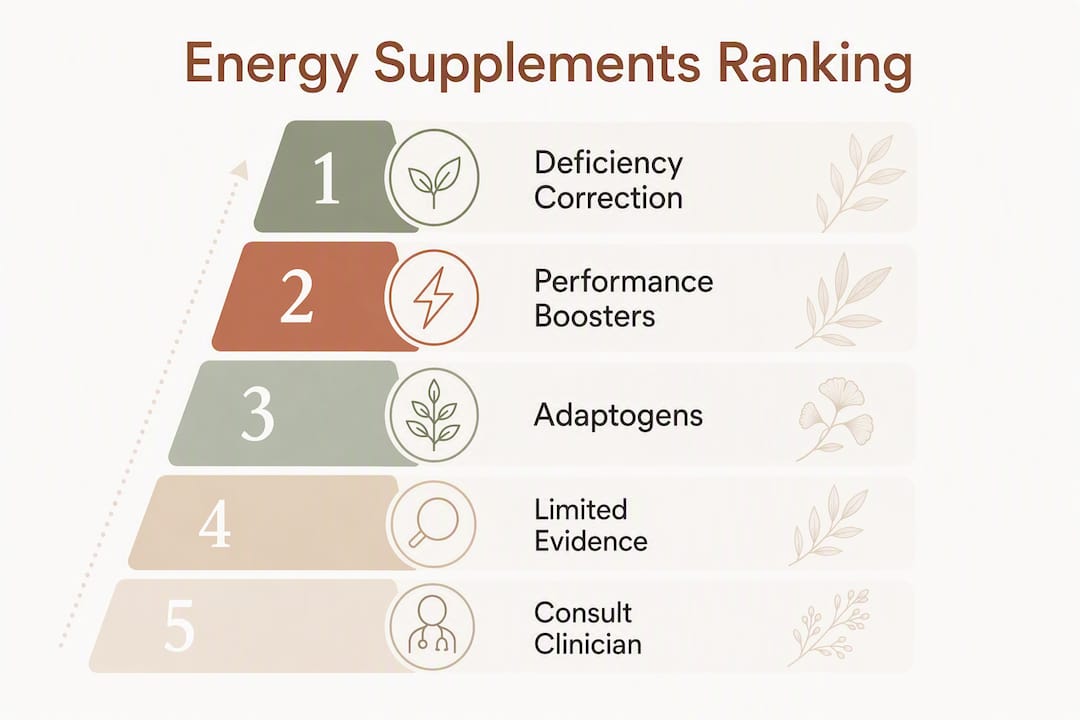
The supplements with the strongest clinical backing for energy are iron, vitamin B12 and the broader B-complex, vitamin D, magnesium, zinc, CoQ10, creatine, and a handful of well-studied adaptogens including ashwagandha and ginseng. The critical caveat: most of these work reliably only when you’re correcting a documented deficiency. CoQ10 and creatine are the notable exceptions, showing measurable benefits in some people even without a diagnosed shortfall. Before spending money on any of them, get tested.
The single most important rule in supplementation: a nutrient that restores depleted levels feels like a revelation; the same nutrient taken when levels are already normal often does nothing at all.
Who benefits most from targeted energy supplements:
- Menstruating and pregnant people (iron deficiency anemia is especially prevalent in these groups)
- Adults over 50 (B12 absorption declines with age; vitamin D insufficiency is widespread)
- People on statins (CoQ10 depletion is a documented side effect)
- Vegans and strict vegetarians (B12 comes almost exclusively from animal products)
- Anyone with limited sun exposure or a diet low in fatty fish (vitamin D)
- Athletes doing high-intensity, short-burst training (creatine)
If fatigue has been persistent for more than a few weeks, see a clinician before reaching for supplements. Chronic fatigue is often multifactorial and warrants a full clinical evaluation, not just a trip to the supplement aisle.
Table of Contents
- How do supplements actually influence your energy levels?
- Which vitamins and minerals most reliably improve energy?
- CoQ10 and creatine: when do they actually help?
- What does the evidence say about adaptogens and botanicals?
- How to figure out whether a supplement will actually help you
- Safety, side effects, and interactions you need to know
- Key Takeaways
- The case for testing before buying
- Nutribliss supports evidence-based supplementation
- Further reading and primary sources
How do supplements actually influence your energy levels?
Vitamins don’t create energy. They act as cofactors and coenzymes in the biochemical pathways that convert food into ATP, the molecule your cells run on. When a key cofactor is missing, those pathways slow down or stall. Restoring it doesn’t produce a caffeine-like jolt; it restores normal metabolic efficiency. That distinction matters for setting realistic expectations.

The biochemical evidence is clear on the pathway: dietary carbohydrates, fats, and proteins enter the mitochondria, where B vitamins (particularly B1, B2, B3, B5, and B12), magnesium, and iron serve as essential cofactors at multiple steps in the Krebs cycle and the electron transport chain. Remove any one of them and ATP output drops.
Physical energy and mental energy draw on different systems. Physical fatigue is largely about muscle oxygenation and ATP availability, which is why iron (oxygen transport via hemoglobin) and creatine (phosphocreatine resynthesis) show up strongly in that domain. Mental fatigue involves neurotransmitter synthesis, cerebral blood flow, and neuroinflammation, which is where adaptogens and compounds like CoQ10 show more directional evidence.
What this means practically: if your fatigue is primarily cognitive (brain fog, poor focus, low motivation), the nutrient profile worth investigating is different from fatigue that shows up as muscle weakness or breathlessness on stairs.
Pro Tip: Before starting any supplement, ask your clinician for a baseline panel. Without it, you’re guessing which pathway is actually bottlenecked, and you may spend months on the wrong nutrient.
Which vitamins and minerals most reliably improve energy?
These five nutrients have the deepest clinical evidence for energy-related outcomes, and each one has a clear testing threshold that tells you whether supplementation is likely to help you.
Vitamin B12 and the B-complex
B12 deficiency is one of the most common and most correctable causes of fatigue, particularly in older adults and vegans. Correcting a confirmed deficiency typically resolves fatigue within a few weeks. The broader B-complex matters too: B1, B2, B3, B5, and B6 all serve as coenzymes in energy metabolism, and the narrative review in Nutrients identifies nine B vitamins with recognized roles in energy-related outcomes. For people with absorption issues (common after age 50 or with certain GI conditions), sublingual or injectable B12 bypasses the gut and tends to work faster than standard oral tablets.

Vitamin D
Vitamin D insufficiency is widespread in the U.S., and the threshold for energy-related benefit is fairly well defined: levels below 20 ng/mL on a serum 25-hydroxyvitamin D test show the clearest improvement when corrected. D3 (cholecalciferol) raises blood levels more effectively than D2. Expect 8–12 weeks of consistent supplementation before retesting.
Iron
Iron deficiency anemia is especially common in menstruating and pregnant people and is one of the most direct causes of fatigue, since iron is central to hemoglobin’s oxygen-carrying capacity. The test to order is serum ferritin plus a complete blood count (CBC). Do not supplement iron without confirmed deficiency. Taking iron when levels are already adequate can cause iron overload, which damages the liver and heart over time.
Magnesium
About 48% of U.S. adults fail to meet magnesium intake recommendations from food alone. Magnesium is involved in over 300 enzymatic reactions, including ATP synthesis. Insufficiency often presents as muscle fatigue, poor sleep, and low energy. Magnesium glycinate and magnesium malate are generally better tolerated than magnesium oxide, which has poor bioavailability.
Zinc
Zinc plays a supporting role in energy metabolism and immune function. Deficiency is more common in people with restricted diets, GI malabsorption conditions, or high alcohol intake. The evidence for zinc supplementation improving energy in non-deficient people is thin; the benefit is largely deficiency-correction.
| Nutrient | Key blood test | Deficiency threshold | Commonly studied dose range | Typical timeline to improvement |
|---|---|---|---|---|
| Vitamin B12 | Serum B12 | Below 200 pg/mL | — | 4–8 weeks |
| Vitamin D | Serum 25-OH vitamin D | Below 20 ng/mL | — | 8–12 weeks |
| Iron | Serum ferritin + CBC | Ferritin below 12 ng/mL | Clinician-directed | 4–12 weeks |
| Magnesium | Serum magnesium | — | 200–300 mg/day | 4–8 weeks |
| Zinc | Serum zinc | — | 8–40 mg/day | 4–8 weeks |
Testing callout: A standard panel for energy-related deficiencies should include serum ferritin, CBC, serum B12, serum 25-hydroxyvitamin D, and serum magnesium where clinically indicated. Most primary care providers can order all of these in a single visit. For a deeper look at personalizing your supplement plan around these results, the testing workflow matters as much as the nutrients themselves.
Common dietary sources worth knowing:
- B12: beef, salmon, eggs, dairy, fortified cereals
- Vitamin D: fatty fish (salmon, mackerel), fortified milk, egg yolks
- Iron: red meat, lentils, spinach (pair with vitamin C to improve absorption)
- Magnesium: leafy greens, almonds, pumpkin seeds, dark chocolate
- Zinc: oysters, beef, pumpkin seeds, chickpeas
CoQ10 and creatine: when do they actually help?
These two nutrients stand apart from the deficiency-correction model. Both have evidence for energy-related benefits in people who aren’t classically deficient, though the mechanisms and use cases are quite different.
Coenzyme Q10 (CoQ10)
CoQ10 is produced naturally in the body and plays a direct role in mitochondrial ATP synthesis. Production declines with age, and statin medications are known to reduce CoQ10 levels as a side effect of blocking the same cholesterol pathway that produces it. Meta-analyses report statistically significant reductions in fatigue at 200–300 mg/day over three or more months in several trials, particularly in middle-aged adults and statin users. A 2022 systematic review and meta-analysis found CoQ10 significantly reduced fatigue scores versus placebo across diverse participant groups. The PMC scoping review also identifies CoQ10 as a key compound for supporting mitochondrial energy production and reducing oxidative stress.
For statin users specifically: the interaction between statins and CoQ10 depletion is well-documented. If you’re on a statin and experiencing unexplained muscle fatigue or weakness, CoQ10 supplementation is worth discussing with your prescriber before attributing the symptom to anything else.
Ubiquinol (the reduced form of CoQ10) tends to show better absorption than ubiquinone, particularly in older adults. Typical dosing in trials runs 100–300 mg/day, with benefits generally appearing after 8–12 weeks of consistent use.
Creatine
Creatine is one of the most thoroughly studied dietary supplements for physical performance. It helps regenerate phosphocreatine stores in muscle, which directly fuels short-burst, high-intensity activity. The evidence is strongest for repeated efforts lasting up to about 2.5 minutes, such as sprinting, weightlifting, and interval training. It has little value for endurance activities like distance running or cycling.
For physical energy and natural stamina support, creatine monohydrate is the most studied and widely recommended form. A common protocol in trials: a loading phase of 20 g/day (split into four doses) for 5–7 days, followed by a maintenance dose of 3–5 g/day. Some people skip the loading phase and go straight to 3–5 g/day, which achieves similar saturation over about 3–4 weeks.
Who should consider each:
- CoQ10: adults over 40, statin users, people with unexplained fatigue not explained by deficiency
- Creatine: people doing high-intensity exercise who want faster recovery and better output per session
| Supplement | Commonly studied dose | Trial duration for benefit | Primary use case |
|---|---|---|---|
| CoQ10 | 100–300 mg/day | 8–12 weeks | Fatigue reduction, mitochondrial support |
| Creatine monohydrate | 3–5 g/day (maintenance) | 4–8 weeks | High-intensity physical performance |
What does the evidence say about adaptogens and botanicals?
Several botanicals show directional benefits for mental energy in clinical trials, but the evidence is more heterogeneous than it is for vitamins and minerals. Effect sizes vary, trial quality ranges widely, and product standardization is inconsistent across brands.
A 2024 scoping review of randomized controlled trials evaluated 16 botanical ingredients for mental energy outcomes. Of those, 11 were identified as promising for further study, with specific ingredients showing directional benefits in at least 20% of outcomes measured. The domains where benefits appeared most consistently were mood, subjective energy, and cognitive performance, not physical stamina.
Ingredients with the most promising signals from that review:
- Ashwagandha: best evidence for reducing perceived stress and fatigue; some trials show improvements in sleep quality, which indirectly supports daytime energy
- Ginseng (Panax): directional benefits for cognitive performance and subjective energy in some trials; effect sizes are modest
- Green tea extract: the catechins (particularly EGCG) and moderate caffeine content both contribute; the combination appears to support metabolism and cognitive function
- Lion’s mane: emerging evidence for cognitive support and nerve growth factor stimulation; fewer large trials than the others
- Maca: some evidence for mood and energy in perimenopausal women; limited data in other populations
Ginkgo biloba is frequently cited in energy supplement discussions, but its primary evidence base is in cerebral blood flow and memory in older adults, not general energy enhancement. It’s worth knowing the distinction before choosing it for fatigue.
Statistic callout: Of the 16 botanical ingredients evaluated in the 2024 scoping review, 11 were identified as promising for further study, with specific ingredients showing directional benefits in at least 20% of outcomes measured in randomized controlled trials.
Safety and quality notes:
- Caffeine content varies significantly across green tea and guarana extracts; check labels if you’re sensitive
- Ashwagandha has rare reports of liver toxicity at high doses; stick to standardized extracts at studied doses (typically 300–600 mg/day of KSM-66 or Sensoril)
- Product quality is inconsistent; third-party tested products are worth the premium
- Onset for most adaptogens is 4–8 weeks of consistent use; don’t judge effectiveness after a week
| Botanical | Primary evidence domain | Typical trial dose | Onset timeline |
|---|---|---|---|
| Ashwagandha | Stress, fatigue, sleep | 300–600 mg/day | 4–8 weeks |
| Panax ginseng | Cognitive performance, energy | 200–300 mg/day | 4–8 weeks |
| Green tea extract | Metabolism, cognition | 100–300 mg/day | 2–6 weeks |
| Lion’s mane | Cognitive support | 3–5 g/day | 4–12 weeks |
| Maca | Mood, energy (perimenopausal) | — | 6–12 weeks |
How to figure out whether a supplement will actually help you
The most efficient path to better energy through supplementation is a structured, evidence-first workflow, not a stack of general-purpose capsules. Here’s how to approach it:
- Identify your symptom pattern. Is the fatigue physical (muscle weakness, breathlessness, poor exercise recovery), mental (brain fog, poor focus, low motivation), or both? This shapes which tests to prioritize.
- Order targeted blood tests. A baseline panel for energy-related deficiencies should include: serum ferritin, CBC, serum B12, serum 25-hydroxyvitamin D, and serum magnesium where clinically indicated. Your primary care provider can order all of these.
- Correct confirmed deficiencies first. Don’t layer adaptogens or CoQ10 on top of an unaddressed iron or B12 deficiency. Fix the foundation before adding anything else.
- Allow adequate time before judging results. Iron and B12 correction typically shows improvement within 4–8 weeks. Vitamin D takes 8–12 weeks. CoQ10 and adaptogens often require 2–3 months of consistent use.
- Re-evaluate with a follow-up test. Retest the deficient marker after the recommended correction period. This confirms the supplement is working and tells you whether the dose needs adjusting.
Labs to bring to your clinician:
- Serum ferritin (iron stores)
- Complete blood count (CBC)
- Serum B12
- Serum 25-hydroxyvitamin D
- Serum magnesium (if muscle fatigue or sleep issues are prominent)
- Thyroid panel (TSH) if fatigue is persistent and unexplained
Pro Tip: Bring a written list to your appointment: current medications (including over-the-counter), your typical daily diet, and your menstrual history if relevant. This gives your clinician the context to interpret your results accurately and recommend the right correction protocol. For a deeper look at what causes fatigue and where supplements fit, that context is often the difference between a targeted fix and months of trial and error.
Safety, side effects, and interactions you need to know
Supplements can be safe and effective when targeted, but several carry real risks when used without testing or in combination with certain medications.
The core safety principle: more is not better. Iron overload, vitamin D toxicity, and herb-drug interactions are all real clinical events, not theoretical concerns. Targeted use based on confirmed need is the safest and most effective approach.
Key drug-supplement interactions:
- Statins and CoQ10: statins deplete CoQ10; supplementing is generally considered safe and may reduce statin-related muscle symptoms, but discuss with your prescriber
- Iron and antibiotics: iron can reduce the absorption of tetracyclines and fluoroquinolones; separate doses by at least 2 hours
- Iron and levothyroxine: iron significantly reduces thyroid medication absorption; take levothyroxine at least 4 hours apart from iron supplements
- Ashwagandha and thyroid medications: ashwagandha may increase thyroid hormone levels; people on thyroid medication should monitor levels if using it
- Ginkgo and blood thinners: ginkgo has antiplatelet properties and can increase bleeding risk when combined with warfarin or aspirin
- Stimulant-containing extracts and heart conditions: green tea and guarana extracts with significant caffeine content can exacerbate arrhythmias and hypertension
High-risk scenarios requiring clinician guidance before starting any supplement:
- Pregnancy or breastfeeding (iron, vitamin A, and many herbal extracts require careful dosing)
- Chronic kidney disease (magnesium and potassium accumulate; vitamin D dosing is complex)
- Autoimmune conditions (some adaptogens may stimulate immune activity)
- People on multiple medications (interaction risk compounds with each additional supplement)
- History of hemochromatosis or liver disease (iron supplementation is contraindicated)
When to stop a supplement and seek medical attention:
- Nausea, abdominal pain, or dark stools after starting iron (possible GI irritation or overdose)
- Hypercalcemia symptoms (nausea, confusion, excessive thirst) after high-dose vitamin D
- New or worsening palpitations after starting any stimulant-containing product
- Jaundice or right-sided abdominal pain after starting any herbal supplement (possible liver toxicity)
Iron overload from unsupervised supplementation can damage the liver and heart over time. Standard clinical guidance recommends measuring ferritin and transferrin saturation before any therapeutic iron use. This is not a precaution to skip.
Key Takeaways
Supplements most reliably improve energy when they correct a documented deficiency; test first, correct confirmed shortfalls, and allow 4–12 weeks before judging results.
| Point | Details |
|---|---|
| Test before you supplement | Order serum ferritin, B12, 25-OH vitamin D, and magnesium before starting any energy supplement. |
| Deficiency correction comes first | Iron, B12, vitamin D, and magnesium work best when levels are genuinely low; benefits in non-deficient people are limited. |
| CoQ10 is the main exception | At 100–300 mg/day, CoQ10 shows fatigue reduction in some trials even without a diagnosed deficiency, especially for statin users. |
| Creatine for physical performance | Creatine monohydrate at 3–5 g/day supports high-intensity exercise recovery; it has little value for endurance or mental fatigue. |
| Nutribliss as a starting point | Nutribliss offers third-party tested supplements, including CoQ10, with transparent ingredient sourcing for readers ready to act on their lab results. |
The case for testing before buying
The supplement industry has a structural incentive to sell you general-purpose energy stacks. The clinical evidence has a different message: the more targeted the intervention, the more likely it is to work. A person with serum ferritin of 8 ng/mL who starts iron supplementation will feel a genuine difference within weeks. The same person buying an adaptogen blend without addressing the iron deficiency first is wasting money and time.
What gets underestimated is how often fatigue has a correctable, testable cause. B12 deficiency in a vegan who has never been tested. Vitamin D at 14 ng/mL in someone who works indoors year-round. Iron stores depleted by years of heavy periods. These are not rare edge cases; they’re common presentations that a standard blood panel catches immediately.
The adaptogen and botanical space is genuinely interesting, and the 2024 scoping review gives real reason to take ashwagandha and ginseng seriously for mental energy. But they work best as a second layer, after the foundational deficiencies are ruled out or corrected. Stacking lion’s mane on top of untreated iron deficiency is like adding a turbocharger to an engine running on the wrong fuel.
The evidence-first workflow isn’t just the cautious approach. It’s the most efficient one. Baseline testing followed by targeted correction is how you actually get results rather than cycling through products that weren’t the right answer for your specific biology.
At #nutribliss, the commitment is to products that earn their place in that workflow: third-party tested, transparently dosed, and matched to the clinical evidence rather than marketing trends. That means recommending testing before purchasing, and being honest when a lifestyle change (sleep, nutrition, exercise) will do more than any capsule.
Nutribliss supports evidence-based supplementation
If your lab results point to a specific gap, or you want a vetted starting point while you work through the testing process, Nutribliss has you covered. The supplements for health and wellness collection is organized around evidence-backed formulations, including CoQ10 in the ubiquinone form studied in clinical trials, with transparent ingredient sourcing and third-party testing.

For readers who want to understand the science behind specific ingredients before purchasing, the science behind superfoods page walks through the clinical rationale for each curated blend. Every product page is informational, not a substitute for medical advice. The right next step is to bring your lab results to your primary care provider, confirm what needs correcting, and then choose supplements that match those findings. When you’re ready to browse vetted options, the Nutribliss health and wellness collection is a practical place to start.
This article is general information, not medical advice. Confirm current guidelines and your personal supplement needs with a qualified clinician before starting any new supplement.
Further reading and primary sources
These are the highest-value sources used in this article. Bring them to your clinician if you want to discuss the evidence behind a specific supplement.
- Vitamins and minerals for energy, fatigue and cognition: narrative review (Nutrients/MDPI) — foundational review of B vitamins, iron, magnesium, and zinc in energy metabolism
- The role of dietary ingredients in mental energy: scoping review (PubMed, 2024) — 16 botanical ingredients evaluated across RCTs; 11 identified as promising for mental energy
- Best vitamins and minerals for energy (Harvard Health) — accessible clinical summary of iron, magnesium, and deficiency thresholds
- Iron and iron overload (NCBI Bookshelf) — clinical guidance on ferritin testing and iron overload risks
- Dietary supplements for exercise and athletic performance: health professional fact sheet (NIH ODS) — authoritative overview of creatine, caffeine, and other performance supplements
- Dietary antioxidants, food supplements, and functional foods for energy enhancement (PMC) — scoping review covering CoQ10, omega-3s, and antioxidant pathways in energy metabolism
- Clinical perspectives on chronic fatigue (PMC review) — multifactorial framework for evaluating persistent fatigue
Statistic callout: Of the 16 botanical ingredients evaluated in the 2024 scoping review, 11 were identified as promising for further study, with specific ingredients showing directional benefits in at least 20% of outcomes measured in randomized controlled trials.