

Most American adults believe multivitamins are the answer to every nutrition concern, yet studies show over 80 percent still miss out on key nutrients like Vitamin D and Iron. For those focused on fitness and well-being, the gap between intention and real health impact is often wider than expected. This article clarifies common misconceptions, reveals why nutrient gaps persist, and outlines smarter ways to approach multivitamin support for active lifestyles.
Table of Contents
- Multivitamins Defined And Common Misconceptions
- Nutrient Gaps In Modern Diets
- How Multivitamins Support Fitness Goals
- Choosing The Right Multivitamin Formula
- Potential Risks And Limitations Explained
Key Takeaways
| Point | Details |
|---|---|
| Multivitamins Are Supplements, Not Replacements | Multivitamins should not be viewed as complete meal replacements, but rather as supplements to fill nutritional gaps. Most healthy adults may not need them if they maintain a balanced diet. |
| Nutrient Deficiencies Are Common | Many Americans experience critical nutrient deficiencies, despite adequate calorie intake, highlighting the importance of targeted supplementation. Key deficient nutrients include Vitamin D, Calcium, and Iron. |
| Personalized Approach to Multivitamins is Crucial | Choosing the right multivitamin requires consideration of individual factors like age, gender, and lifestyle to ensure effective nutrient support. |
| Consult Health Professionals for Guidance | It’s recommended to consult healthcare professionals before starting supplementation to assess individual needs and avoid potential risks. |
Multivitamins Defined and Common Misconceptions
Multivitamins represent dietary supplements containing a comprehensive blend of essential vitamins and minerals designed to supplement nutritional intake. The Office of Dietary Supplements clarifies that these supplements typically include nutrients in quantities aligned with recommended dietary allowances, serving as a nutritional safety net for individuals with potential dietary gaps.
Contrary to widespread beliefs, multivitamins are not universal cure-alls or complete meal replacements. Academic reviews examining population intake trends reveal that most Americans receive adequate nutrition through their regular diet. The supplement industry often exaggerates potential benefits, creating misconceptions about the necessity of daily multivitamin consumption. In reality, most healthy adults with balanced dietary habits might not require additional supplementation.
Common misconceptions about multivitamins include:
- Believing they can completely replace a nutritious diet
- Assuming everyone needs daily supplementation
- Thinking more vitamins automatically means better health
- Expecting immediate or dramatic health transformations
Specifically, certain population groups may benefit more from targeted multivitamin use, such as pregnant women, older adults, individuals with restricted diets, or those managing specific health conditions. Individual nutritional needs vary significantly, making personalized medical consultation crucial before starting any supplementation regimen.
Pro tip: Consult a healthcare professional to determine your specific nutritional needs and potential multivitamin requirements based on your unique health profile and dietary patterns.
Nutrient Gaps in Modern Diets
Comprehensive nutritional studies analyzing the Standard American Diet reveal a startling reality: most Americans consume sufficient calories while simultaneously experiencing critical nutrient deficiencies. Despite high food intake, the average diet consistently lacks essential micronutrients necessary for optimal health and performance.
Long-term research from the United States Department of Agriculture demonstrates that over 80% of Americans fail to meet recommended intake levels for key nutrients. The most consistently deficient nutrients include:
- Vitamin D
- Calcium
- Potassium
- Iron
- Dietary fiber
These nutritional gaps stem from multiple factors, including processed food consumption, limited fruit and vegetable intake, and increasingly sedentary lifestyles. Modern dietary patterns prioritize convenience over nutritional density, leading to a population chronically undernourished despite abundant food availability. The consequences extend beyond immediate energy levels, potentially impacting long-term immune function, metabolic health, and disease prevention.
Here is a summary comparing typical micronutrient deficiencies with their primary health impacts:
| Nutrient Commonly Lacking | Main Role in the Body | Common Health Effects of Deficiency |
|---|---|---|
| Vitamin D | Bone health, immune support | Weak bones, increased illness risk |
| Calcium | Nerve and muscle function | Poor bone strength, muscle cramps |
| Potassium | Fluid balance, heart health | Fatigue, irregular heartbeat |
| Iron | Oxygen transport, energy | Anemia, tiredness, reduced immunity |
| Dietary Fiber | Digestion, metabolic health | Constipation, higher cholesterol levels |
Understanding these nutritional shortfalls highlights why targeted supplementation through multivitamins can serve as a strategic nutritional intervention. While not a complete substitute for whole food nutrition, these supplements can help bridge critical micronutrient gaps and support overall wellness.
Pro tip: Track your daily nutrient intake using a digital food diary app to identify potential nutritional deficiencies and make informed dietary adjustments.
How Multivitamins Support Fitness Goals
Scientific research from the National Institutes of Health reveals that multivitamins play a critical role in supporting fitness goals by addressing the unique nutritional demands of active individuals. Athletes and fitness enthusiasts experience higher metabolic stress, increased nutrient expenditure, and greater recovery requirements that standard diets often cannot fully meet.
Key nutrients essential for fitness performance include:
- Vitamin D: Critical for muscle strength and recovery
- B Vitamins: Support energy metabolism and reduce fatigue
- Magnesium: Enhances muscle function and prevents cramping
- Iron: Crucial for oxygen transportation and endurance
Comprehensive fitness nutrition studies demonstrate that targeted multivitamin supplementation can help active individuals maintain consistent energy levels, support muscle recovery, and minimize the risk of performance-limiting nutritional deficiencies. While multivitamins are not a replacement for a balanced diet, they serve as an effective nutritional insurance policy for those with high physical activity levels.

The benefits extend beyond immediate performance, potentially supporting long-term health by reducing oxidative stress, supporting immune function, and helping maintain optimal physiological conditions for consistent training and recovery.
Pro tip: Consult a sports nutritionist to develop a personalized multivitamin strategy tailored to your specific fitness goals and activity level.
Choosing the Right Multivitamin Formula
Expert guidance from nutritional research institutions emphasizes that selecting the right multivitamin requires a strategic and personalized approach. The ideal formula depends on individual factors such as age, gender, lifestyle, and specific health goals, making a one-size-fits-all approach ineffective.
Key considerations when choosing a multivitamin include:
- Life Stage Specificity: Formulas designed for specific age groups
- Nutrient Bioavailability: Easily absorbed vitamin and mineral forms
- Third-Party Certifications: Quality and purity verification
- Individual Health Needs: Targeted nutrient support
Nutritionists recommend avoiding multivitamins with excessive nutrient doses and prioritizing products that complement a balanced diet rather than attempting to replace whole food nutrition. Understanding your personal nutritional profile is crucial, as different life stages and activity levels demand unique micronutrient support.
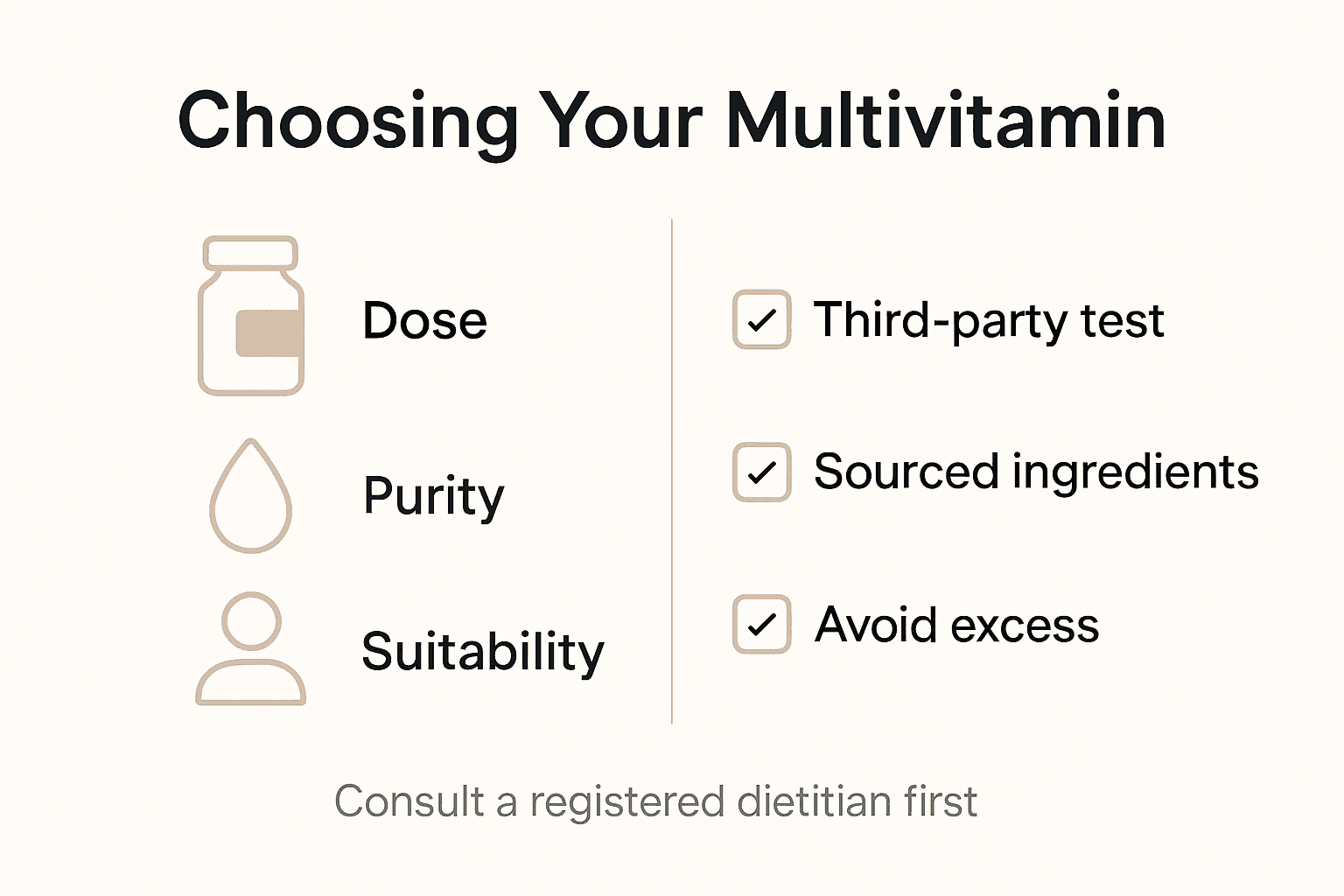
Beyond basic composition, look for additional quality indicators such as third-party testing, transparent ingredient sourcing, and formulations backed by scientific research. Remember that multivitamins should be viewed as a nutritional safety net, not a comprehensive solution to dietary requirements.
The following table highlights key factors to consider when choosing a multivitamin:
| Selection Factor | Why It Matters | What to Look For |
|---|---|---|
| Life Stage Tailoring | Supports needs for age and gender | Age- and gender-specific formulas |
| Nutrient Bioavailability | Ensures effective absorption | Chelated minerals, active vitamins |
| Certification | Confirms safety and quality | NSF, USP, or third-party labels |
| Health Goal Alignment | Matches personal health or fitness objectives | Targeted support ingredients |
Pro tip: Consult a registered dietitian to perform a comprehensive nutritional assessment and develop a personalized multivitamin strategy tailored to your specific health and fitness objectives.
Potential Risks and Limitations Explained
Comprehensive research from the National Institutes of Health demonstrates that multivitamin supplementation is not a guaranteed solution for health optimization. A landmark study involving over 390,000 adults revealed that daily multivitamin consumption does not necessarily translate to reduced mortality risk or significant health advantages for generally healthy individuals.
Potential risks and limitations of multivitamin use include:
- Overconsumption: Excessive intake of certain vitamins can lead to toxicity
- False Security: May create a misleading sense of complete nutritional protection
- Interactions: Possible negative interactions with prescription medications
- Quality Variations: Inconsistent manufacturing standards across different brands
The nuanced reality of multivitamin supplementation requires careful consideration. While these products can address specific nutritional deficiencies, they are not magical solutions that guarantee improved health outcomes. Individuals with balanced diets and no specific health conditions might find minimal additional benefit from routine multivitamin consumption.
Moreover, certain population groups—such as pregnant women, individuals with diagnosed deficiencies, or those with restricted dietary patterns—may experience more tangible advantages from targeted supplementation. However, blanket recommendations are inappropriate, and personalized medical guidance remains crucial.
Pro tip: Schedule an annual comprehensive blood test to accurately assess your specific nutritional needs before committing to any long-term multivitamin regimen.
Boost Your Health and Fitness with Personalized Multivitamins
Struggling to fill the nutritional gaps in your diet while pushing your fitness to the next level is a common challenge. The article highlights how essential vitamins like Vitamin D, B vitamins, magnesium, and iron support energy, muscle recovery, and overall wellness. If you want to avoid the risks of deficiency and support your active lifestyle, choosing the right multivitamin tailored to your unique needs is critical.
At Nutribliss, we understand that one size does not fit all. Our Fitness Supplements collection offers carefully crafted formulas designed to match your specific health and performance goals. Whether you prefer convenient options or specialized support, you will find options that align with science-backed nutritional guidance.

Elevate your wellness routine today with premium multivitamins from Nutribliss Supplements. Explore our diverse range of products and make informed choices backed by expert knowledge. Visit Nutribliss.us now to find the perfect supplements for your journey toward better health and fitness.
Frequently Asked Questions
What are multivitamins and how do they benefit health?
Multivitamins are dietary supplements containing a blend of essential vitamins and minerals that support overall health by filling nutritional gaps in the diet.
Who should consider taking multivitamins?
Individuals who may benefit from multivitamins include pregnant women, older adults, people with restricted diets, and those managing specific health conditions.
Can multivitamins replace a balanced diet?
No, multivitamins are not a substitute for a nutritious diet. They should be viewed as a safety net to complement, not replace, whole food nutrition.
Are there risks associated with taking multivitamins?
Yes, potential risks include overconsumption leading to toxicity, creating a false sense of security about nutrition, and possible interactions with medications. Consulting a healthcare professional is advisable before starting supplementation.