

Many people believe swallowing collagen peptides magically deposits collagen directly into their skin and joints. That’s not how it works. Instead, these hydrolyzed protein fragments act as biological signals, telling your body to ramp up its own collagen production. This article unpacks what collagen peptides are, how they trigger endogenous collagen synthesis, and the proven benefits for skin elasticity and joint function you can expect. You’ll also learn how to choose and dose collagen peptides effectively for real results.
Table of Contents
- What Are Collagen Peptides?
- Mechanism of Action of Collagen Peptides
- Skin Health Benefits of Collagen Peptides
- Joint Health Benefits of Collagen Peptides
- Comparison to Other Forms of Collagen
- Common Misconceptions About Collagen Peptides
- Supplementation Guidelines and Dosage
- Types and Sources of Collagen Peptides
- Safety and Side Effects
- Explore NutriBliss Collagen Peptides and Supplements
- Frequently Asked Questions About Collagen Peptides
Key Takeaways
| Point | Details |
|---|---|
| Collagen peptides are hydrolyzed fragments | Hydrolysis breaks collagen into short chains improving absorption and bioavailability. |
| Peptides stimulate endogenous collagen production | They signal fibroblasts to increase collagen types I and III synthesis rather than supplying collagen directly. |
| Clinical trials demonstrate measurable benefits | Studies report up to 7% skin elasticity improvement and 40% joint pain reduction with consistent use. |
| Hydrolyzed peptides absorb better than alternatives | Lower molecular weight enables superior absorption compared to gelatin or native collagen. |
| Effective dosing ranges from 2.5 to 10 grams daily | Consistent supplementation over 8 weeks or more is necessary to see results. |
What Are Collagen Peptides?
Collagen peptides are hydrolyzed collagen fragments, typically two to six amino acids long. Hydrolysis is an enzymatic process that breaks down the large collagen molecule into smaller chains. This dramatically improves digestibility and absorption in your gut compared to native collagen, which has a very high molecular weight.
The biochemical properties of collagen peptides make them far more bioavailable than unprocessed collagen. Collagen peptides are short-chain hydrolyzed collagen fragments that have increased bioavailability compared to native collagen, enabling easier digestion and absorption in the gut. Once absorbed, these peptides enter circulation and perform biological functions throughout your body. This enhanced absorption allows them to reach target tissues where they can stimulate collagen production.
Hydrolyzed collagen peptides differ fundamentally from gelatin and native collagen in both form and effectiveness. Their lower molecular weight and smaller size mean your digestive system can break them down quickly and efficiently, delivering active peptides into your bloodstream.
Key characteristics of collagen peptides:
- Short amino acid chains (2 to 6 units long)
- Low molecular weight (typically under 5 kDa)
- Enhanced gut absorption due to hydrolyzed structure
- Increased bioavailability compared to native collagen and gelatin
- Rapid digestion and circulation after oral intake
Mechanism of Action of Collagen Peptides
Collagen peptides work through a dual mechanism that goes far beyond simple protein supplementation. First, they act as signaling molecules that activate fibroblasts, the specialized cells responsible for producing collagen in your skin and connective tissues. Second, they supply essential amino acids needed for new collagen and extracellular matrix formation.
Research shows collagen peptides promote the synthesis of endogenous collagen by acting as signaling molecules that stimulate fibroblasts rather than merely providing amino acids as building blocks. This fibroblast stimulation by collagen peptides increases production of collagen types I and III, which provide structural strength and elasticity to your skin. These peptides also trigger biosynthesis of other extracellular matrix components that support tissue integrity.
This biological activity translates to improved skin hydration, reduced wrinkle depth, and enhanced joint function. The signaling role means collagen peptides actively remodel connective tissue rather than passively supplying protein. Your body recognizes these fragments as indicators to increase collagen production, initiating a repair cascade.
How collagen peptides work:
- Activate fibroblasts through cellular signaling pathways
- Increase synthesis of collagen types I and III in dermis and cartilage
- Supply glycine, proline, and hydroxyproline for tissue repair
- Stimulate extracellular matrix biosynthesis beyond collagen alone
- Trigger tissue remodeling and regeneration responses
Pro tip: Take collagen peptides on an empty stomach in the morning to maximize absorption. Pairing them with vitamin C enhances collagen synthesis because vitamin C is a required cofactor for collagen production. Learn more about collagen supplementation benefits to optimize your routine.
Skin Health Benefits of Collagen Peptides
Clinical research demonstrates impressive skin benefits from collagen peptide supplementation. Studies report up to 7% increases in skin elasticity after eight weeks of consistent daily intake. These peptides boost dermal collagen density, improve skin hydration, and reduce the depth and appearance of wrinkles.

A systematic review found oral collagen supplementation stimulates fibroblast activity in the skin, increasing collagen type I and type III synthesis, which improves skin elasticity, hydration, and reduces wrinkles. The clinical skin benefits of collagen peptides are dose dependent and require consistent consumption over multiple weeks to manifest visibly.
These improvements result from increased collagen production in the dermal layer where collagen provides structural support. More collagen means firmer, more resilient skin that retains moisture better. Repeated intake leads to cumulative benefits, with skin texture and youthfulness visibly improving over time.
Documented skin benefits:
- Up to 7% improvement in skin elasticity after 8 weeks
- Increased dermal collagen density and thickness
- Enhanced skin hydration and moisture retention
- Reduced wrinkle depth and visible signs of aging
- Improved skin texture and smoothness
Statistic spotlight: Clinical trials demonstrate a 7% increase in skin elasticity after eight weeks of daily collagen peptide supplementation, with continued improvements over longer periods.
Explore skin health collagen supplements designed to deliver these clinically validated benefits with optimal dosing and purity.
Joint Health Benefits of Collagen Peptides
Collagen peptides offer substantial benefits for joint health and comfort. Research shows they reduce osteoarthritis related joint pain by up to 40% after three months of supplementation. These peptides promote cartilage regeneration, improving joint mobility and reducing stiffness.
A meta analysis confirmed collagen peptide supplementation reduces joint pain and improves joint function in individuals with osteoarthritis through increased cartilage synthesis and anti-inflammatory effects. The joint pain relief collagen peptides provide comes from both increased collagen production in cartilage and reduction of inflammatory markers in joint tissues.
Consistent daily supplementation is necessary for measurable joint benefits. The cartilage regeneration process takes time, and you need to maintain adequate peptide levels to support ongoing repair. Using clinically validated dosages enhances the likelihood of positive outcomes.
Joint health benefits:
- Up to 40% reduction in osteoarthritis joint pain
- Improved joint mobility and reduced stiffness
- Enhanced cartilage synthesis and regeneration
- Anti-inflammatory effects in joint tissues
- Better joint function during physical activity
Pro tip: Combine collagen peptides with regular low impact exercise like swimming or cycling. Movement stimulates circulation to joints, helping deliver peptides to cartilage tissue where they can support repair. Check out joint health collagen supplements formulated for optimal joint support.
Comparison to Other Forms of Collagen
Understanding the differences between collagen forms helps you choose the most effective supplement. Hydrolyzed collagen peptides have molecular weights below 5 kDa, enabling rapid and complete absorption. Gelatin has larger molecules exceeding 20 kDa, leading to slower or incomplete absorption. Native collagen is unhydrolyzed with very high molecular weight and cannot be absorbed intact orally.
Research confirms hydrolyzed collagen peptides have better absorption than gelatin or non-hydrolyzed collagen due to their lower molecular weight, making them more effective for supplementation. The absorption differences collagen forms directly impact their ability to stimulate collagen synthesis in target tissues.
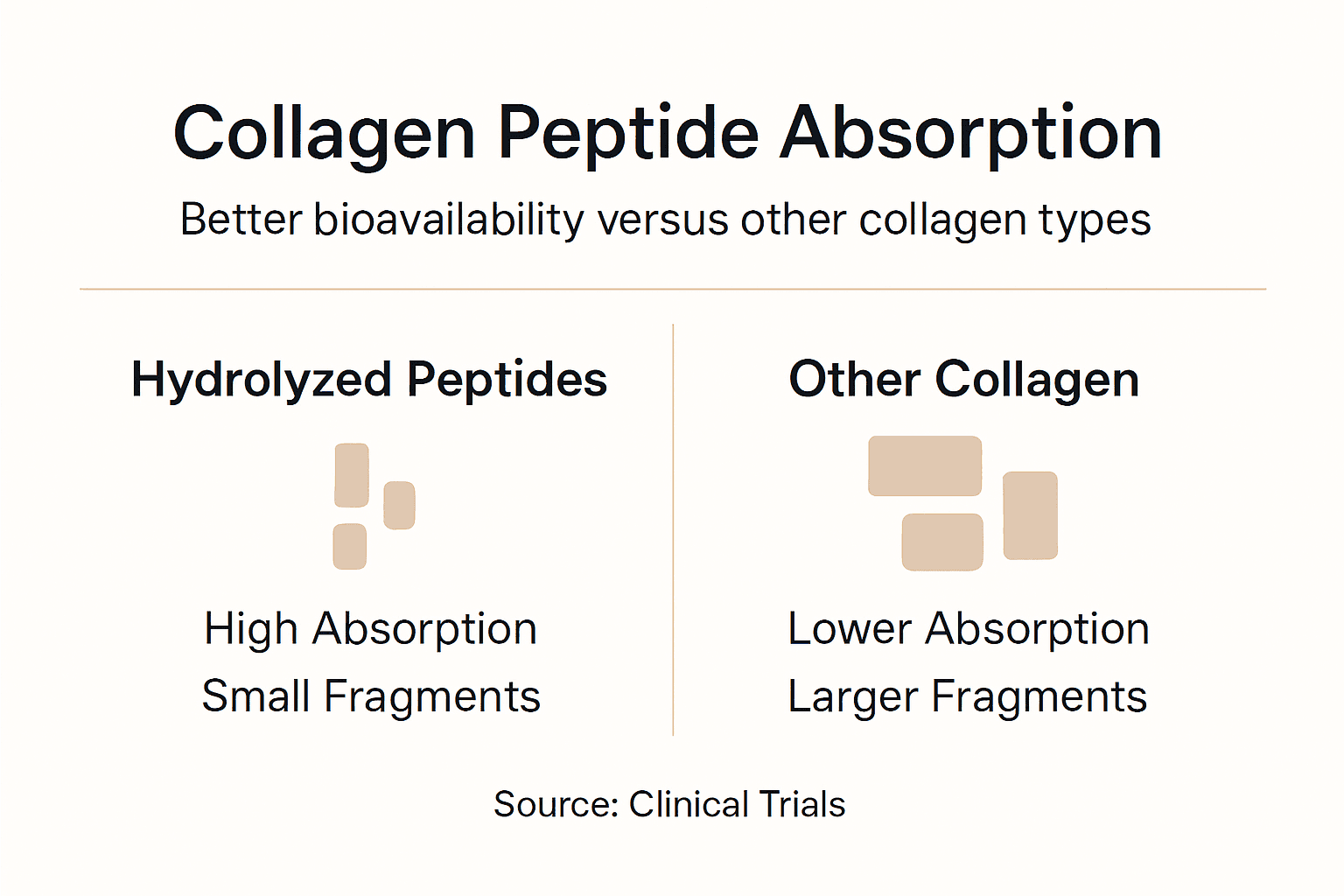
Better absorption translates to more active peptides reaching your bloodstream and tissues. This makes hydrolyzed peptides superior for both skin and joint benefits. Choosing the right form maximizes your supplementation investment.
Comparison of collagen forms:
| Form | Molecular Weight | Absorption Rate | Effectiveness |
|---|---|---|---|
| Hydrolyzed Peptides | <5 kDa | Rapid, complete | Highest |
| Gelatin | >20 kDa | Slow, partial | Moderate |
| Native Collagen | >300 kDa | None (not absorbed intact) | Lowest |
Key differences:
- Hydrolyzed peptides absorb quickly and completely through the gut
- Gelatin requires further digestion and absorbs less efficiently
- Native collagen cannot be absorbed intact and must be fully digested
- Only peptides deliver bioactive fragments to stimulate collagen synthesis
- Choosing hydrolyzed peptides ensures maximum supplementation benefits
Learn more about collagen forms comparison to understand which type suits your needs best.
Common Misconceptions About Collagen Peptides
Several myths about collagen peptides create confusion and unrealistic expectations. Understanding the biological reality helps you supplement effectively and avoid disappointment.
The biggest misconception is that consuming collagen peptides directly adds intact collagen to your skin or joints. A common misconception is that consuming collagen peptides directly adds intact collagen to the skin; however, peptides are digested and used primarily to signal and stimulate the body’s own collagen production rather than deposit collagen itself. This collagen peptide misconceptions clarification is critical for setting accurate expectations.
Collagen peptides are digested into amino acids and smaller peptides in your gut. They stimulate your body’s endogenous collagen production through signaling pathways rather than supplying intact collagen molecules. This biological mechanism means results take weeks to appear as your body ramps up its own collagen synthesis.
Common myths debunked:
- Myth: Collagen peptides travel intact from your stomach to your skin. Reality: They are digested and act as signaling molecules.
- Myth: All collagen supplements are equally effective regardless of source. Reality: Marine collagen may trigger allergies in seafood sensitive individuals.
- Myth: Taking more collagen peptides gives faster or better results. Reality: Effective doses range from 2.5 to 10 grams daily; excess offers no proven benefits.
- Myth: You’ll see results immediately after starting supplementation. Reality: Consistent use over 8 weeks or more is required for measurable benefits.
- Myth: Collagen peptides directly repair damaged tissue. Reality: They stimulate your body’s repair mechanisms rather than acting as direct building blocks.
Understanding these facts helps you supplement intelligently with realistic timelines and appropriate dosing.
Supplementation Guidelines and Dosage
Effective collagen peptide supplementation requires appropriate dosing and consistency. Clinical trials establish that effective collagen peptide supplement dosages for skin and joint benefits range from 2.5 to 10 grams per day based on clinical trial data. The clinical dosage collagen peptides research provides clear guidance for optimal results.
Consistent use over eight weeks or more is necessary to observe benefits. Your body needs time to increase collagen production and remodel tissues. Sporadic supplementation won’t deliver the cumulative effects seen in clinical studies.
Choose supplements verified for purity and sourced from bovine or marine collagen based on your allergy considerations. Avoid products with unnecessary additives or contaminants that compromise safety and efficacy. Follow manufacturer directions and consult healthcare providers if you have specific health concerns.
Dosage recommendations:
- Start with 5 grams daily as a baseline effective dose for general benefits.
- Increase to 10 grams daily if targeting significant joint pain or advanced skin aging.
- Take collagen peptides consistently at the same time each day for best results.
- Continue supplementation for at least 8 weeks before evaluating effectiveness.
- Pair with vitamin C rich foods or supplements to enhance collagen synthesis.
- Choose supplements third party tested for purity and accurate labeling.
Pro tip: Mix collagen peptide powder into your morning coffee or smoothie. The powder is typically flavorless and dissolves easily, making daily supplementation convenient. Consistency matters more than timing, so integrate it into an existing habit you never skip.
Explore collagen supplementation guidelines for detailed advice. Consider Nutribliss collagen peptides powder for a high quality option, or browse skin health collagen supplements for targeted formulations.
Types and Sources of Collagen Peptides
Collagen peptides come primarily from bovine (cow) and marine (fish) sources, each with distinct characteristics. Bovine collagen peptides are rich in hydroxyproline, an amino acid critical for collagen stability and structure. Marine collagen peptides contain higher levels of glycine and proline, often showing slightly higher bioavailability.
Research indicates collagen peptides sourced from bovine and marine origins have slightly different amino acid profiles and bioavailability, influencing their effectiveness and allergenic potential. The types of collagen peptides comparison reveals important considerations for supplement selection.
Marine collagen may cause allergenic reactions in individuals sensitive to seafood. Bovine collagen is generally safer from an allergenic perspective but may not be suitable for people avoiding beef products. Source impacts amino acid profile, affecting tissue repair efficacy and matching different health goals.
Source comparison:
- Bovine collagen: High in hydroxyproline, supports structural collagen stability, generally allergen safe.
- Marine collagen: Rich in glycine and proline, potentially higher bioavailability, risk for seafood allergies.
- Porcine collagen: Similar profile to bovine but less common in supplements.
- Amino acid differences influence which tissues benefit most from each source.
- Choose based on dietary restrictions, allergy risk, and specific health objectives.
Knowing collagen peptide sources helps you select supplements matching your individual needs, preferences, and safety requirements.
Safety and Side Effects
Collagen peptides have an excellent safety profile with very low incidence of adverse effects. Clinical trials report adverse event rates below 1%, making them one of the safest dietary supplements available. The few side effects observed are typically mild and transient.
Collagen peptide supplementation is generally safe with very low risk of adverse effects, but consumers should be aware of potential mild gastrointestinal symptoms and allergenicity, especially from marine sources. The collagen peptide safety profile research confirms their suitability for long term use.
Mild gastrointestinal symptoms like bloating or fullness may occur in sensitive individuals but remain rare. Marine collagen poses allergenic risk for people with seafood allergies. Choosing high purity supplements from reputable manufacturers minimizes contaminant exposure and reduces side effect risks.
Safety considerations:
- Adverse effects occur in less than 1% of users in clinical trials
- Mild gastrointestinal symptoms (bloating, fullness) are the most common side effects
- Marine collagen can trigger allergic reactions in seafood sensitive individuals
- High purity supplements reduce risk of contaminants and unwanted additives
- Following recommended doses ensures safe use without increased risk
Following recommended dosages and consulting healthcare providers if you have pre existing conditions ensures safe supplementation. Review supplement safety guidelines for comprehensive advice on responsible supplement use.
Explore NutriBliss Collagen Peptides and Supplements
Now that you understand how collagen peptides work and their scientifically proven benefits, it’s time to put this knowledge into action. NutriBliss offers high quality collagen peptide powders and supplements specifically formulated for skin and joint health. Each product is designed with purity, optimal bioavailability, and clinically validated dosing in mind to help you achieve real results.

Explore the complete Nutribliss supplements collection to find products that fit your wellness goals. Dive into expert guides like why take collagen supplements and our comprehensive nutritional supplements guide to learn how to integrate collagen peptides into your daily routine safely and effectively. These resources help you maximize the benefits you’ve learned about in this article.
Frequently Asked Questions About Collagen Peptides
Do collagen peptides directly add collagen to my skin and joints?
No, collagen peptides do not deposit intact collagen into tissues. They are digested into amino acids and smaller peptides that stimulate your body’s own collagen production through cellular signaling pathways. This endogenous synthesis is what improves skin elasticity and joint health over time.
When is the best time to take collagen peptides and how much do I need?
Take 2.5 to 10 grams daily, ideally on an empty stomach for maximum absorption. Consistency matters more than timing, so integrate supplementation into a daily routine you won’t skip. Benefits require at least eight weeks of continuous use to become noticeable.
What’s the difference between bovine and marine collagen peptides?
Bovine collagen is rich in hydroxyproline and generally allergen safe, while marine collagen has higher glycine and proline with slightly better bioavailability but poses risk for seafood allergies. Both effectively stimulate collagen synthesis; choose based on dietary preferences and allergy considerations.
Can collagen peptides help with hair and nail health beyond skin and joints?
Yes, collagen peptides support all connective tissues including those in hair follicles and nail beds. The same signaling mechanisms that improve skin and joints also strengthen hair structure and promote faster, stronger nail growth, though these effects are less extensively studied than skin and joint benefits.
How long does it take to see results from collagen peptide supplementation?
Most people observe noticeable improvements in skin hydration within four to six weeks, with measurable elasticity gains by eight weeks. Joint pain reduction typically requires eight to twelve weeks of consistent daily supplementation. Individual results vary based on age, baseline collagen levels, and dosage.