

Choose a mixed-source plant protein like pea plus rice, or a leucine-fortified blend, and confirm it carries third-party testing before you buy. That combination solves the two real risks with non-dairy protein powder: incomplete amino acids and unverified contaminant exposure. If you want a starting point, sample a small size before committing to a full tub.
TL;DR:
- Blended plant proteins like pea combined with rice or leucine-fortified mixes are most reliable for complete amino acid profiles and contaminant safety.
- Check for third-party testing seals and certificates of analysis to verify heavy-metal levels and overall safety of the product.
- For effective muscle maintenance, aim for 0.3 to 0.4 grams of protein per kilogram of body weight per meal, spreading intake across several meals.
- Single-source powders often have amino acid gaps, making blends the more practical choice for consistent nutritional support.
- Proper dosing, ingredient transparency, and verified safety are more important than marketing claims or brand loyalty in choosing a non-dairy protein powder.
Table of Contents
- What Is Non-Dairy Protein Powder, and What Are the Main Sources?
- How Do You Choose the Right Tub? A Practical Checklist
- How Much Should You Take, and When?
- What Contaminant Risks Should You Watch For?
- What Does the Research Actually Say About Plant Protein and Muscle?
- Why the Standard Advice on Plant Protein Falls Short
- Nutribliss Non-Dairy Protein Picks and How to Buy Smart
- Sources
What Is Non-Dairy Protein Powder, and What Are the Main Sources?
Non-dairy protein powder is any protein supplement made without milk-derived ingredients like whey or casein. That covers a wide field: pea, rice, soy, hemp, potato, and increasingly, proteins made through precision fermentation. Each source behaves differently in your shaker bottle and in your body, and knowing the difference is the first real step toward picking one that works for you instead of one that just has a nice label.
Pea protein is the current workhorse of vegan protein powder. It’s dense in branched-chain amino acids and digests relatively easily, but it runs low on methionine, one of the sulfur-containing amino acids your body can’t make on its own. Most pea proteins also carry an earthy, slightly chalky taste that better processing has only partly fixed.
Rice protein brings the opposite gap. It’s light, mild-tasting, and easy on the stomach, but it’s short on lysine. That complementary weakness is exactly why pea and rice show up together so often in soy protein powder alternatives and other plant blends: pea covers rice’s lysine gap, and rice covers pea’s methionine gap.
Soy protein powder is the one plant source that comes close to a complete amino acid profile on its own, which is why it’s been a staple in sports nutrition since long before “plant based protein” became a marketing category. Some people avoid it over estrogen concerns tied to isoflavones, though the research on that point is far less alarming than internet forums suggest. Soy is still worth considering if the flavor and texture work for you.
Hemp protein brings fiber and omega fatty acids to the table, which sounds great until you check the protein density. Most hemp powders land around 15 grams of protein per 30 gram scoop, well below pea or soy, and it’s also low in lysine. Hemp works better as a fiber-and-fat boost layered into a smoothie than as your primary protein source.
Potato protein is a newer entrant with a surprisingly strong leucine content, which makes it a smart addition to blends even though it’s rarely sold on its own.
Then there’s the frontier category: proteins made through precision fermentation, where microorganisms are engineered to produce specific proteins without an animal or even a traditional crop harvest. These are still a small slice of the dairy free protein supplements market, but they’re worth watching, since early formulations show promising amino acid completeness without the soil-contaminant baggage that plant crops sometimes carry.
Here’s the quick rundown of what each source brings and what it lacks:
- Hemp — fiber and healthy fats, low protein density, low lysine.
This is exactly why blends dominate the shelf. A single-source powder almost always has a gap somewhere in its essential amino acid profile, and combining two or three complementary sources is the most reliable way to close it without needing to eat a chemistry textbook’s worth of foods in one day.
How Do You Choose the Right Tub? A Practical Checklist
Comparing two protein powders side by side, the label with more marketing usually isn’t the one with better protein. Here’s the order to check things in, because it actually matters:
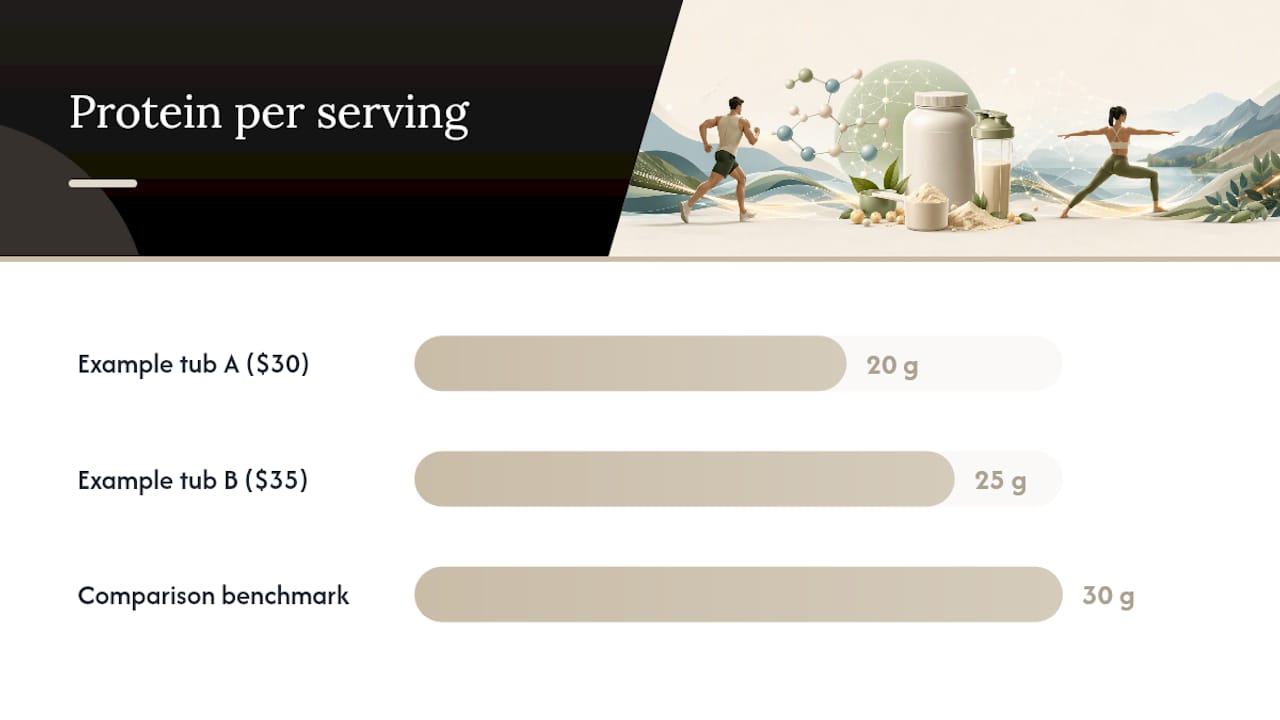
- Look at protein per serving first, then do the math on price per 30 grams of usable protein. A $30 tub that gives you 20 grams of protein per scoop is not cheaper than a $35 tub giving you 25 grams. Divide the price by the total protein in the container, then scale to a 30 gram benchmark, so you’re comparing apples to apples instead of scoop sizes to scoop sizes.
- Check leucine content, or confirm the blend is leucine-fortified. Leucine is the amino acid that flips the switch on muscle protein synthesis, and most plant sources need a bigger serving size, or added free leucine, to hit roughly 3 grams of leucine per serving when muscle maintenance is the goal.
- Avoid proprietary blends. If a label lists “plant protein blend” with a single combined gram amount instead of breaking out pea, rice, and soy individually, you can’t verify what you’re actually getting. Demand transparency on gram amounts per ingredient, not just a total.
- Verify third-party testing. Look for seals from NSF, Informed Choice, or USP, and if the brand offers a certificate of analysis (COA), read it. A COA should show tested-for heavy metals and confirm they fall under safety thresholds.
- Consider flavor, texture, and processing method. Powders labeled sprouted, fermented, or hydrolyzed tend to mix smoother and taste less chalky, because those processes break down some of the compounds responsible for the gritty mouthfeel plant proteins are known for.
- Check for allergens, added sugars, and fillers. Some “clean” labels still pack in maltodextrin or sugar alcohols to mask the taste gaps that better processing would have solved without them.
Pro Tip: Buy the smallest size available the first time you try a new plant protein. Texture and taste tolerance vary enormously between brands, and a $50 tub sitting half-used in your cabinet is the most common reason people give up on non-dairy protein powder for vegans and go back to something less suitable for their diet.
None of this is complicated once you’ve done it once. The habit that separates people who stick with a plant protein for years from people who cycle through five tubs and quit is simple: they read the ingredient panel before the marketing copy, and they check the actual gram numbers instead of trusting words like “premium” or “advanced formula.”
If you’re comparing pea protein options specifically, the same checklist applies, just pay closer attention to whether it’s blended with rice or another lysine source to round out the amino acid profile.
How Much Should You Take, and When?
For general muscle maintenance, aim for roughly 0.3 to 0.4 grams of protein per kilogram of body weight per meal, spread across three to four meals rather than loaded into one shake. That distribution matters more with plant protein than with whey, because plant sources typically need a larger serving to hit the same leucine trigger.
Whey delivers its anabolic punch at around 20 to 25 grams per serving. Most plant blends need a larger serving to reach an equivalent leucine dose, unless the formula is fortified with added free leucine, in which case a smaller serving can still do the job. That’s not a flaw in plant protein. It’s just a dosing difference you need to plan around instead of assuming a scoop is a scoop.
- Pre-workout: a smaller serving 60 to 90 minutes before training, paired with carbohydrates, works well for most people.
- Post-workout: this is where hitting your leucine threshold matters most, so don’t skimp on serving size here.
- Throughout the day: spacing 20 to 40 gram servings across three or four meals supports muscle protein synthesis better than one giant shake.
A 2026 meta-analysis of long-term trials comparing plant-based and animal-based protein supplementation found no significant difference in lean body mass or strength outcomes, as long as total daily protein intake was adequate. The dosing strategy is what closes the gap, not the source itself.
On texture: plant proteins mix better cold than warm, and a high-shear blender or shaker with a metal whisk ball beats a spoon every time. If grit still bothers you, try blending with a milk alternative like oat or soy milk instead of water. The added fat and emulsifiers in those milks smooth out the texture more than you’d expect.
What Contaminant Risks Should You Watch For?
Plant crops absorb whatever is in the soil they grow in, and that includes heavy metals like lead, cadmium, and arsenic. Investigations have found that some plant-based protein powders carry higher average heavy-metal levels than dairy-based alternatives, largely because of where and how the source crops were grown, not because plant protein itself is inherently riskier.
That doesn’t mean plant protein is unsafe. It means verification isn’t optional.
Third-party certification from organizations like NSF, Informed Choice, or USP exists precisely because label claims and safety testing are two different things, and only one of them is legally required in most markets.
Here’s what to actually do with that information:
- Look for a visible NSF, Informed Choice, or USP seal on the product page or label.
- Request or locate the certificate of analysis (COA) and check it lists heavy-metal testing results, not just a generic quality statement.
- Store your powder in a cool, dry place, sealed tightly. Plant proteins are more prone to clumping and rancidity from oxidized fats than whey is, especially blends containing hemp or flax additions.
- Check expiration dates rather than assuming shelf-stable means indefinite. Most tubs are good for 12 to 18 months once opened, but heat and humidity shorten that.
- If you’re pregnant, managing kidney disease, or otherwise in a category where protein intake needs medical oversight, talk to a clinician before changing your protein routine, plant-based or otherwise. This applies just as much to a “natural” plant powder as it would to any other supplement.
None of this is meant to scare you off plant protein. It’s meant to replace vague trust in a package with an actual verification step that takes thirty seconds once you know what to look for.
What Does the Research Actually Say About Plant Protein and Muscle?
The evidence has shifted meaningfully in the last few years, and it doesn’t support the old assumption that plant protein is a lesser substitute for whey. A meta-analytic review of plant protein and muscle outcomes found that plant-based powders support muscle hypertrophy and strength gains comparably to dairy protein, provided total daily protein and leucine exposure are adequate. The 2026 randomized-trial meta-analysis covering 18 trials backs this up further, finding no significant difference in lean mass or strength between plant-based and animal-based protein groups when total intake was sufficient.
The practical implication for anyone shopping for the best non-dairy protein: source matters less than most marketing suggests. Dosing and completeness matter more.
- Total daily protein intake still outweighs any single-source advantage.
- Leucine threshold, not protein source, is the trigger point for muscle protein synthesis.
- Blending or fortification is how plant proteins close the gap that single-source powders leave open.
- Broader reviews also link higher plant-to-animal protein ratios with better cardiovascular markers at a population level, a secondary benefit worth factoring in if heart health is part of why you switched.
Effective protein supplement strategies include picking a blend, hitting your leucine threshold, and verifying safety through third-party testing rather than taking a label’s word for it. If you want the deeper mechanics of how leucine dosing works, the protein biology breakdown on the Nutribliss blog covers the serving math in more detail. #nutribliss
Why the Standard Advice on Plant Protein Falls Short
Most guides treat “vegan protein powder” as one product category, as if pea, rice, soy, and hemp were interchangeable. They aren’t, and that oversimplification is what leads people to buy a single-source powder, feel like it’s “not working,” and quietly conclude plant protein doesn’t build muscle. It’s not the protein failing. It’s the dosing and the amino acid math that never got checked.
The research doesn’t support skepticism about plant protein’s effectiveness. It supports skepticism about sloppy sourcing and unverified contaminant testing. Those are solvable problems, not inherent flaws.
If there’s one thing to prioritize above all else, it’s this: buy blends, not single sources, and buy from brands that show you a COA instead of asking you to trust a seal on a bag. Everything else, flavor, brand loyalty, price, comes after that.
— GAURAV
Nutribliss Non-Dairy Protein Picks and How to Buy Smart
Some non-dairy formulas prioritize complete amino acid coverage and verified safety, without hiding behind proprietary blend labels that make it impossible to know what you’re actually paying for.
Here’s how the checklist from earlier translates into what to look for on a Nutribliss product page before you check out:
| What to check | Why it matters | What to look for |
|---|---|---|
| Protein source | Determines amino acid completeness | Mixed-source blends over single-source powders |
| Ingredient transparency | Lets you verify actual gram amounts | Full disclosure, no hidden “protein blend” totals |
| Serving strategy | Determines whether you hit your leucine threshold | 30 to 40 gram servings, or leucine-fortified formulas |
| Testing status | Confirms contaminant safety | Third-party verification referenced on the product page |
Start with a single-serve or small tub size if you’re new to a formula, and calculate price per effective serving the same way outlined earlier in this guide: total price divided by grams of usable protein, not by scoop count. That’s the only honest way to compare different products on the shelf.
Pairing your protein routine with proper hydration matters too, especially around training days, and the Nutribliss electrolytes supplement is worth a look if you’re building out a fuller recovery stack rather than just a protein shake. Browse the current lineup, check the ingredient panels for yourself, and pick the tub that actually matches your amino acid math instead of the one with the loudest label.
Sources
The clinical picture on plant protein has firmed up considerably. The meta-analytic review on plant protein and muscle outcomes remains the strongest single reference for the leucine-threshold argument made throughout this guide, and the 2026 RCT meta-analysis offers the most current long-term comparison between plant and animal protein supplementation.
On the safety side, the heavy metals and supplement safety review explains the soil-uptake mechanism behind contaminant variability in plant crops, while the processing and nutritional value review covers how sprouting, fermentation, and hydrolysis change digestibility and flavor.
For readers who want to go deeper on the biology or the buying mechanics, Nutribliss has covered both in more technical detail: the leucine and protein biology breakdown, the label-reading guide for plant based protein, and the third-party testing explainer. If you’re curious how plant-forward eating extends beyond the shaker bottle, Wild Foodz’s plant-based menu guide is a useful look at the broader dietary pattern.
- Dietary plant-based protein supplements: sources, processing, nutritional value, and health benefits
- Long-term RCT meta-analysis comparing plant-based and animal-based protein supplements (2026)