

TL;DR:
- Burnout is a syndrome of unmanaged workplace stress characterized by exhaustion, cynicism, and decreased effectiveness. Preventing burnout involves self-care, boundary-setting, external support, and recognizing early warning signs like irritability and boredom. Organizational autonomy and stress cycle management are essential for sustainable long-term resilience.
Burnout is defined by the World Health Organization as a syndrome of chronic workplace stress that has not been successfully managed, characterized by exhaustion, cynicism, and reduced professional effectiveness. Knowing how to prevent burnout before it takes hold is the single most protective step you can take for your long-term career and mental health. The good news: burnout does not arrive without warning. It builds gradually through depleted resilience, and that gradual onset is your window to act. The strategies in this article are grounded in research from the CDC, the American Psychological Association, and workplace experts like Prof. Sharon Parker at UNSW.
How to prevent burnout before it takes hold
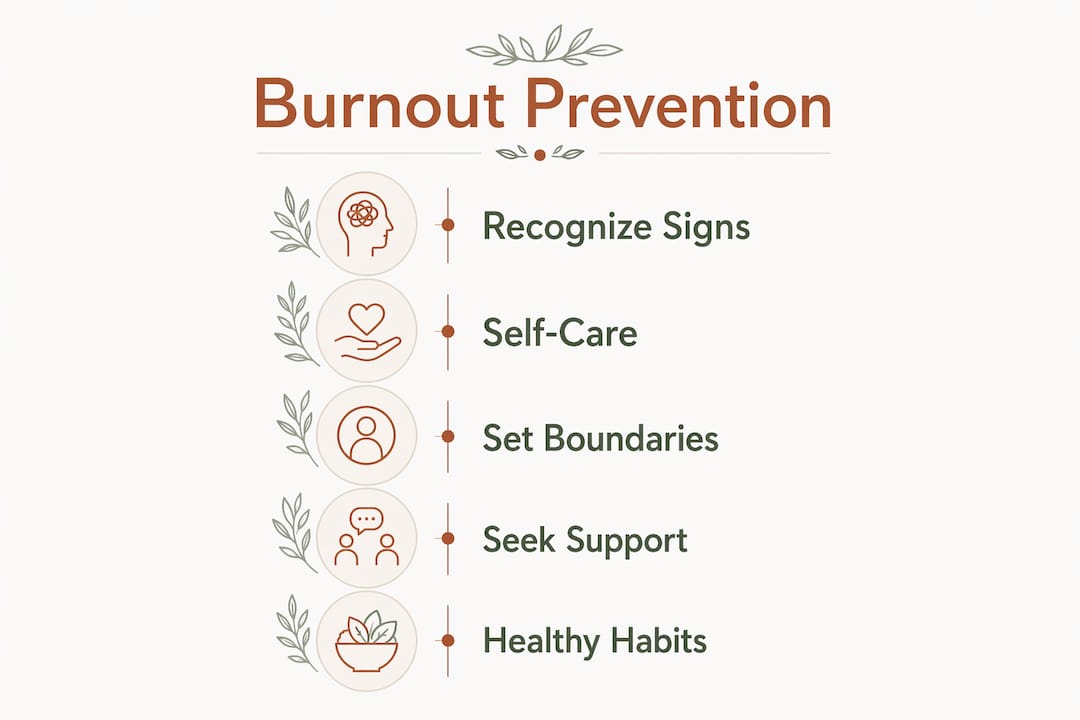
Burnout prevention works through three interlocking pillars: self-care, boundary-setting, and support systems. Each pillar addresses a different vulnerability point in the stress cycle. Miss one, and the others lose their protective effect.
Self-care is not optional recovery time. It is the physiological foundation that determines how much stress your nervous system can absorb before it starts to break down. Boundary-setting controls the volume of demands entering your life. Support systems give you external perspective when your own judgment is clouded by exhaustion. Together, these three create a buffer that most high-performing professionals never build deliberately, which is exactly why burnout rates remain high across knowledge-work industries.
The most important insight from recent research is that burnout develops in stages, starting with subtle behavior changes long before functional decline. This means prevention is always possible earlier than you think, and intervention is always more effective before the crisis stage.
What are the early signs of burnout you should recognize?
Burnout does not feel like a breakdown at first. It feels like a bad week that never ends. Recognizing the difference between normal fatigue and the early warning signs of burnout is the skill that separates people who recover quickly from those who spiral into full depletion.
The early signs fall into three categories:
- Emotional signals: Persistent irritability, cynicism about your work, and a creeping sense that nothing you do matters. These are not personality flaws. They are symptoms of a nervous system running on empty.
- Behavioral signals: Social withdrawal, increased scrolling on social media, leaning on alcohol or caffeine to regulate energy. The CDC notes that substance reliance worsens burnout risk by compounding the physiological stress load.
- Physical signals: Frequent headaches, disrupted sleep, appetite changes, and a general sense of physical heaviness that rest does not fix.
The most dangerous early sign is boredom. When someone who was once engaged starts feeling chronically bored, that is often depleted resilience manifesting as emotional flatness, not laziness. Most people dismiss it. They should not.
Pro Tip: Set a weekly five-minute check-in with yourself every Friday. Rate your irritability, motivation, and physical energy on a scale of one to ten. A consistent downward trend across all three is your signal to act before symptoms compound.
How can sleep, exercise, and nutrition prevent burnout?
Lifestyle habits are not soft interventions. They are the biological infrastructure that determines your stress tolerance. Three habits carry the most evidence for preventing work burnout.
- Exercise regularly. The CDC recommends 2.5 hours of exercise per week in sessions of 20 to 30 minutes to reduce the impact of stress hormones on the body. That is 20 minutes of moderate movement five days a week. It does not require a gym. A brisk walk counts. The mechanism is direct: exercise metabolizes cortisol and adrenaline, the same hormones that accumulate during chronic stress and accelerate burnout.
- Protect your sleep window. The APA recommends 7 to 9 hours of sleep per night, and specifies that maintaining a consistent sleep-wake schedule is as important as total hours. Irregular sleep timing disrupts cortisol rhythms, which makes stress harder to regulate the next day. This is one of the most underestimated factors in preventing work burnout.
- Stabilize your nutrition. Blood sugar crashes drive irritability and cognitive fatigue, two of the earliest burnout symptoms. Prioritizing protein, complex carbohydrates, and adequate hydration throughout the day keeps your mood and energy more stable under pressure.
| Habit | Recommended amount | Primary benefit |
|---|---|---|
| Aerobic exercise | 2.5 hours per week | Reduces cortisol and stress hormone buildup |
| Sleep | 7 to 9 hours, consistent timing | Restores emotional regulation capacity |
| Balanced nutrition | Regular meals, protein and complex carbs | Stabilizes mood and cognitive energy |
Pro Tip: If you struggle with sleep quality, read Nutribliss’s guide on improving sleep naturally for specific, evidence-based techniques that go beyond standard sleep hygiene advice.
What workplace strategies help you avoid burnout?
The workplace is where most burnout originates, and it is also where the most targeted prevention strategies apply. Preventing work burnout at the organizational level requires both individual action and structural awareness.

Prof. Sharon Parker at UNSW identifies autonomy as a critical buffer against workplace burnout. When you have control over your priorities and schedule, even partially, your stress response is measurably lower. If your current role offers little autonomy, the most effective move is to negotiate for it explicitly, starting with small areas like meeting attendance or project sequencing.
Here is what the research-backed workplace prevention toolkit looks like in practice:
- Set hard stop times. Decide when your workday ends and treat it as a non-negotiable appointment. Unplugging after hours is not a productivity sacrifice. It is what makes sustained performance possible.
- Use micro-breaks deliberately. Prof. Meister’s research shows that intentional detachment during the day restores energy more effectively than pushing through. A five-minute break every 90 minutes is not lost time. It is maintenance.
- Document workload issues objectively. When your plate is consistently overloaded, documenting specific issues gives you concrete data to bring to a manager conversation. Vague complaints are easy to dismiss. Specific patterns are not.
- Normalize saying no. Declining a task is not a career risk when done professionally. It is a signal that you understand your capacity, which is a skill managers respect in high-performers.
Gallup research cited by UNSW shows that limited managerial support directly correlates with higher burnout and absenteeism. This means burnout is partly an organizational failure, not purely a personal one. You have the right to advocate for a healthier work structure.
Healthcare professionals face a particularly acute version of this challenge. Platforms that give clinicians more control over their schedules, like those discussed in staffing flexibility research, demonstrate how structural autonomy reduces burnout even in high-demand roles.
How does seeking support shift your burnout trajectory?
One of the most counterintuitive facts about burnout is that the exhaustion it causes actively prevents you from seeing the solutions available to you. Mental fatigue narrows your cognitive field. You stop noticing options. This is why external perspectives from coaches, mentors, or therapists are often the turning point in recovery, not a last resort.
The steps for building a support system that actually works:
- Identify one trusted person in your professional life who can give you honest feedback about your behavior and performance. Not a cheerleader. Someone who will tell you when you look depleted.
- Reframe help-seeking as strategy. Asking for support is not weakness. It is the same logic as hiring a financial advisor: you bring in expertise to improve outcomes you cannot optimize alone.
- Challenge perfectionism directly. Perfectionism is one of the strongest predictors of burnout because it makes rest feel like failure. Setting realistic goals and accepting good-enough outputs in low-stakes areas is a skill you can practice.
- Protect social connection. The APA identifies social connection as a core component of lasting burnout prevention. Isolation accelerates depletion. Even brief, genuine social interactions during the workday restore a measurable amount of emotional energy.
“Normalizing conversations about burnout early creates psychological safety and prevents escalation.” — UNSW BusinessThink
Reframing your responsibilities as opportunities for growth is not toxic positivity. It is a cognitive tool that reduces the helplessness component of burnout, which is the part that makes recovery hardest.
What daily habits sustain your energy long-term?
Sustainable burnout prevention is not a one-time reset. It is a set of daily habits that compound over time. The Delete, Delegate, Defer, Do methodology is one of the most practical frameworks for managing daily task load without accumulating stress debt.
- Delete tasks that add no real value. Most people carry obligations that exist out of habit, not necessity.
- Delegate anything that does not require your specific expertise. Holding onto tasks you could hand off is a hidden energy drain.
- Defer non-urgent work to a scheduled time rather than letting it crowd your mental bandwidth.
- Do only what is urgent, important, and yours to own today.
Beyond task management, closing the physiological stress cycle is a daily requirement. Exercise, deep breathing, and even laughter signal the nervous system to shift from fight-or-flight to rest and recovery. Mental relief alone does not close the stress cycle. Your body needs a physical signal that the threat has passed.
Pro Tip: Add a five-minute gratitude journal entry at the end of each workday. Research consistently links gratitude practice to lower cortisol levels and improved emotional regulation, two direct defenses against burnout. Keep the bar low: three specific things, no minimum word count.
Understanding how to manage cortisol and stress hormones is also worth your time if you want to go deeper on the biology behind these daily habits.
Key takeaways
Preventing burnout requires consistent, layered action across lifestyle, workplace structure, and social support, not a single fix applied once.
| Point | Details |
|---|---|
| Recognize early signs | Irritability, boredom, and social withdrawal signal burnout before full depletion hits. |
| Prioritize sleep and exercise | CDC and APA guidelines give you specific, measurable targets that protect your stress tolerance. |
| Set workplace boundaries | Autonomy, micro-breaks, and documented workload issues reduce burnout risk at the structural level. |
| Seek external support | Coaches, mentors, and therapists restore perspective when exhaustion narrows your thinking. |
| Close the stress cycle daily | Physical activity and relaxation techniques reset the nervous system, not just the mind. |
What I’ve learned about burnout that most articles won’t tell you
Most burnout content focuses on symptoms and checklists. What it misses is the identity dimension. The professionals I see struggling most with burnout are not the ones who work the hardest. They are the ones who have tied their self-worth most tightly to their output. When performance dips, as it inevitably does under sustained stress, the shame compounds the exhaustion. That combination is what makes burnout so hard to climb out of.
The practical implication is this: self-compassion is not a soft skill. It is a physiological intervention. When you stop treating rest as failure, your nervous system actually recovers faster. I have seen this pattern repeatedly. The people who recover from burnout quickest are not the ones who push through. They are the ones who give themselves permission to stop without guilt.
The other thing worth saying plainly: burnout is often a system problem wearing a personal problem’s face. If your organization consistently overloads its people, no amount of individual meditation will fix that. You have the right to name that dynamic, document it, and advocate for change. Protecting your energy is not selfish. It is what makes you effective long enough to do work that matters.
— GAURAV
Support your recovery with Nutribliss

Lifestyle strategies work best when your body has the nutritional foundation to support them. Nutribliss formulates supplements specifically to complement stress management and emotional wellness routines. Whether you need support for sleep quality, energy balance, or daily resilience, the Nutribliss supplements collection includes science-backed options designed for people managing real demands. For those who want to understand the research behind what they take, the science behind superfoods page breaks down the evidence clearly. Use #nutribliss to share your wellness progress and connect with a community that takes recovery seriously.
FAQ
What is the fastest way to recover from burnout?
Recovery from burnout requires closing the physiological stress cycle through physical activity, rest, and social connection, not just mental relief. External support from a therapist or coach accelerates recovery by restoring perspective when exhaustion narrows your thinking.
How many hours of sleep do you need to prevent burnout?
The APA recommends 7 to 9 hours of sleep per night, with consistent sleep and wake times being as important as total duration. Irregular sleep timing disrupts cortisol regulation and reduces your capacity to manage stress the following day.
Can exercise really reduce burnout risk?
Yes. The CDC recommends 2.5 hours of moderate exercise per week to reduce the impact of stress hormones on the body. Exercise metabolizes cortisol and adrenaline directly, which are the same hormones that accumulate during chronic stress and accelerate burnout.
What are the first signs of burnout at work?
The earliest signs include persistent irritability, cynicism, boredom with previously engaging work, and social withdrawal. These symptoms often appear weeks or months before functional decline, which is why early self-monitoring is the most effective prevention tool.
Is burnout a personal problem or an organizational one?
Burnout is both. Gallup research shows that limited managerial support directly correlates with higher burnout rates, confirming that workplace structure plays a significant role. Individual strategies reduce personal vulnerability, but organizational change is required for lasting prevention at scale.