

Start with one daily probiotic, either a supplement or a fermented food, taken with a meal that has a little fat in it. Pick a product that lists the strain and guarantees CFU (colony-forming units) through the expiration date, not just at manufacture. If you’re pregnant, immunocompromised, or managing a serious illness, talk to your provider before adding one.
TL;DR:
- Regular, consistent use of probiotics, at least three to five times weekly, significantly improves colonization and gut support compared to sporadic taking.
- Look for probiotic products that list specific strains, guarantee CFU through expiration, and are tested by third parties for reliability and proper storage.
- Taking probiotics with a meal containing fat enhances survival through stomach acid, especially when doses are spaced 2 to 3 hours from antibiotics.
- Fermented foods provide beneficial live cultures but typically lack the targeted, research-backed doses found in supplements.
- For best results, log doses and storage, set reminders on habitual cues, and consult a healthcare professional if managing a serious illness or immune complication.
Table of Contents
- How to Add Probiotics to Your Daily Routine
- What Should You Look for on a Probiotic Label?
- When Is the Best Time to Take Probiotics?
- How Do You Know If a Probiotic Is Working?
- What I’ve Learned Writing About Probiotics for Nutribliss
- Ready to Add a Probiotic to Your Routine?
- Sources
- FAQ
How to Add Probiotics to Your Daily Routine
The biggest mistake people make with probiotics isn’t picking the wrong strain. It’s taking them sporadically, then giving up after ten days because “nothing happened.” Cleveland Clinic guidance is blunt about this: probiotics work as a preventive, long-term support, and daily use, or at minimum 3 to 5 times a week, builds colonization far better than occasional dosing.
Here’s a routine that actually survives real life:
- Pick a slot and defend it. Morning with breakfast is the easiest anchor for most people, since it’s the meal you’re least likely to skip. An evening dose with dinner works just as well if mornings are chaotic for you.
- Pair it with a meal that has some fat. Yogurt with oats and a spoonful of nut butter, or a smoothie with almond butter blended in, both buffer stomach acid and improve survival through the gut, according to a Healthline breakdown of clinical timing advice.
- Layer supplements and food in the same week. Take a capsule five mornings a week and swap in kefir or kimchi on the other two. You get dose consistency and dietary variety without overthinking it.
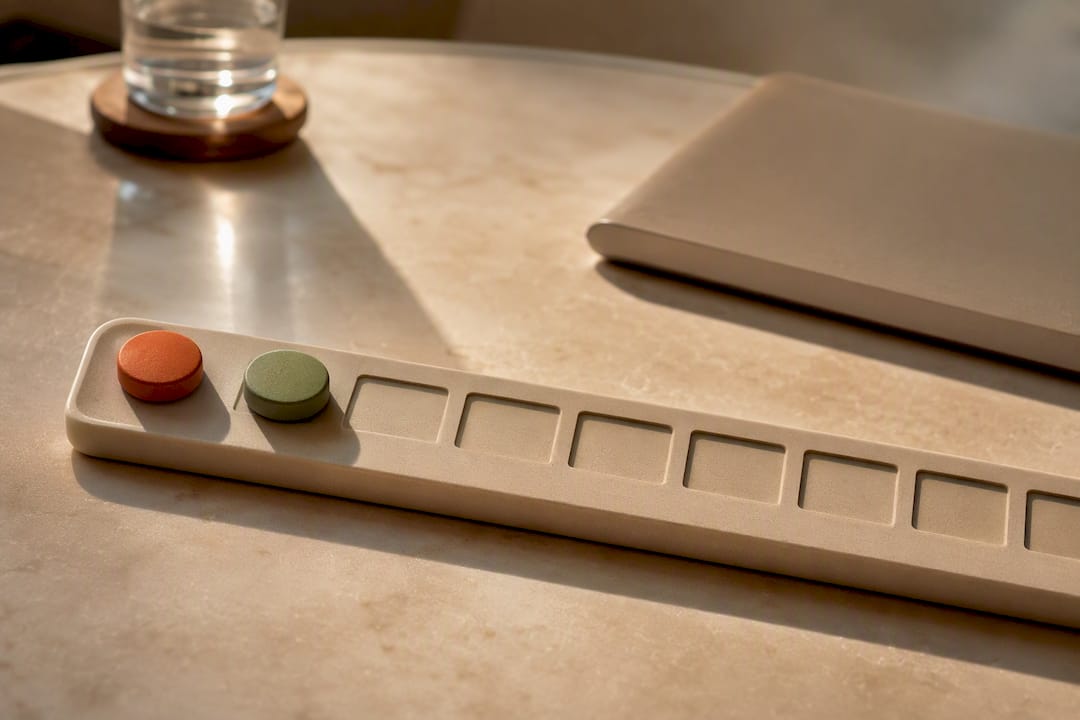
- Log the basics. Write the dose, the date you opened the bottle, and where you’re storing it. A 30-day trial length gives you enough runway to notice a real pattern.
Pro Tip: Set a recurring phone reminder tied to an existing habit, like brewing coffee, instead of a random alarm. Habit stacking beats willpower almost every time.
If you’re already juggling a multivitamin or other daily supplements, building probiotics into that same supplement schedule keeps the whole routine from falling apart by week two.
What Should You Look for on a Probiotic Label?
Not every bottle on the shelf is worth your money, and the label tells you why in about ten seconds if you know what to check.
- Look for the genus, species, and strain spelled out, something like Lactobacillus rhamnosus GG, not just “probiotic blend.”
- Confirm the CFU count is guaranteed through the expiration date, not just measured at the time of manufacture, since live counts decline over shelf life.
- Treat a baseline amount of CFU considered reasonable by experts, understanding that some conditions call for higher doses under professional guidance.
- Decide between single-strain and multi-strain based on your goal. A targeted single strain suits a specific issue; a multi-strain blend suits general gut support.
- Match the strain to the goal where you can. Saccharomyces boulardii and L. rhamnosus GG, for instance, are among the better-studied strains for preventing antibiotic-associated diarrhea when started early, per the NIH health professional fact sheet.
- Favor brands that mention third-party testing and give clear refrigeration or storage instructions on the label.
Label check: The NIH Office of Dietary Supplements notes that probiotics are generally safe for healthy adults, but flags rare, serious infections in immunocompromised or critically ill individuals, exactly the group that should consult a provider first.
For a deeper walkthrough of strain science and how to compare products side by side, Nutribliss’s guide to probiotic supplements covers the label-reading process in more detail.
When Is the Best Time to Take Probiotics?
Timing matters, but not nearly as much as consistency does. Taking your dose shortly before or with a meal containing some fat improves survival through stomach acid, according to Healthline’s review of clinical timing advice. That’s the whole trick: fat slows digestion just enough to give live cultures a better shot at reaching your gut intact.
Antibiotics complicate the picture. Space probiotic doses 2 to 3 hours away from an antibiotic dose, and keep taking the probiotic for 1 to 2 weeks after finishing the antibiotic course to help your gut recover, per NIH/ODS guidance. A few strains, like S. boulardii, tolerate simultaneous dosing better than most bacteria-based products do.
- Check the label before you buy: some strains need refrigeration, others are shelf-stable.
- Always confirm CFU is listed through expiration, never just at manufacture.
- Traveling? Pack shelf-stable capsules in a pill case rather than risking a cooler bag and a melted ice pack.
Pro Tip: Keep your probiotic bottle next to your toothbrush or coffee maker. Visual cues beat memory almost every time you’re building a new habit.
How Do You Know If a Probiotic Is Working?
Most people notice mild changes, like less bloating or more regular digestion, within several weeks. A fair assessment takes 4 to 12 weeks of consistent use before you judge whether it’s actually helping.
- Expect some transient gas or bloating in the first week or two as your gut adjusts.
- Watch for red flags like fever, severe abdominal pain, or worsening symptoms, and stop use if any appear.
- Keep a simple daily log: dose taken, timing, and how you felt.
- If you consult a clinician, bring the exact strain and CFU count with you rather than just the brand name.
The Cleveland Clinic points out that irregular dosing undoes progress faster than any small difference in timing, so the log matters more than the clock.
What I’ve Learned Writing About Probiotics for Nutribliss
Writing about probiotics for a living teaches you fast that the supplement aisle rewards confusion. Vague labels, mystery CFU counts, blends with no strain names attached, all of it sells because most shoppers don’t know what to check. The fix isn’t complicated: read for strain, read for CFU at expiration, and stop treating consistency as optional.
The Gut Health & Digestion line is built around that same standard, clear strain labeling and formulations grounded in the research this article cites, because a supplement you can’t verify isn’t one you should trust with your gut. That’s the whole point of #nutribliss: making the label do its job.
— GAURAV
Ready to Add a Probiotic to Your Routine?
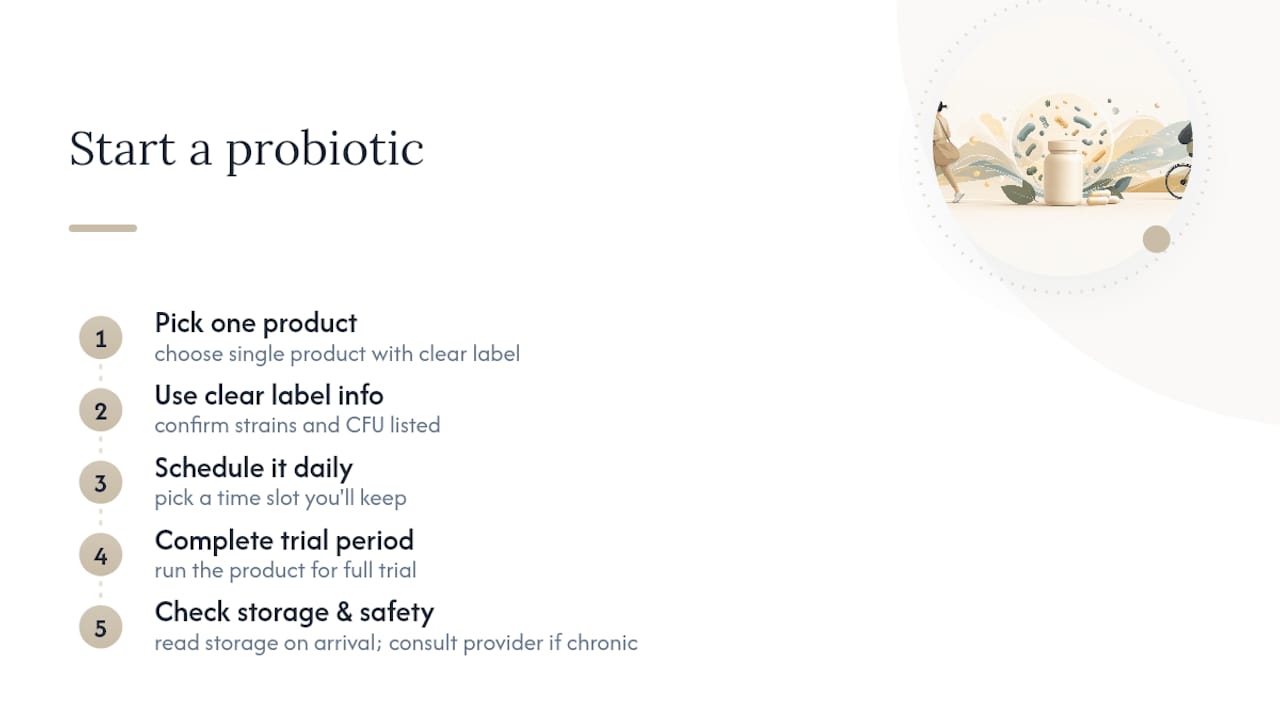
You don’t need a five-step overhaul to start. You need one product with a clear label and a slot in your day you’ll actually keep. Nutribliss’s Gut Health & Digestion collection lists strain and CFU information on every product page, so you know exactly what you’re taking before it ships.
If you’re building a broader daily habit around gut support and general wellness, the Daily Foundations line pairs well with a probiotic routine without adding complexity to your morning. Start small: pick a single product, run it for a full trial period before switching to something else, and check the label for storage instructions the day it arrives. If you manage a chronic condition or immune concern, talk to your healthcare provider before starting, then head to the Gut Health & Digestion collection to compare options and place your first order.
This article is general information, not a substitute for advice from a qualified doctor. Consult a qualified healthcare professional about your own circumstances before acting on anything here.
Sources
Fermented foods deliver live cultures, but they rarely match a supplement’s dose precision. Yogurt, kefir, kimchi, sauerkraut, miso, and kombucha all count, and NCCIH notes that these foods may not provide the strain-specific, research-backed doses that supplements do. What they offer instead is broader microbial variety, which has its own value for a resilient gut.
- Best time to take probiotics — Cleveland Clinic
- When Is the Best Time To Take Probiotics? — Healthline
If you’re planning meals around a trip, this guide to eating healthy on holiday has practical tips for keeping fermented foods and fiber-rich prebiotics in the mix even when you’re away from your own kitchen.
FAQ
How Often Should I Take Probiotics for Gut Health?
Daily use, or at least 3 to 5 times a week, builds better colonization than occasional dosing, according to Cleveland Clinic guidance. Consistency matters more than the exact time of day you choose.
Is It Better to Take Probiotics in the Morning or at Night?
Either works, as long as you take them with or shortly before a meal containing some fat, which helps the cultures survive stomach acid according to clinical timing advice. Pick whichever meal you’re least likely to skip.
Can I Take Probiotics While on Antibiotics?
Yes, but space the doses 2 to 3 hours apart from your antibiotic and continue the probiotic for 1 to 2 weeks after finishing the course, per NIH/ODS guidance. Some strains, like S. boulardii, tolerate simultaneous dosing better than most.
Are Fermented Foods as Effective as Probiotic Supplements?
Fermented foods provide live cultures and microbial variety, but NCCIH notes they usually lack the strain-specific, research-backed doses supplements offer. Combining both gives you dose precision and dietary variety.
How Much Do Nutribliss Probiotic Products Cost?
Current prices for Nutribliss’s Gut Health & Digestion products are listed directly on the collection page. Each listing includes strain, CFU, and storage details so you can compare options before buying.