

For most HIIT sessions, top up with 30 to 60 grams of carbs beforehand, hydrate with electrolytes if you sweat heavily, use 30 to 60 grams of carbs per hour for sessions running past 30 minutes, and get roughly 0.6 to 1 gram of carbs per kilogram of body weight plus 10 to 25 grams of protein within 30 minutes after finishing. Start hydrated rather than chugging water mid session. Nail those numbers and #nutribliss followers usually notice steadier energy and faster bounce back the next day.
TL;DR:
- Consuming 30 to 60 grams of carbs before a HIIT session and maintaining proper hydration with electrolytes can enhance energy stability and recovery.
- Timing your pre-workout intake is crucial: a full meal three to four hours prior, a smaller snack one to two hours before, and a quick carb source 30 to 60 minutes before.
- During workouts exceeding 30 minutes, 30 to 60 grams of carbs per hour can sustain performance, preferably from liquids like sports drinks or diluted juices.
- Post-workout, aim for a carbohydrate dose of 0.6 to 1 gram per kilogram of body weight plus 10 to 25 grams of protein within 30 minutes for optimal glycogen replenishment.
- Training fasted versus fed yields similar gains, but feeding beforehand is advisable for maximum power output and performance consistency.
Table of Contents
- How Should You Time Your Pre-Workout Meal for HIIT?
- What Should Your Hydration and Electrolyte Plan Look Like?
- Do You Need to Eat Carbs During a HIIT Workout?
- What Should You Eat After a HIIT Workout to Recover?
- Should You Train HIIT Fasted or Fed?
- What Are Good Meal and Snack Examples for Different HIIT Schedules?
- How Does Nutribliss Fit Into an Evidence-Based Fueling Plan?
- What I’d Tell Every HIIT Athlete About Fueling
- Simplify Recovery With Nutribliss
- Sources
- FAQ
How Should You Time Your Pre-Workout Meal for HIIT?
The goal before a HIIT session is simple: top off liver and muscle glycogen without sitting on a stomach full of food you can’t digest fast enough. High intensity intervals shove blood away from your gut and toward working muscle, so anything heavy in fat or fiber tends to sit there and cause trouble mid workout.
The timing window changes what you should eat. Three to four hours out, you can eat a full, balanced meal. One to two hours out, you want something smaller and easier to digest. Thirty to sixty minutes out, keep it to a quick carb hit and skip the fat almost entirely.
- 3 to 4 hours before: A full meal with 60 to 90 grams of carbs, 20 to 30 grams of protein, and moderate fat. Think grilled chicken, rice, and roasted vegetables.
- 1 to 2 hours before: A smaller plate with 30 to 50 grams of carbs and 10 to 15 grams of protein. Oatmeal with a banana, or toast with a thin layer of nut butter, works well.
- 30 to 60 minutes before: 30 to 60 grams of carbs, 10 to 20 grams of protein, minimal fat and fiber. A ripe banana, a rice cake with honey, or a diluted sports drink covers it without weighing you down.
Early-morning sessions are their own puzzle. If you’re training at 6 a.m., the night-before dinner does most of the glycogen-loading work. A small carb snack, like half a banana or a few dates, right before you walk out the door usually bridges the gap without upsetting your stomach. This is where the research diverges a bit from the exact carb-priority, low-fat approach found in performance nutrition guidance for athletes, which is worth a closer read if mornings are your main training window.
What Should Your Hydration and Electrolyte Plan Look Like?
Euhydration means walking into your workout already hydrated, not trying to catch up once you’re sweating. A quick check: pale yellow urine and no strong thirst signal you’re in decent shape to start.
Practical timing looks something like this: drink normally the day before, take in 16 to 20 ounces about two hours before training, and sip a small amount 15 to 30 minutes beforehand if you’re thirsty. That said, drinking strictly to thirst rather than forcing fluids is the safer default, since overhydrating with plain water can dilute sodium levels and trigger cramping or, in rare cases, hyponatremia.
Electrolytes matter most when sweat rates run high, whether from heat, humidity, or just being a heavy sweater. Sodium helps your body hold onto fluid better than water alone. Options range from powdered electrolyte mixes to standard sports drinks, and either works if the sodium content is meaningful, not just flavoring.
- Start hydrated the day before, not the morning of.
- Sip rather than gulp in the two hours leading up to training.
- Add sodium when sessions run long, hot, or particularly sweaty.
Pro Tip: Test any new electrolyte product during a regular training session, never on a day that matters. Some formulas taste fine but sit heavy on an already-stressed stomach during intervals.
Do You Need to Eat Carbs During a HIIT Workout?
Most HIIT sessions under 30 minutes don’t need mid-workout carbs. Your glycogen stores can cover that window without help.
Once you push past 30 minutes, or you’re stacking multiple rounds of intervals with short rest, 30 to 60 grams of carbohydrate per hour helps maintain output in the later rounds. Here’s how to actually get that fuel in without wrecking your stomach:
- Choose a liquid carb source first. Sports drinks, diluted juice, or a maltodextrin mix absorb faster and sit easier than solid food during high-intensity movement.
- Space it out. Small sips or a gel every 10 to 20 minutes beats one large dose that sits in your gut.
- Dilute if you’re prone to GI upset. A stronger concentration moves slower through your system and can backfire during explosive work.
- Practice it in training first. Never introduce a new during-workout fuel on a day you actually care about the result.
A DIY option that works in a pinch: a tablespoon of honey stirred into water, or fruit juice cut roughly in half with water. Both deliver fast carbs without the thickness that slows digestion.
What Should You Eat After a HIIT Workout to Recover?
The 30 minutes after a hard HIIT session is when your muscles are primed to restock glycogen. For sessions that seriously deplete your stores, aim for 0.6 to 1 gram of carbohydrate per kilogram of body weight, paired with roughly a 3 to 1 ratio of carbs to protein when you need to bounce back quickly for another session.
Protein needs are more modest right after training. Somewhere between 10 and 25 grams is enough to kick off muscle repair; you don’t need a massive dose immediately, since your body will keep pulling protein from meals over the following hours.
- A shake blending fast carbs (banana, oats) with a scoop of whey protein.
- Chocolate milk and a piece of fruit, which naturally lands close to that carb-to-protein ratio.
- Rice with a lean protein source, if you’d rather eat a real meal than drink one.
If you’re training again within 8 hours, lean toward the liquid or fast-digesting option since it clears your stomach quicker. If your next session is a day or two out, a full meal works just as well, and getting solid sleep matters just as much as the recovery snack itself. Evening sessions followed by a heavy, high-fat meal right before bed can interfere with sleep quality, so keep the post-workout meal carb-forward and lighter on fat if you’re training late.
Should You Train HIIT Fasted or Fed?
A six-week trial on sprint-interval training found fasted and fed groups posted similar gains in VO2peak and leg strength, with the fasted group showing a drop in diastolic blood pressure that the fed group didn’t. Performance-wise, neither approach clearly won.
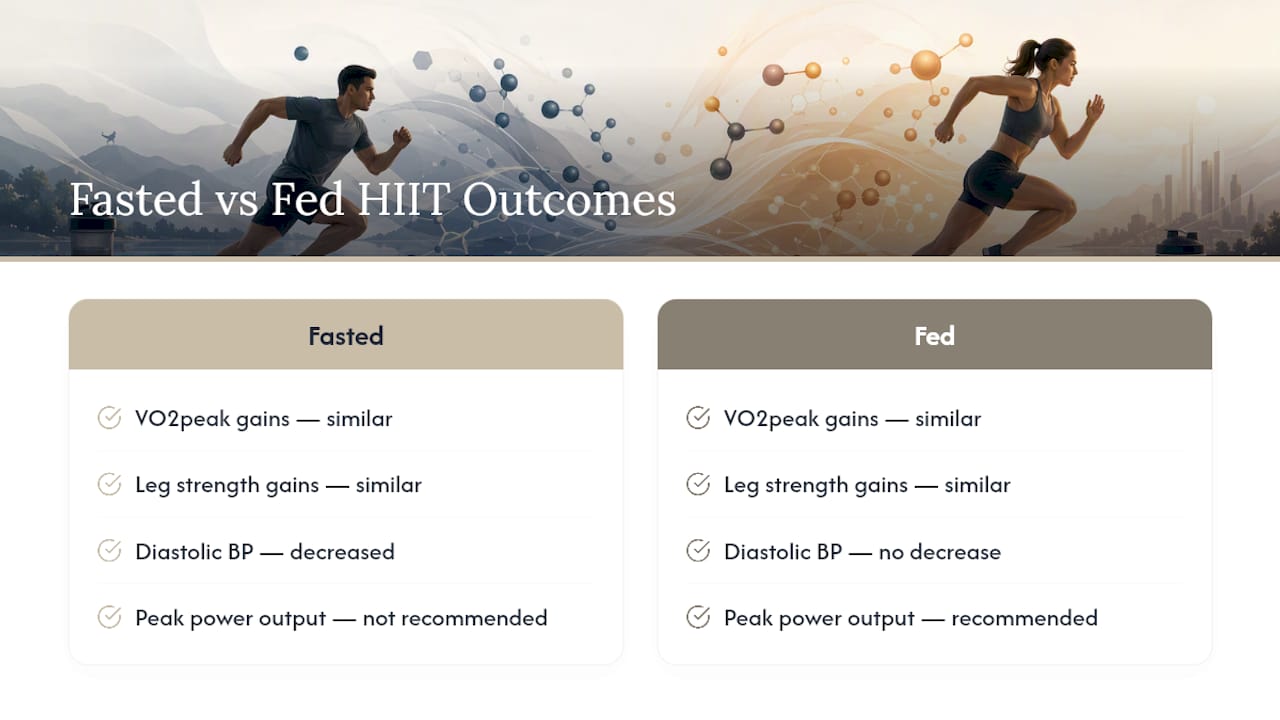
The practical takeaway: if you’re chasing a personal best or need peak power output, train fed. Save fasted sessions for lower-stakes days when you want a specific metabolic stimulus rather than a max effort. Whatever you choose for a big event, practice that exact fueling approach 4 to 6 weeks ahead of time so your gut isn’t caught off guard. Skip fasting altogether for long sessions or anything demanding sustained peak power, since low glycogen availability tends to show up exactly when you need to output the most.
What Are Good Meal and Snack Examples for Different HIIT Schedules?
Real timelines beat abstract macronutrient targets when you’re standing in your kitchen at 5:45 a.m. wondering what to eat.
- 6 a.m. session: Light dinner with rice or potatoes the night before, then half a banana or a few dates 20 minutes before training. Around 25 to 30 grams of carbs total on waking.
- Noon session: Oatmeal with berries around 10 a.m. (roughly 40 grams carbs, 10 grams protein), then a small handful of pretzels or a rice cake at 11:30 if you’re still hungry.
- 6 p.m. session: A balanced lunch at 1 p.m., then a snack like Greek yogurt with honey or toast with jam around 4:30 to 5 p.m. for that 60 to 90-minute pre-workout window.
For travel or early mornings when a kitchen isn’t an option, a banana, a packet of instant oatmeal, or a handful of dried dates travels well and digests fast. Whatever the schedule, night-before carb intake sets the floor for how much energy you’re actually working with.
How Does Nutribliss Fit Into an Evidence-Based Fueling Plan?
Everything above comes from peer-reviewed sport nutrition research, not guesswork, including guidance from the American College of Sports Medicine on hydration and high-intensity fueling. Supplements are a tool, not a substitute for the timing and food choices already covered.
Electrolyte products earn their place on heavy-sweat days or in hot conditions, and recovery formulas can simplify hitting that 3-to-1 carb-to-protein target when you’re short on time. The Athlete Recovery & Performance collection and various electrolyte options are designed to support recovery and hydration targets, but test anything new in a low-stakes training session before relying on it for a session that matters.
What I’d Tell Every HIIT Athlete About Fueling
Match your fuel to what the session actually demands, not to a generic template. Two mistakes I see constantly: chugging plain water instead of adding sodium on sweaty days, and training high-intensity fasted without ever testing how it feels first.
— GAURAV
Simplify Recovery With Nutribliss
You’ve got the numbers now: carbs before, electrolytes as needed, protein and carbs after. The harder part is doing it consistently when life gets in the way of meal prep. Nutribliss built its Athlete Recovery & Performance collection around exactly the carb-to-protein recovery ratio covered above, so hitting your post-HIIT window doesn’t require blending five separate ingredients at 6 a.m.

Electrolyte formulas from the same collection are worth testing on your next heavy-sweat session, ideally a training day rather than a day that counts. If digestion is your bigger concern when introducing new fuels, the Gut Health & Digestion line pairs well with any new pre or during-workout carb strategy. Browse the Athlete Recovery & Performance collection and pick one product to run through a couple of training sessions before your next hard interval day.
Sources
- ACSM webinar Q&A: Exercise-associated hyponatremia in endurance sports
- Comparison of physiological and clinical markers for chronic sprint-interval training exercise performed either in the fasted or fed states among healthy adults
- Meeting the nutritional demands of high-intensity training
- Periodized nutrition and training: practice recommendations
FAQ
What Is the 3-3-3 Rule for Workouts?
The 3-3-3 rule isn’t a formal, research-backed standard; definitions vary depending on the source. Some fitness content uses it to describe three rounds of three exercises for three minutes each, but no consensus framework ties it directly to HIIT fueling.
Is 20 Minutes of HIIT Three Times a Week Enough?
Twenty-minute HIIT sessions three times a week can produce meaningful fitness gains for most people, especially when intensity stays genuinely high during the work intervals. Since sessions that short typically fall under the 30-minute mark, you generally don’t need in-session carbs, just proper pre and post-workout fueling.
What Are Common HIIT Fueling Mistakes?
The two biggest mistakes are skipping pre-workout carbs entirely and overdrinking plain water without any sodium. Both lead to the same outcome: flat energy mid workout or cramping that has nothing to do with fitness level and everything to do with fueling.
What Is the Proper Way to Fuel a HIIT Workout?
Eat a carb-focused meal 1 to 2 hours before training, or a smaller carb snack 30 to 60 minutes out, then hydrate to thirst with electrolytes added on heavy-sweat days. After training, aim for 0.6 to 1 gram of carbs per kilogram of body weight plus 10 to 25 grams of protein within 30 minutes, following the 3-to-1 carb-to-protein pattern that supports faster glycogen recovery.
Does Caffeine Help Before HIIT?
Moderate caffeine doses, generally 1 to 3 milligrams per kilogram of body weight, can improve short-duration high-intensity performance for many athletes. Higher doses may add a small edge but also raise the risk of jitters and gastrointestinal discomfort, so it’s worth testing your own tolerance in training first.