

Finding reliable information about functional foods can feel challenging when you want real benefits for performance and wellness. With so many myths and superfood claims everywhere, knowing what actually works matters for anyone serious about their nutrition journey in the United States. This article clears up misconceptions and explains how functional foods deliver measurable physiological benefits without promising miracle solutions, helping you make informed choices that support your athletic routine and overall health.
Table of Contents
- Functional Foods Defined And Common Myths
- Major Types And Everyday Examples
- How Functional Foods Impact Health
- Benefits For Athletic Performance And Recovery
- Labeling, Regulation, And Consumer Safety
- Choosing Quality Functional Foods Wisely
Key Takeaways
| Point | Details |
|---|---|
| Functional Foods Offer Health Benefits | These foods provide specific physiological advantages that extend beyond basic nutrition and support overall wellness. |
| Regulatory Framework is Limited | In the U.S., functional foods lack a formal definition, and claims must be carefully monitored to protect consumers. |
| Two Main Categories Exist | Functional foods are categorized as either naturally functional or enhanced, each offering different health benefits. |
| Integration into Diet is Key | Gradually incorporating a variety of functional foods into your diet can maximize health benefits and support wellness. |
Functional Foods Defined and Common Myths
Functional foods represent a powerful nutritional approach that goes beyond traditional dietary expectations. These foods provide specific health benefits that extend well beyond basic nutritional requirements. Functional foods are scientifically defined as foods containing components that offer physiological advantages beyond fundamental nutrition.
Understanding the core characteristics of functional foods requires examining their unique properties:
- Contain naturally occurring bioactive compounds
- Provide targeted health benefits
- Can be whole foods or enhanced with additional nutrients
- Support disease prevention strategies
- Offer measurable physiological improvements
Contrary to popular misconceptions, functional foods are not miracle solutions or magical supplements. Health experts caution against marketing claims that suggest superfood status or instant transformative properties. Instead, they represent strategic nutritional choices that contribute to overall wellness when incorporated into a balanced diet.
Regulatory Landscape
In the United States, functional foods do not have a formal regulatory definition. The Food and Drug Administration (FDA) primarily monitors marketing claims, focusing on structure-function statements that cannot claim disease treatment. This regulatory approach ensures consumer protection while allowing nutritional innovation.
Categorization of Functional Foods
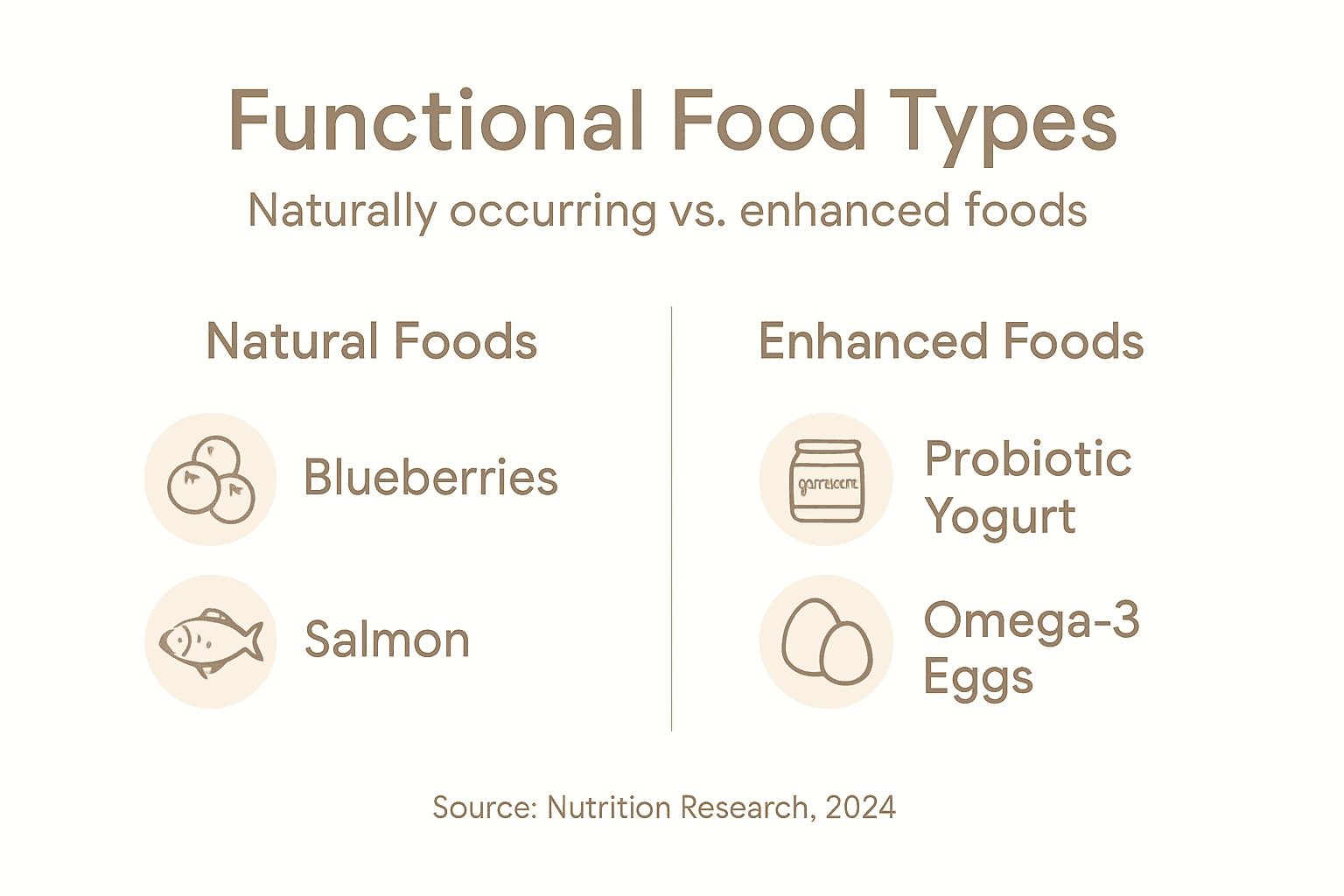
Functional foods broadly fall into two primary categories:
-
Naturally Functional Foods
- Whole foods with inherent health-promoting properties
- Examples include fruits, vegetables, fish, and whole grains
-
Enhanced Functional Foods
- Foods fortified with additional nutrients
- Designed to provide targeted health benefits
- Might include fortified dairy products, cereals, or beverages
Pro tip: Integrate functional foods gradually into your diet, focusing on variety and balance rather than relying on any single “miracle” food.
Here is a comparison of naturally functional foods versus enhanced functional foods, highlighting their main differences:
| Aspect | Naturally Functional Foods | Enhanced Functional Foods |
|---|---|---|
| Source | Whole and minimally processed | Fortified or supplemented products |
| Health Benefit Origin | Native bioactive compounds | Added vitamins or nutrients |
| Typical Examples | Leafy greens, salmon, berries | Vitamin-fortified milk, probiotic yogurt |
| Processing Level | Low, usually not altered | Moderate to high, often manufactured |
Major Types and Everyday Examples
Functional foods encompass a diverse range of nutritional powerhouses designed to enhance health beyond basic sustenance. Functional food categories span multiple types of naturally occurring and enhanced food products that deliver targeted physiological benefits.
Naturally Functional Foods
These foods contain inherent bioactive compounds that promote wellness without additional modifications:
- Fresh fruits and vegetables
- Whole grains
- Nuts and seeds
- Fatty fish rich in omega-3
- Legumes and beans
- Fermented foods like yogurt and kimchi
Enhanced Functional Foods
Fortified food options expand nutritional potential by adding specific nutrients to support targeted health outcomes:
- Calcium-enriched orange juice
- Omega-3 supplemented eggs
- Probiotic-enhanced dairy products
- Vitamin D fortified milk
- Cereals with added minerals and vitamins
Nutrient Enrichment Strategies
Nutrient enhancement involves strategically adding beneficial compounds to common foods. This process allows manufacturers to address specific nutritional deficiencies and create foods with amplified health benefits.
Functional foods work synergistically to support physiological processes and promote overall wellness.
Health Impact Spectrum
Functional foods target various health domains:
- Cardiovascular health
- Immune system support
- Digestive wellness
- Bone strength
- Cognitive function
- Metabolic balance
Pro tip: Integrate a diverse range of functional foods into your diet to maximize nutritional benefits and support comprehensive wellness.
For quick reference, here’s how functional foods influence different health domains:
| Health Domain | Example Functional Food | Key Benefit |
|---|---|---|
| Cardiovascular | Omega-3 enriched eggs | Supports heart function |
| Digestive | Probiotic yogurt | Enhances gut health |
| Immune System | Citrus fruits | Boosts immune defenses |
| Cognitive Function | Whole grains | Supports brain performance |
How Functional Foods Impact Health
Physiological Mechanisms of functional foods represent a groundbreaking approach to nutrition, offering more than simple sustenance. Bioactive compounds modify critical health processes by targeting fundamental physiological systems and supporting overall wellness.
Key Health Impact Domains
Functional foods interact with human biology through multiple sophisticated pathways:
- Immune System Modulation
- Inflammation Reduction
- Metabolic Regulation
- Cellular Protection
- Digestive System Support
- Cardiovascular Health
Chronic Disease Prevention
Functional nutrition strategies combat disease risks by introducing targeted nutritional interventions. These foods work at a molecular level to:
- Neutralize harmful free radicals
- Support cellular repair mechanisms
- Regulate inflammatory responses
- Enhance metabolic efficiency
- Strengthen immune defense systems
Consistent consumption of functional foods can create a proactive shield against potential health challenges.
Biochemical Interaction Dynamics
The power of functional foods lies in their complex biochemical interactions. These foods contain specialized nutrients that communicate directly with cellular processes, triggering protective and regenerative mechanisms throughout the body.

Targeted Nutritional Strategies
Different functional food categories address specific health concerns:
- Antioxidant-Rich Foods: Protect against cellular damage
- Probiotic Sources: Support gut microbiome health
- Omega-3 Enriched Foods: Promote cardiovascular wellness
- Fiber-Dense Ingredients: Enhance digestive function
Pro tip: Integrate a diverse range of functional foods strategically to maximize their synergistic health benefits and create a comprehensive wellness approach.
Benefits for Athletic Performance and Recovery
Athletic performance optimization through functional foods15007-8/fulltext) represents a cutting-edge approach to enhancing physical potential. Strategic nutritional interventions can dramatically improve endurance, recovery, and overall athletic capabilities by targeting specific physiological processes.
Performance Enhancement Mechanisms
Athletes can leverage functional foods to achieve multiple performance benefits:
- Muscle Repair and Growth
- Energy Metabolism Optimization
- Inflammation Reduction
- Immune System Support
- Mental Clarity and Focus
- Sustained Physical Endurance
Nutritional Recovery Strategies
Performance-enhancing dietary approaches offer athletes comprehensive support through targeted nutritional interventions. These strategies focus on rapid recovery and sustained performance:
- Protein-rich recovery foods
- Antioxidant-packed ingredients
- Anti-inflammatory nutrients
- Electrolyte-balancing compounds
- Adaptogenic botanical supplements
Consistent nutritional optimization can transform an athlete’s performance and recovery potential.
Key Functional Food Benefits
Athletes can experience significant improvements across multiple performance domains:
- Muscle Protein Synthesis: Accelerates repair and growth
- Metabolic Efficiency: Enhances energy utilization
- Oxidative Stress Reduction: Minimizes cellular damage
- Hormonal Balance: Supports natural performance mechanisms
Comprehensive Performance Nutrition
Beyond immediate benefits, functional foods create a holistic approach to athletic wellness. They address not just physical performance, but overall metabolic health, immune function, and long-term athletic sustainability.
Pro tip: Develop a personalized functional food strategy that integrates targeted nutrition with your specific athletic goals and physiological requirements.
Labeling, Regulation, and Consumer Safety
Functional Food Regulatory Framework requires careful consumer understanding. FDA regulations govern functional food claims through strict oversight of marketing and labeling practices to protect consumer interests and prevent misleading information.
Regulatory Landscape
Key aspects of functional food regulation include:
- Limited statutory definitions
- Restricted disease treatment claims
- Emphasis on structure-function statements
- Consumer protection mechanisms
- Marketing claim transparency requirements
Claim Classification
Functional food labeling involves complex regulatory nuances that consumers must understand:
- Structure-function claims
- Nutritional benefit statements
- Health maintenance descriptions
- Performance enhancement indicators
- Scientific substantiation requirements
Consumer awareness is the primary defense against misleading nutritional marketing.
Consumer Safety Strategies
Protecting yourself requires a proactive approach:
- Read labels critically
- Verify scientific backing
- Understand claim limitations
- Research product ingredients
- Consult healthcare professionals
Claim Interpretation Guidelines
Important distinctions exist between permissible and prohibited claims. Functional food manufacturers cannot legally claim to treat, cure, or prevent diseases, emphasizing the importance of consumer education and critical evaluation.
Pro tip: Always cross-reference product claims with reputable scientific sources and consult healthcare professionals before incorporating new functional foods into your diet.
Choosing Quality Functional Foods Wisely
Strategic Food Selection begins with understanding the nuanced landscape of functional nutrition. Quality functional food selection requires critical evaluation of ingredients, sourcing, and scientifically substantiated health claims.
Key Selection Criteria
Consumers should prioritize functional foods based on several essential factors:
- Scientific evidence supporting claims
- Minimal processing
- Transparent ingredient lists
- Third-party testing certifications
- Comprehensive nutritional profiles
- Bioavailability of active compounds
Evaluation Strategies
Comprehensive functional food assessment involves multiple considerations15007-8/fulltext) beyond simple marketing promises:
- Verify research-backed health claims
- Assess ingredient quality and sourcing
- Compare nutritional density
- Check for potential interactions
- Consider individual health requirements
Not all functional foods deliver equal benefits - discernment is crucial.
Red Flags and Warning Signs
Beware of potential functional food marketing traps:
- Exaggerated health claims
- Lack of scientific substantiation
- Proprietary blends without ingredient transparency
- Excessive processing
- Artificial additives
- Unrealistic performance promises
Holistic Nutritional Approach
Functional foods should complement, not replace, a balanced diet. They represent strategic nutritional tools designed to enhance overall wellness through targeted biological support.
Pro tip: Consult healthcare professionals and conduct independent research to validate functional food claims before incorporating them into your dietary regimen.
Enhance Your Wellness and Performance with Nutribliss
The article highlights the vital role of functional foods in supporting overall wellness and optimizing athletic performance. If you are striving to reduce inflammation, boost energy, support brain function, or speed recovery, targeted nutritional solutions are essential. Nutribliss offers a wide selection of science-backed supplements designed to complement your functional food intake and help you reach your health and performance goals.
Explore specialized options like Brain Health Supplements to enhance cognitive function or Energy Supplements for natural vitality and endurance.

Take control of your health journey today by visiting Nutribliss.us and discover how our diverse range of functional nutrition products can empower your wellness and athletic potential. Start now and experience the difference that thoughtful supplementation can make.
Frequently Asked Questions
What are functional foods?
Functional foods are foods that offer health benefits beyond basic nutrition, containing bioactive compounds that support physiological advantages and disease prevention.
How do I incorporate functional foods into my diet?
Integrate functional foods gradually and focus on variety and balance. Choose a mix of naturally functional foods and enhanced functional foods to maximize health benefits.
What is the difference between naturally functional foods and enhanced functional foods?
Naturally functional foods are whole foods with inherent health properties, like fruits and vegetables, while enhanced functional foods are fortified with additional nutrients to provide specific health benefits, such as vitamin-enriched cereals.
Can functional foods help with athletic performance?
Yes, functional foods can enhance athletic performance by supporting muscle repair, optimizing energy metabolism, reducing inflammation, and boosting overall recovery, making them a valuable addition to an athlete’s diet.