

Think calcium supplements alone can rebuild fragile bones? Science tells a more nuanced story. Calcium plays multiple essential roles in your body beyond just supporting skeletal structure. This article clarifies widespread misconceptions, explores calcium’s physiological functions, and provides actionable guidance for effective supplementation to enhance your bone health and overall wellness.
Table of Contents
- The Physiology Of Calcium: Foundation For Bone Health
- Calcium Absorption And Nutrient Interactions
- Calcium Supplementation: Evidence And Bone Health Outcomes
- Common Misconceptions About Calcium
- Choosing The Right Calcium Supplement
- Explore Science-Backed Supplements To Support Your Calcium Intake
- Frequently Asked Questions About Calcium And Supplementation
Key takeaways
| Point | Details |
|---|---|
| Calcium serves multiple vital functions | Beyond bones, calcium regulates muscle contractions, nerve signaling, and heart rhythm. |
| Vitamin D dramatically enhances absorption | Vitamin D increases calcium absorption by 30-40%, making it essential for bone health. |
| Supplements prevent but don’t reverse bone loss | Calcium helps maintain bone density but cannot restore advanced osteoporosis alone. |
| Form and dosing matter significantly | Calcium citrate offers better bioavailability than carbonate, especially for older adults. |
| Proper intake reduces health risks | Dividing doses and avoiding excess prevents kidney stones and cardiovascular concerns. |
The physiology of calcium: foundation for bone health
Understanding how calcium functions in your body helps you appreciate why proper supplementation matters. Calcium forms the primary mineral component of your bones and teeth as hydroxyapatite crystals, creating the rigid structure that supports your entire body. Over 99% of your body’s calcium resides in your skeletal system, serving as a crucial mineral reservoir that your body taps into when blood calcium levels drop.
Beyond structural support, calcium plays dynamic roles throughout your physiology. Calcium facilitates muscle contractions by triggering actin and myosin protein interactions in muscle fibers. Without adequate calcium, your muscles couldn’t contract properly, affecting everything from your heartbeat to voluntary movements.
Your nervous system depends heavily on calcium ions to function correctly. Calcium regulates neurotransmitter release at synaptic junctions, enabling nerve signals to travel efficiently throughout your body. These critical functions extend far beyond bone health:
- Cardiac muscle relies on calcium for coordinated contractions that maintain your heartbeat
- Blood clotting requires calcium to activate clotting factors and form protective clots
- Cellular signaling pathways use calcium as a messenger molecule for countless biological processes
- Enzyme activation depends on calcium cofactors for proper metabolic function
These interconnected roles highlight why maintaining optimal calcium levels through diet and supplements supports not just your bones but your entire physiological system. Essential minerals for daily health and wellness work synergistically, with calcium playing a central coordinating role.
Calcium absorption and nutrient interactions
Now that you understand calcium’s diverse roles, let’s explore how your body actually absorbs this vital mineral. Your intestinal tract absorbs calcium through active transport and passive diffusion, but efficiency varies dramatically based on several factors. Age, vitamin D status, and other nutrient levels all influence how much calcium your body can utilize.
Vitamin D stands out as the most critical factor affecting calcium absorption. Vitamin D enhances intestinal calcium absorption by up to 30-40%, dramatically improving bioavailability and bone mineralization. Without adequate vitamin D, your body absorbs only 10-15% of dietary calcium. With sufficient vitamin D, absorption jumps to 30-40%.

This dramatic difference becomes especially important as you age. Older adults naturally produce less vitamin D in their skin and often have reduced intestinal absorption capacity. Many people over 50 need both calcium and vitamin D supplementation to maintain bone health effectively.
Several other nutrients influence calcium metabolism:
- Magnesium activates vitamin D and helps regulate calcium transport into bones
- Vitamin K2 directs calcium to bones rather than soft tissues
- Phosphorus works with calcium to form hydroxyapatite crystals
- Protein intake affects calcium excretion and bone remodeling
Pro Tip: Get your vitamin D levels tested before starting calcium supplementation. Blood levels below 30 ng/mL significantly impair calcium absorption, making supplements far less effective. Most experts recommend maintaining vitamin D levels between 40-60 ng/mL for optimal bone health.
Balancing these nutrients creates a synergistic effect where each enhances the others’ benefits. You can’t simply flood your system with calcium and expect results. The vitamin D supplementation guide provides detailed strategies for optimizing this crucial partnership.
Calcium supplementation: evidence and bone health outcomes
With absorption mechanics clear, let’s examine what research actually shows about calcium supplements and bone health. Clinical trials provide robust evidence that supplementation helps prevent bone loss, though results vary based on vitamin D status and individual factors.
The most compelling evidence comes from studies combining calcium with vitamin D. Calcium plus vitamin D reduces fracture risk by 15-20% in older adults, particularly for hip fractures. This substantial reduction demonstrates real-world benefits for maintaining bone integrity and preventing debilitating injuries.
However, calcium alone shows more modest effects. Calcium supplementation alone reduces fracture risk by approximately 10%, highlighting why the vitamin D partnership matters so much. Taking calcium without adequate vitamin D means you’re leaving significant bone protection on the table.
Key findings from bone health research:
- Supplements work best for preventing bone loss in people with inadequate dietary intake
- Benefits appear most pronounced in adults over 50 with low baseline calcium intake
- Long-term supplementation maintains bone mineral density better than short-term use
- Effects plateau at adequate intake levels, with no additional benefit from excessive doses
Understanding these limitations helps set realistic expectations. Calcium supplements primarily prevent bone loss rather than rebuilding already weakened bones. If you have advanced osteoporosis, supplements form just one component of a comprehensive treatment plan that should include prescription medications, weight-bearing exercise, and dietary modifications.
The evidence clearly supports supplementation as a preventive strategy. Starting calcium and vitamin D supplementation earlier in life, before significant bone loss occurs, offers better long-term protection than waiting until osteoporosis develops.
Common misconceptions about calcium
Despite widespread calcium supplement use, several persistent myths confuse consumers and undermine effective supplementation strategies. Let’s separate fact from fiction with evidence-based clarity.
The biggest misconception: calcium supplements can reverse severe osteoporosis. Supplements mainly help prevent bone loss and must be combined with lifestyle changes; they do not reverse advanced osteoporosis alone. Once significant bone deterioration occurs, you need more aggressive interventions including prescription medications like bisphosphonates.
Another dangerous myth suggests more calcium always equals stronger bones. Your body tightly regulates calcium levels, and excessive intake creates health risks rather than benefits. Consuming over 2,500 mg daily increases kidney stone risk and may contribute to cardiovascular calcification. Balance matters more than quantity.
Many people also wrongly assume dietary sources provide enough calcium for everyone. While food should be your primary calcium source, many U.S. adults fall short of recommended intake levels. Dairy avoiders, vegans, and those with lactose intolerance often need supplements to meet daily requirements.
Common calcium myths debunked:
- Myth: All calcium supplements work the same way. Fact: Different forms have vastly different absorption rates and tolerability.
- Myth: Taking calcium alone suffices for bone health. Fact: You need vitamin D, magnesium, vitamin K2, and weight-bearing exercise too.
- Myth: Young people don’t need to worry about calcium. Fact: Building peak bone mass in your 20s and 30s prevents osteoporosis decades later.
- Myth: Supplements replace the need for calcium-rich foods. Fact: Whole foods provide additional nutrients and compounds that supplements lack.
Pro Tip: Track your total calcium intake from all sources, including fortified foods, before adding supplements. Many breakfast cereals, plant milks, and juices contain added calcium that counts toward your daily total. Exceeding 2,000 mg from combined sources offers no additional benefit and increases health risks.
Balancing informed supplementation with dietary sources gives you the best outcomes. Both why take dietary supplements and why supplement magnesium guide explore how different nutrients work together for optimal health.
Choosing the right calcium supplement
With myths cleared away, let’s tackle the practical question: which calcium supplement should you actually buy? The supplement aisle offers dozens of options, but understanding key differences helps you select the most effective form for your needs.
Calcium citrate and calcium carbonate dominate the market, each with distinct advantages. Calcium citrate has higher bioavailability and can be taken with or without food, making it especially beneficial for older adults with lower stomach acid production. Your body absorbs about 25-35% of calcium from citrate regardless of meal timing.
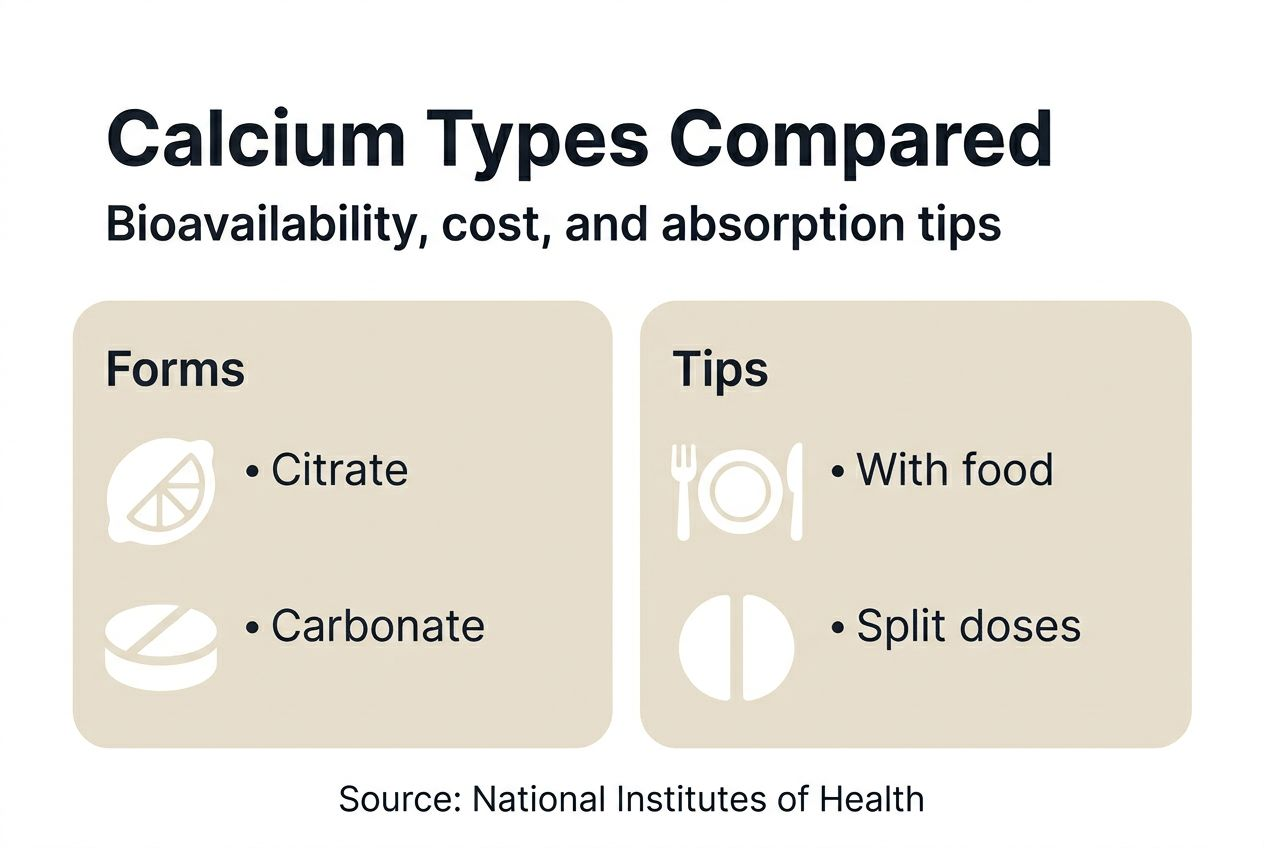
Calcium carbonate costs less and provides more elemental calcium per pill, but requires stomach acid for optimal absorption. Taking it with meals maximizes effectiveness. People over 50 or those taking acid-reducing medications absorb carbonate poorly, making citrate the better choice despite higher cost.
| Supplement Form | Absorption Rate | Best Taken | Ideal For |
|---|---|---|---|
| Calcium Citrate | 25-35% | Anytime | Older adults, low stomach acid, acid-reducer users |
| Calcium Carbonate | 20-25% (with food) | With meals | Younger adults, those seeking cost-effective option |
| Calcium Phosphate | 20-30% | With food | People avoiding carbonate or citrate |
Dosing strategy matters as much as supplement form. Supplements should be divided into doses of no more than 500 mg to enhance absorption and reduce side effects. Your body can only absorb about 500 mg at once, so taking 1,000 mg in one dose wastes half the calcium and increases constipation risk.
Follow these steps for optimal supplementation:
- Calculate your dietary calcium intake from food and fortified products first
- Determine your shortfall compared to recommended daily amounts (1,000-1,200 mg for most adults)
- Select a supplement form based on age, digestive health, and convenience preferences
- Divide your supplement dose into 400-500 mg increments taken throughout the day
- Pair calcium with vitamin D for maximum absorption and bone benefits
- Take calcium citrate between meals or with food; always take carbonate with meals
Pro Tip: Avoid taking calcium supplements with iron supplements or high-fiber foods. Both interfere with calcium absorption. Space calcium and iron doses at least two hours apart, and take calcium away from bran cereals or high-phytate foods.
Understanding what is bioavailability helps you appreciate why supplement form and timing dramatically affect results. Higher bioavailability means your body actually uses more of what you consume, reducing waste and improving outcomes.
Explore science-backed supplements to support your calcium intake
Making informed choices about calcium supplementation protects your bone health for decades to come. Now that you understand the science behind absorption, dosing, and nutrient interactions, you’re ready to select products that deliver real results.

NutriBliss offers carefully formulated supplements designed with bioavailability and nutrient synergy in mind. Their product line emphasizes science-backed ingredients that work together to support bone health and overall wellness. Whether you need calcium, vitamin D, magnesium, or comprehensive mineral support, their supplements collection provides quality options backed by nutritional research.
Exploring the science behind superfoods reveals how whole-food ingredients complement targeted supplementation for comprehensive nutritional support. Combining high-quality supplements with informed choices enhances your wellness journey and helps you achieve lasting health benefits.
Frequently asked questions about calcium and supplementation
How much calcium should adults aim to consume daily?
Adults ages 19-50 need 1,000 mg daily, while women over 50 and men over 70 require 1,200 mg. Aim to get most calcium from food sources like dairy, leafy greens, and fortified products, supplementing only to fill gaps.
What are the best dietary sources of calcium?
Dairy products lead with 300 mg per cup of milk or yogurt. Fortified plant milks, canned sardines with bones, tofu made with calcium sulfate, collard greens, and fortified orange juice provide excellent non-dairy options.
Can calcium supplements cause side effects?
Yes, constipation and gas commonly occur, especially with calcium carbonate. Taking smaller divided doses reduces these effects. Excessive intake over 2,500 mg daily risks kidney stones and may interfere with absorption of other minerals.
Is vitamin D testing necessary before taking calcium supplements?
Testing helps optimize results since low vitamin D levels drastically reduce calcium absorption. If you have risk factors like limited sun exposure, dark skin, or are over 50, testing ensures your vitamin D status supports calcium utilization.
How can I improve calcium absorption naturally?
Maintain adequate vitamin D through sunlight or supplements, include magnesium-rich foods, practice weight-bearing exercise that stresses bones, limit excessive caffeine and sodium that increase calcium excretion, and avoid taking calcium with high-fiber meals that bind minerals.