

Milk, yogurt, bananas, potatoes, avocados, spinach, beans, nuts, seeds, coconut water, orange juice, salted broths, and plain table salt all supply electrolytes, and most of them are already sitting in your kitchen. You don’t need a specialty drink to hit your daily sodium, potassium, calcium, or magnesium targets. Here’s a fast list to work from:
- Grab-and-go: bananas, oranges, avocados
- Fridge staples: milk, yogurt, cheese
- Pantry staples: almonds, pumpkin seeds, canned beans, table salt
- Beverages: coconut water, orange juice, low-sodium vegetable juice, salted broth
Pro Tip: Pair a banana with a few salted pretzels after a sweaty workout. It’s a cheap, two-minute way to replace both the potassium and sodium you just lost.
Key Takeaways
Food-first electrolyte replacement works for nearly everyone, and targeted drinks or supplements only become necessary during prolonged heavy sweating or clinical fluid loss.
| Point | Details |
|---|---|
| Everyday foods cover most needs | Milk, bananas, potatoes, spinach, and beans supply the major electrolytes without added sugar. |
| Potassium target matters | The DASH plan recommends about 4,700 mg of potassium daily, largely from produce. |
| Sweat losses need both minerals | Replace sodium and potassium together after heavy sweating, not sodium alone. |
| Watch for red-flag symptoms | Confusion, fainting, or irregular heartbeat call for medical attention, not home remedies. |
| Nutribliss fits the gaps | Nutribliss offers a transparent, low-sugar electrolyte supplement for prolonged exertion or heat exposure when food alone isn’t enough. |
Table of Contents
- What Has Electrolytes and What Are They, Exactly?
- What Do Electrolytes Actually Do in Your Body?
- What Foods and Drinks Contain Electrolytes?
- How Do You Replenish Electrolytes Naturally?
- What Are the Signs of an Electrolyte Imbalance?
- What Do Experts Say About Food vs. Supplements?
- A Publisher’s Note on Food-First Hydration
- Ready to Fill the Gaps Food Doesn’t Cover?
- Frequently Asked Questions
- Sources
What Has Electrolytes and What Are They, Exactly?
Electrolytes are minerals that carry an electric charge, and that charge is what lets your cells send signals, contract muscles, and keep fluid balanced between blood and tissue, according to MedlinePlus. Asking what has electrolytes is really asking which foods deliver these charged minerals in usable amounts.
The main ones to track are:
- Sodium — table salt, broths, cured meats
- Potassium — bananas, potatoes, beans
- Chloride — usually travels with sodium in salty foods
- Magnesium — nuts, seeds, leafy greens
- Calcium — dairy, fortified plant milks, sardines
- Phosphate — dairy, meat, whole grains
Bicarbonate also plays a buffering role, helping keep blood pH stable, though it isn’t something you eat directly. Dairy leans toward calcium and phosphate; bananas and potatoes lean toward potassium. Once you know which mineral does what, grocery shopping gets a lot less confusing.
What Do Electrolytes Actually Do in Your Body?
Electrolytes keep fluid balanced inside and outside your cells, fire your nerve signals, contract your muscles, and help regulate blood pressure and pH, per NCBI’s StatPearls overview. Each mineral has its own job, though they often work as a team:
- Sodium pulls water into your bloodstream and helps maintain blood volume
- Potassium supports healthy blood pressure and steady heart rhythm
- Calcium triggers muscle contraction, including your heartbeat
- Magnesium helps convert food into usable energy and calms nerve activity
- Chloride works alongside sodium to maintain fluid balance
- Phosphate partners with calcium in bone structure and cellular energy
The DASH eating plan targets roughly 4,700 mg of potassium a day for blood pressure support, a figure most people fall short of without deliberately eating potassium-rich produce.
Your body normally regulates all of this automatically through your kidneys and hormones. That regulation gets stressed during heavy sweating, prolonged vomiting or diarrhea, or with certain medical conditions, which is when food or fluid replacement actually starts to matter.
What Foods and Drinks Contain Electrolytes?
Food-first is the smartest strategy for nearly everyone, and the good news is every major electrolyte shows up generously across ordinary grocery items.
| Electrolyte | Everyday Food Sources | Typical Serving Example |
|---|---|---|
| Potassium | Banana, potato, spinach, beans | Medium baked potato ≈ 941 mg potassium |
| Sodium | Table salt, broth, cured meats, cheese | 1 cup broth ≈ several hundred mg sodium |
| Calcium | Milk, yogurt, sardines, fortified plant milk | 1 cup milk supplies a meaningful daily share |
| Magnesium | Almonds, pumpkin seeds, spinach, black beans | Handful of almonds contributes notably |
Potassium sources worth stocking: bananas, white or sweet potatoes (a medium baked potato delivers about 941 mg), spinach, white beans, and avocado.
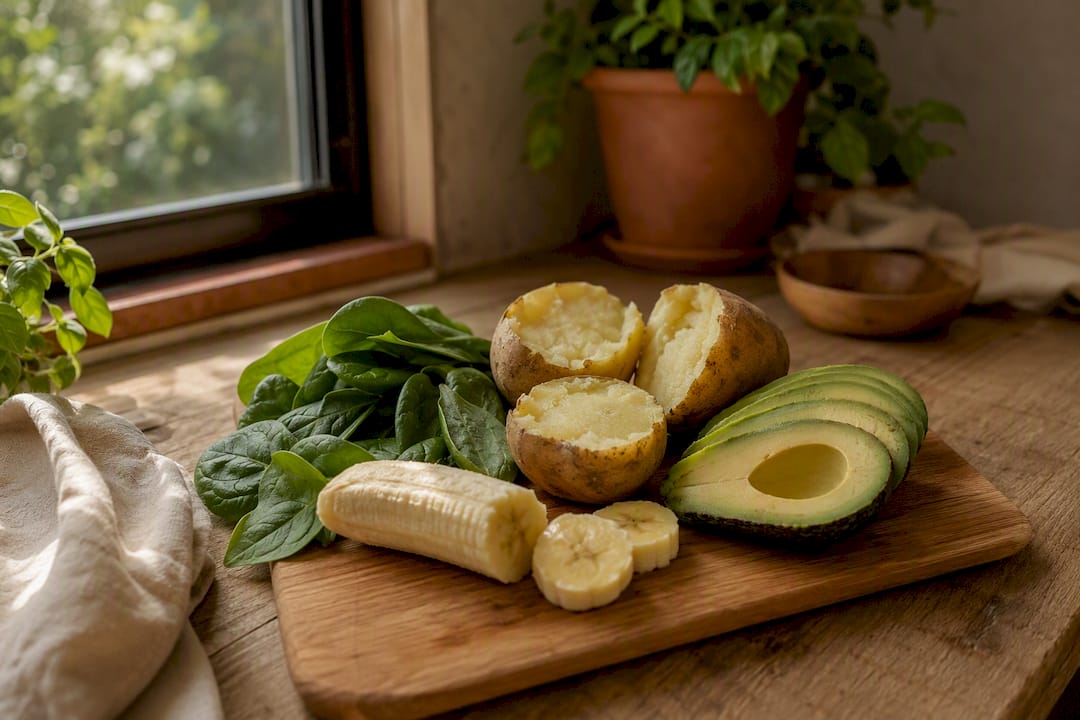
Sodium sources: table salt, pickles, salted broths, deli meats, and cheese. Most people get plenty of sodium without trying; the concern is usually too much, not too little.

Calcium sources: milk, yogurt, cheese, fortified plant-based milks, and canned sardines with bones.
Magnesium sources: almonds, cashews, pumpkin seeds, spinach, and black beans.
Chloride sources: it rides along with sodium, so salted foods and table salt cover both.
Phosphate sources: dairy, meat, poultry, and whole grains.
Coconut water and orange juice are both recognized as high-potassium beverage options, while milk covers calcium, sodium, and potassium in one glass. Low-sugar sports drinks can help during long, hot workouts, but they rarely beat whole foods for everyday nutrient density.
Pro Tip: After heavy sweating, pair a sodium source (salted broth or pretzels) with a potassium source (banana or orange juice). That combination replaces the two minerals sweat loses fastest.
For daily eating, lean toward the low-sodium, whole-food versions of these picks. Save the saltier or sweeter options for when you’ve genuinely lost a lot of fluid through exercise, heat, or illness.
How Do You Replenish Electrolytes Naturally?
Food covers daily electrolyte needs for almost everyone; drinks and supplements only earn their place during prolonged heavy sweating, illness with significant fluid loss, or a specific clinical need. Sweat is mostly water and salt, with smaller amounts of potassium and magnesium mixed in, so replacing it isn’t just about chugging water, according to NPR’s reporting on hydration science.
A few practical moves:
- Snack on yogurt with berries, or a banana with almond butter, for a balanced electrolyte mix.
- Sip coconut water or milk after a workout instead of reaching for a sugary sports drink.
- For mild illness with fluid loss, a homemade oral rehydration mix of water, a pinch of salt, and a small amount of sugar can help, following guidance from a healthcare provider.
- Read supplement labels closely. Watch the sugar count and check that the ingredient list is actually transparent about dosages.
Pro Tip: If you’re watching calories, skip the high-sugar commercial electrolyte drinks and look for low-calorie or unsweetened powder options instead.
If you have kidney disease, heart failure, or take medications that affect potassium or sodium, talk to a clinician before adding any electrolyte supplement to your routine.
What Are the Signs of an Electrolyte Imbalance?
Confusion, fainting, severe muscle weakness, an irregular heartbeat, or prolonged vomiting and diarrhea are the clearest signals something is off, and they warrant medical attention rather than a home fix.
- Low potassium (hypokalemia): muscle weakness, cramping, irregular heart rhythm
- High potassium (hyperkalemia): dangerous heart rhythm changes, sometimes with little warning
- Low sodium (hyponatremia): headache, nausea, confusion
- Low magnesium: tremors, muscle cramps, fatigue
A basic metabolic panel or dedicated electrolyte panel, ordered through blood work, catches most of these issues. Home test kits exist but aren’t a substitute for lab-grade testing when symptoms are serious. If you’re having chest pain, fainting spells, or persistent confusion, that’s an emergency room visit, not a wait-and-see situation.
What Do Experts Say About Food vs. Supplements?
Most healthy people meet their electrolyte needs through balanced meals alone; supplements earn their spot only during endurance events, extended heat exposure, or medical fluid loss, according to Harvard’s Nutrition Source. The body’s own hormonal and kidney-based regulation is remarkably good at keeping things stable without help.
Pro Tip: Favor low-sugar electrolyte formulations, and if you have kidney or heart conditions, check with your doctor before adding any supplement. Medical centers echo this caution consistently, warning that added sugar without added benefit is the more common problem, not deficiency.
Nutribliss builds its electrolyte formulas around that same food-first philosophy, using transparent ingredient labeling so you know exactly what you’re adding to a normally balanced diet. #nutribliss
A Publisher’s Note on Food-First Hydration
At Nutribliss, we recommend building your electrolyte intake from real food first: milk, bananas, potatoes, leafy greens. Supplements have a place, but only when sweat losses or medical needs genuinely outpace what a normal diet provides.
- We publish ingredient transparency and formulation details on our science page, because credibility should be checkable, not just claimed.
Ready to Fill the Gaps Food Doesn’t Cover?
If your diet already leans on bananas, dairy, and salted broths, you’re covering most of your bases. But for long training days, heat waves, or travel when fresh produce isn’t available, a clean electrolyte supplement fills the gap without the sugar overload of typical sports drinks. Nutribliss formulates its electrolyte supplement with ingredient transparency front and center, so you can check exactly what’s inside before it goes in your water bottle. For a deeper look at the formulation science behind it, visit our science page. If you’re training seriously, pairing whole foods with a science-backed hydration strategy rounds out the picture. When you’re ready to try a food-first supplement built for exactly these gaps, the product page is the place to start. #nutribliss
Frequently Asked Questions
What has electrolytes besides sports drinks? Milk, yogurt, bananas, potatoes, leafy greens, beans, nuts, coconut water, and orange juice all supply electrolytes without the added sugar found in many commercial sports drinks.
Can I test electrolytes at home? Home test kits exist, but a basic metabolic panel or electrolyte panel ordered by a clinician is far more reliable for diagnosing an actual imbalance.
What is a good electrolyte source for muscle cramps? Magnesium-rich foods like almonds, pumpkin seeds, and spinach, paired with potassium sources like bananas or potatoes, are a reasonable first step before considering a supplement.
Do fruits have electrolytes? Yes. Bananas and oranges are particularly high in potassium, and orange juice is a recognized beverage source of the same mineral.
When should I see a doctor about electrolyte imbalance? Seek care if you experience confusion, fainting, severe weakness, an irregular heartbeat, or prolonged vomiting or diarrhea, since these can signal a dangerous imbalance.
This article is general information, not a substitute for advice from a qualified doctor. Consult a qualified healthcare professional about your own circumstances before acting on anything here.
Sources
- Electrolyte drinks | The Nutrition Source, Harvard T.H. Chan School of Public Health
- Fluid and electrolyte balance - MedlinePlus
- Electrolytes - StatPearls - NCBI Bookshelf
- Food Sources of Potassium — NHLBI (DASH resources)