

Over 40 percent of American adults report experiencing muscle cramps during exercise, often linked to electrolyte imbalance. As fitness routines intensify, understanding how these minerals influence hydration, nerve function, and muscle performance becomes a game changer for anyone aiming to improve their health. This guide uncovers how electrolyte balance supports athletic results and reveals simple strategies American fitness enthusiasts can use to stay at their physical best.
Table of Contents
- Understanding Electrolytes And Their Functions
- Types Of Electrolytes Essential For Fitness
- How Electrolytes Impact Hydration And Muscle Performance
- Signs Of Electrolyte Imbalance In Active Lifestyles
- Choosing And Using Electrolyte Supplements Safely
Key Takeaways
| Point | Details |
|---|---|
| Understanding Electrolytes’ Importance | Electrolytes play essential roles in hydration, muscle performance, and overall cellular health, making their balance critical for optimal physiological function. |
| Monitoring Electrolyte Levels | Athletes should track sweat loss and electrolyte levels during workouts to create personalized hydration and replacement strategies. |
| Recognizing Imbalance Symptoms | Common signs of electrolyte imbalance include muscle cramps, fatigue, and dizziness, indicating the need for immediate management. |
| Careful Supplementation | Consultation with healthcare professionals is vital before starting electrolyte supplements to align with individual needs and avoid potential health risks. |
Understanding Electrolytes and Their Functions
Electrolytes are essential minerals that conduct electrical charges within the human body, playing a critical role in numerous physiological processes. These charged minerals maintain critical bodily functions that range from hydration to muscle performance. Understanding their complex interactions helps athletes and fitness enthusiasts optimize their physical potential.
The primary electrolytes include sodium, potassium, chloride, calcium, and magnesium. Each electrolyte serves unique functions that contribute to overall cellular health. Cellular homeostasis depends on precise electrolyte balance, which regulates nerve impulse transmission, muscle contractions, and acid-base equilibrium. When these minerals are properly balanced, they enable smooth communication between cells, support metabolic processes, and help maintain optimal physical performance.
For fitness enthusiasts, electrolyte management becomes especially crucial during intense physical activities. Sweating depletes these essential minerals, potentially leading to decreased performance, muscle cramps, and fatigue. The body requires consistent electrolyte replacement to maintain peak physiological function. Athletes can support their electrolyte balance through strategic hydration, targeted supplementation from resources like the Nutribliss electrolytes guide, and understanding individual nutritional needs.
Pro Tip: Personalize Your Electrolyte Intake: Track your individual sweat rate and electrolyte loss during workouts by weighing yourself before and after exercise, helping you develop a precise replacement strategy tailored to your unique physiological requirements.
Types of Electrolytes Essential for Fitness
Fitness performance relies on five primary electrolytes, each playing a unique and critical role in maintaining physiological function. Sodium and potassium emerge as key players in regulating fluid balance and nerve function, making them fundamental to athletic performance and recovery. These minerals work synergistically to control hydration levels, muscle contractions, and cellular communication.
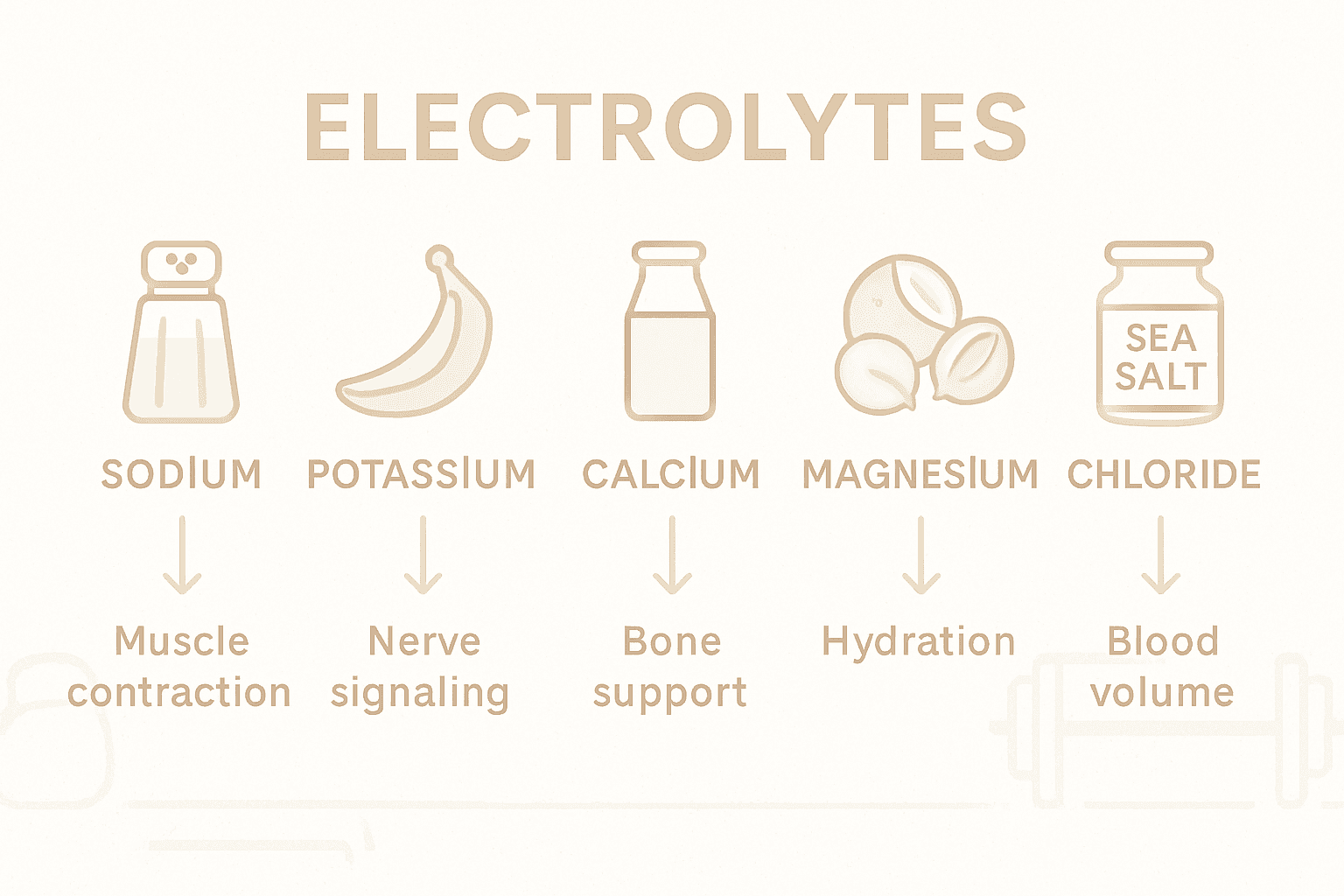
Calcium and magnesium represent another crucial electrolyte pair with significant implications for fitness enthusiasts. Calcium drives muscle contractions and supports nerve signaling, while magnesium plays a pivotal role in energy metabolism and muscle recovery. Athletes often overlook magnesium, yet its importance in muscle function cannot be understated, particularly during high-intensity training sessions.
Chloride, though less discussed, completes the essential electrolyte lineup. This mineral helps maintain proper blood volume, supports digestive processes, and assists in maintaining the body’s acid-base balance. When athletes experience electrolyte depletion through intense workouts and excessive sweating, they risk compromising their performance and recovery potential. Strategic electrolyte replacement becomes crucial in maintaining optimal physiological function and preventing exercise-induced fatigue.
The following table offers a concise reference of the main electrolytes, highlighting their primary functions and potential effects when imbalanced:
| Electrolyte | Main Physiological Role | Effect of Deficiency |
|---|---|---|
| Sodium | Regulates fluid balance and nerve impulses | Headache, muscle cramps, dizziness |
| Potassium | Maintains cellular hydration, supports nerve signals | Weakness, irregular heartbeat, fatigue |
| Calcium | Drives muscle contraction, aids nerve signaling | Muscle spasms, numbness, low bone density |
| Magnesium | Supports energy metabolism and muscle recovery | Fatigue, cramps, poor performance |
| Chloride | Maintains acid-base balance and blood volume | Nausea, weakness, pH imbalance |
Pro Tip: Electrolyte Mapping: Create a personalized electrolyte tracking chart that monitors your individual mineral loss during different workout intensities, helping you develop a targeted replacement strategy that matches your specific fitness demands.
How Electrolytes Impact Hydration and Muscle Performance
Electrolytes are critical determinants of muscle performance and hydration status, acting as fundamental regulators of cellular function during physical exertion. Oral carbohydrate-electrolyte supplementation demonstrates significant improvements in sports performance and cardiovascular response, highlighting the intricate relationship between electrolyte balance and athletic capabilities. These charged minerals facilitate precise muscle contractions, neural signaling, and fluid distribution throughout the body.

During intense physical activity, the body loses electrolytes through sweat, creating a dynamic challenge for muscle function and overall performance. Sodium and potassium play pivotal roles in maintaining cellular water balance, preventing muscle cramps, and supporting rapid energy transmission. Hydration strategies that incorporate targeted electrolyte replacement can dramatically mitigate performance decline and reduce recovery time.
Muscle performance is fundamentally dependent on electrolyte concentration and balance. When electrolyte levels drop, athletes experience decreased muscle responsiveness, reduced power output, and increased fatigue. Calcium and magnesium contribute to muscle contraction mechanics, while chloride helps maintain optimal blood volume and acid-base equilibrium. This delicate biochemical interplay ensures that muscles can contract efficiently, generate power, and recover quickly after strenuous exercise.
Pro Tip: Sweat Tracking: Weigh yourself before and after workouts to calculate precise electrolyte and fluid loss, enabling you to develop a personalized hydration and replacement strategy that matches your individual physiological needs.
Signs of Electrolyte Imbalance in Active Lifestyles
Athletes and fitness enthusiasts must recognize the subtle yet critical indicators of electrolyte disruption that can compromise performance and overall health. Common physiological warning signs include muscle cramps, persistent fatigue, unexpected headaches, dizziness, and sudden onset of nausea, signaling potential mineral imbalances that demand immediate attention and strategic intervention.
The body communicates electrolyte disturbances through multiple complex mechanisms, with muscle function serving as a primary indicator. Sodium and potassium irregularities often manifest as involuntary muscle contractions, reduced strength, and diminished exercise tolerance. Strategic electrolyte management through targeted supplementation can help mitigate these performance-limiting symptoms and restore optimal physiological function.
Severe electrolyte imbalances present more alarming neurological and cardiovascular symptoms that athletes cannot ignore. Irregular heartbeat, cognitive confusion, and potential seizure risks underscore the critical importance of maintaining precise mineral equilibrium. Professional athletes and weekend warriors alike must develop keen body awareness, recognizing that seemingly minor symptoms can indicate significant underlying electrolyte disruptions that compromise both short-term performance and long-term health.
Pro Tip: Symptom Tracking: Maintain a detailed workout journal documenting your physical sensations, hydration intake, and any unusual bodily responses to create a personalized early warning system for potential electrolyte imbalances.
Choosing and Using Electrolyte Supplements Safely
Electrolyte supplementation requires a strategic and informed approach to ensure optimal health and performance. Research indicates that athletes should be cautious about relying solely on electrolyte supplements to prevent physiological imbalances, emphasizing the importance of understanding individual nutritional needs and potential limitations of these products.
Understanding the composition of electrolyte supplements is crucial for making informed choices. Many supplements contain high sodium concentrations that can potentially contribute to excessive sodium intake, which may pose health risks if not carefully monitored. Consumers should prioritize supplements with balanced mineral profiles, avoiding products with unnecessary additives or extreme mineral concentrations that could disrupt the body’s natural electrolyte equilibrium.
Consultation with healthcare professionals becomes essential when integrating electrolyte supplements into fitness routines. Factors such as individual sweat rates, exercise intensity, duration, and personal health conditions significantly influence supplementation requirements. Comprehensive electrolyte supplement reviews can provide additional insights into selecting appropriate products that align with specific fitness goals and physiological needs.
Here is a comparison of natural food sources versus supplements for meeting electrolyte needs:
| Method | Advantages | Drawbacks |
|---|---|---|
| Whole Foods | Provides additional nutrients and fiber | May be insufficient during intense workouts |
| Supplements | Convenient and precise dosing | Risk of overconsumption, possible additives |
Pro Tip: Personalized Supplementation: Conduct a comprehensive sweat test with a sports nutritionist to determine your precise electrolyte loss during exercise, enabling you to select supplements that match your unique metabolic profile and performance demands.
Optimize Your Fitness Performance with Targeted Electrolyte Support
Maintaining the right electrolyte balance is essential for anyone serious about fitness and recovery. The article highlights the challenges athletes face such as muscle cramps, fatigue, and decreased performance caused by electrolyte depletion. Understanding key minerals like sodium, potassium, calcium, and magnesium can empower you to personalize your hydration and recovery strategy for maximum gains.
To support your goals, explore our wide range of Fitness Supplements designed to replenish vital electrolytes and enhance muscle function.

Take control of your workout results today by choosing supplements that are scientifically crafted for effective electrolyte replacement. Visit Nutribliss.us now to find top-quality products and expert guidance. Don’t let imbalances hold you back from achieving your peak performance and fast recovery. Start your personalized supplement journey with Recovery Supplements that meet your unique needs and fuel your fitness success.
Frequently Asked Questions
What are electrolytes and why are they important for fitness?
Electrolytes are essential minerals that conduct electrical charges in the body. They play a critical role in hydration, muscle performance, and nerve function, crucial for athletes and fitness enthusiasts during physical activities.
How do electrolytes affect hydration levels during exercise?
Electrolytes, particularly sodium and potassium, help maintain fluid balance in the body. They prevent dehydration by regulating the distribution of water in and out of cells, which is vital during intense workouts when electrolytes are lost through sweat.
What are the signs of electrolyte imbalance during workouts?
Common signs of electrolyte imbalance include muscle cramps, fatigue, headaches, dizziness, and nausea. Recognizing these symptoms early is essential for maintaining performance and health during physical activities.
How can I effectively manage my electrolyte intake for optimal performance?
Effective management includes hydration strategies that incorporate electrolyte-rich foods or supplements. Tracking your sweat rate during workouts can help determine your individual electrolyte needs, thus allowing for personalized replacement strategies.