

TL;DR:
- Hydrolyzed collagen or gelatin paired with vitamin C taken before loading improves tendon structure, requiring weeks to months. Most benefits depend on combining targeted supplementation with mechanical stress and proper dosing timing. Weaker evidence supports secondary supplements like omega-3s or curcumin for inflammation and symptom relief.
The single most effective nutritional strategy for tendon repair is hydrolyzed collagen or gelatin taken with vitamin C, timed roughly 60 minutes before progressive tendon loading. That combination has the strongest human evidence for improving tendon cross-sectional area and stiffness. Everything else, from curcumin to omega-3s, plays a supporting role at best.
TL;DR:
- Collagen peptides or gelatin: a dose of collagen peptides or gelatin paired with vitamin C, taken about 60 minutes before loading sessions
- Vitamin C: required cofactor for collagen cross-linking; pair it with every collagen dose
- Secondary options: MSM, bromelain, curcumin, omega-3s, and zinc may reduce inflammation or support connective tissue, but evidence is weaker
- Timing matters: training-day dosing with a mechanical loading stimulus produces better outcomes than supplementation alone
- Realistic timeline: structural tendon changes (stiffness, cross-sectional area) typically appear over weeks to months in trials, not days
A 2024 meta-analysis of 19 studies (n=768) found collagen peptide supplementation combined with structured resistance training produced a pooled standardized mean difference of 0.67 (p < 0.01) for tendon morphology outcomes, a meaningful effect by clinical standards.
Table of Contents
- What does the research actually say about tendon supplements?
- Which supplements have the best evidence for tendon repair?
- How should you dose and time tendon supplements?
- Are there safety concerns or drug interactions to know about?
- Which supplements have weak or mixed evidence?
- What does a research-informed 8–12 week tendon protocol look like?
- Key Takeaways
- The supplement industry gets tendons wrong more often than it gets them right
- Key sources and further reading
What does the research actually say about tendon supplements?
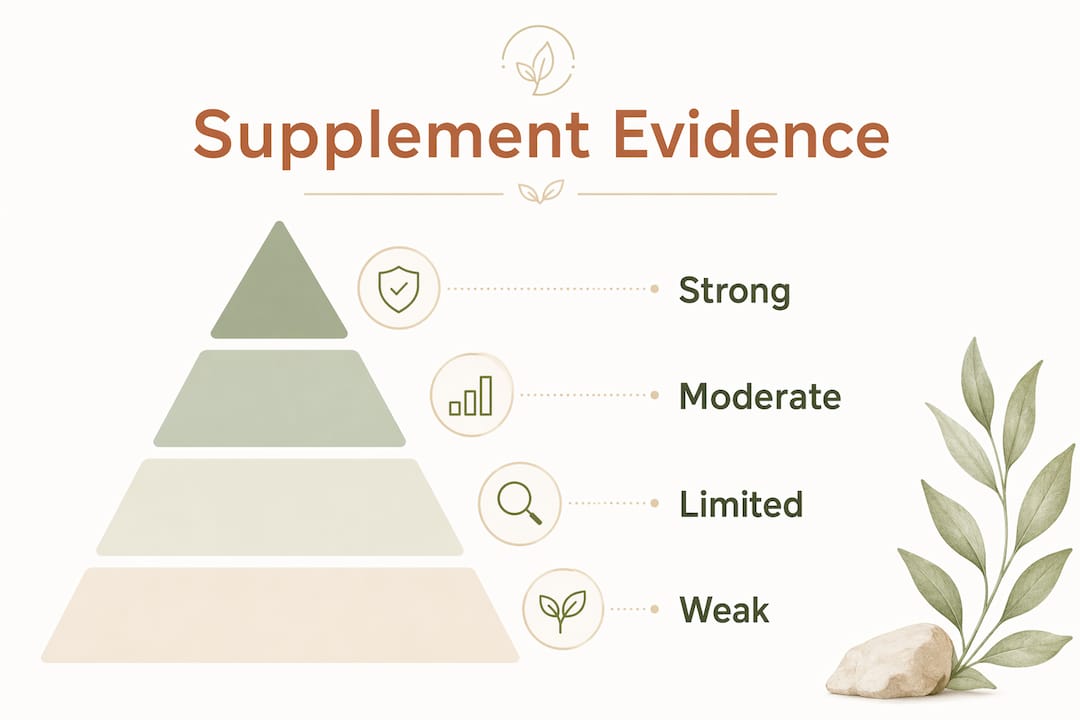
The evidence base for tendon health nutrition has grown considerably, but it is not uniform. Collagen peptides combined with exercise sit at the top of the evidence hierarchy. Everything else requires more caution.
The 2024 meta-analysis cited above pooled 19 studies and found a statistically significant, clinically meaningful improvement in tendon morphology when collagen supplementation was paired with structured resistance training. Importantly, the effect was not just statistical noise: the pooled SMD of 0.67 represents a moderate-to-large effect in musculoskeletal research terms. A systematic review of nutrition and tendinopathy confirmed that collagen-derived peptides are the most consistently evaluated supplement in this space, often showing structural or clinical improvements when exercise is part of the protocol.
That said, the field has real limitations. Trial heterogeneity is high: doses range from 5 g to 30 g per day, study durations vary from weeks to over a year, and many trials use multi-ingredient formulas that make it hard to isolate which component is driving the benefit. Researchers consistently call for standardized dosing, core outcome sets for tendinopathy, and cleaner separation of treatment components to clarify what is actually working.
“Combining training and dietary supplements tends to produce better clinical and functional outcomes in tendinopathy than either approach alone.” — JUMPFOOD trial protocol (2023)
The JUMPFOOD trial, an ongoing RCT for patellar tendinopathy, is one of the cleaner designs in the field. Its protocol specifies 10 g hydrolyzed collagen plus 40 mg vitamin C daily, taken one hour before exercises or in the evening on non-exercise days. Results from that trial will help confirm whether the collagen + loading synergy holds up under rigorous conditions.
Which supplements have the best evidence for tendon repair?
Here is an ingredient-by-ingredient breakdown, ordered by strength of evidence.
Hydrolyzed collagen and collagen peptides (Type I)
This is the anchor of any evidence-based tendon nutrition plan. Trial doses range from 10 g to 30 g per day, with higher doses (15–30 g/day) showing significant between-group improvements in tendon stiffness and Young’s modulus. The mechanism is straightforward: collagen peptides supply the amino acids (glycine, proline, hydroxyproline) that tendons need to build and remodel collagen fibrils. Critically, those raw materials are most likely incorporated into tendon tissue when a localized mechanical loading stimulus is present. Supplementation without loading is far less effective.

Evidence grade: Strong (when paired with progressive loading)
Vitamin C (ascorbic acid) and vitamin C-enriched gelatin
Vitamin C is a required cofactor for the enzymes (prolyl and lysyl hydroxylases) that stabilize and cross-link collagen molecules. Without adequate vitamin C, newly synthesized collagen is structurally weaker. It also acts as an antioxidant during tissue repair, managing oxidative stress at the injury site. Trials vitamin C is typically paired in modest amounts with each collagen dose. That is a modest amount, well within safe ranges, but the co-ingestion timing matters: take them together, not hours apart.
Evidence grade: Strong (as a cofactor; direct tendon RCT evidence for oral supplementation is still emerging)
Gelatin (vitamin C-enriched)
Gelatin is a practical, lower-cost alternative to hydrolyzed collagen peptides and shares a similar amino acid profile, making it a reasonable option for pre-exercise supplementation despite differences in solubility. For readers who prefer whole-food-adjacent options, a small serving of gelatin with citrus juice before a loading session is a reasonable protocol.
Evidence grade: Moderate (similar mechanistic rationale to collagen peptides; fewer dedicated RCTs)
L-arginine and MSM (methylsulfonylmethane)
Both ingredients appear frequently in multi-ingredient tendon formulas. L-arginine is a precursor to nitric oxide and may support collagen synthesis pathways, while MSM provides sulfur, a structural component of connective tissue. The narrative review evidence for both is suggestive but not definitive: most studies are small, short, or embedded in combination formulas that prevent clean attribution. They are not unreasonable additions, but do not anchor a protocol around them.

Evidence grade: Limited
Bromelain, curcumin, and boswellic acids
These three work primarily through anti-inflammatory and antioxidant mechanisms. Bromelain (a pineapple-derived enzyme) may reduce swelling and pain in acute tendon injury. Curcumin (the active compound in turmeric) has well-documented anti-inflammatory properties in vitro and in animal models, but human RCT data for tendons specifically is thin. Boswellic acids follow a similar pattern: promising preclinical signals, limited human tendon data. They are reasonable secondary additions for symptom management, not structural repair.
Evidence grade: Limited to Moderate (symptom support; not structural)
Omega-3 fatty acids
Omega-3 fatty acids modulate systemic inflammation and support connective tissue health generally; however, direct tendon-specific clinical trial evidence remains limited. For someone dealing with chronic tendinopathy, adding a quality fish oil is a low-risk, potentially useful adjunct. Learn more about how sports nutrition fundamentals support inflammation control during recovery.
Evidence grade: Limited (for tendons specifically; strong for systemic inflammation)
Zinc
Zinc supports connective tissue enzymes and wound healing, and while direct tendon-specific trial evidence is sparse, correcting zinc deficiency is advisable. Food sources (meat, shellfish, legumes) are preferable to high-dose supplementation unless a deficiency is confirmed.
Evidence grade: Limited (deficiency correction is warranted; supplementation above adequacy has no clear tendon-specific benefit)
Pro Tip: Before adding multiple supplements, check for vitamin D deficiency. Some studies associate vitamin D deficiency with worse tendon symptoms and longer disease duration — correcting a deficiency costs little and may meaningfully affect recovery.
How should you dose and time tendon supplements?
Timing is not a minor detail here. The reason 60 minutes before loading is the standard recommendation comes from amino acid pharmacokinetics: collagen peptides and gelatin both produce a peak in circulating amino acids roughly 60 minutes after ingestion, which coincides with the training-induced collagen synthesis window. Miss that window and you are still providing building blocks, but the signal to incorporate them into tendon tissue is weaker.
| Supplement | Trial dose range | Practical target | Timing |
|---|---|---|---|
| Hydrolyzed collagen peptides | 10–30 g/day | 15–30 g on training days | 60 min before loading |
| Gelatin (vitamin C-enriched) | 5–15 g/day | 10–15 g on training days | 60 min before loading |
| Vitamin C (with collagen/gelatin) | 40–50 mg minimum | 50 mg co-ingested | Same time as collagen/gelatin |
| MSM | — | — | With meals |
| Omega-3 (EPA + DHA) | — | 2,000 mg | With meals |
| Zinc | 8–11 mg/day (RDA) | Dietary first; supplement if deficient | With meals |
On non-training days, the JUMPFOOD protocol takes collagen in the evening. That is a reasonable approach for daily dosing schedules. The evidence slightly favors training-day dosing when loading is present, but daily dosing is more practical for many people and is not harmful.
Tendon tissue is slow to remodel. Structural changes in cross-sectional area and stiffness typically emerge over 6–12 weeks of consistent supplementation plus loading in trials. Symptom improvements (pain reduction, function) often appear earlier, sometimes within 4–6 weeks, but do not mistake early symptom relief for complete tissue repair.
For total protein, adequate dietary protein is a prerequisite. Amino acids like glycine, leucine, and lysine support collagen synthesis and cross-linking. Collagen peptides are not a complete protein source, so they supplement, not replace, a protein-adequate diet. Aim for general sports nutrition protein targets (roughly 1.6–2.2 g/kg body weight per day) alongside targeted collagen dosing.
Are there safety concerns or drug interactions to know about?
For most healthy adults, the supplements discussed here are well tolerated. But a few specific situations warrant extra attention.
Common side effects:
- Collagen peptides and gelatin: occasional GI upset (bloating, fullness), especially at higher doses; fish-derived collagen may trigger reactions in people with fish allergies
- Bromelain: may cause GI irritation; pineapple allergy is a contraindication
- High-dose curcumin extracts: GI discomfort; rare liver enzyme elevations with very high doses
- MSM: generally well tolerated; mild GI effects at higher doses
Drug and nutrient interactions:
- Bromelain and high-dose curcumin may potentiate anticoagulant medications (warfarin, aspirin, newer blood thinners). If you are on anticoagulants, consult your prescriber before adding either.
- High-dose zinc supplementation can interfere with copper absorption over time; do not supplement zinc above the RDA without a confirmed deficiency.
- Vitamin D supplementation at high doses interacts with certain medications; check with a clinician if you are on digoxin or thiazide diuretics.
Pre-surgery: Pause bromelain, high-dose curcumin, and omega-3 concentrates at least one to two weeks before any planned surgery, as these may affect bleeding time.
Competitive athletes: Many supplement products are not third-party tested for banned substances. If you compete under USADA, WADA, or any sanctioned sports body, use only products certified by NSF Certified for Sport, Informed Sport, or an equivalent program. A positive test from a contaminated product is not an excusable outcome.
Red flags that require a clinician visit:
- Sudden sharp worsening of tendon pain, especially after a pop or snap (possible rupture)
- Swelling, warmth, and redness that spreads (possible infection or systemic inflammatory condition)
- Pain that does not respond at all after 6–8 weeks of consistent loading and supplementation
- Any systemic symptoms (fever, unexplained weight loss) alongside tendon pain
Pro Tip: Pregnancy and immunocompromised individuals should consult a healthcare provider before starting any new supplement regimen, including collagen peptides. Sourcing and purity matter more in these populations.
Which supplements have weak or mixed evidence?
A lot of products marketed for tendon health rely on animal data, small pilot trials, or studies that used multi-ingredient formulas. That does not make them useless, but it does mean you should not pay a premium for them or deprioritize the interventions with stronger evidence.
“Many nutraceuticals show promising mechanisms and small-study signals, but overall lack large, high-quality human trials for definitive recommendations.” — Tendinopathy and nutraceutics narrative review (PMC)
The core problem is attribution. Most interventions in tendon trials combined collagen with other ingredients (MSM, arginine, bromelain, and others), and trial durations varied widely from 1 to 18 months. When a multi-ingredient formula shows a benefit, you cannot tell which ingredient drove it. That is why the collagen + vitamin C combination stands out: it has been tested in cleaner designs with single or dual ingredients.
High-dose single botanicals (boswellia, ginger extract, resveratrol) show structural improvements in animal models that have not translated robustly to human RCTs. Preclinical data is useful for generating hypotheses, not for making purchasing decisions. Similarly, proprietary blends with undisclosed doses are essentially untestable: you cannot verify whether the active ingredient is present at a clinically relevant amount.
The practical takeaway: prioritize collagen plus vitamin C, then consider adding one or two secondary options (omega-3s, curcumin) for their systemic anti-inflammatory benefits, and treat everything else as speculative until better human data arrives.
What does a research-informed 8–12 week tendon protocol look like?
This protocol is designed to pair supplementation with progressive mechanical loading, which is the combination the evidence supports. Review it with a physical therapist or sports medicine clinician before starting, especially if you have a diagnosed tendinopathy.
8–12 week plan overview
Weeks 1–2: Acclimation
- Get a baseline assessment from a clinician or physical therapist: confirm the tendon involved, rule out partial or full rupture, and establish a pain score (use a 0–10 numeric scale or the VISA-P/VISA-A for patellar or Achilles tendinopathy).
- Start collagen peptides at 10–15 g/day with 50 mg vitamin C, taken 60 minutes before any movement session.
- Begin isometric loading only (e.g., wall sits for patellar tendon, calf raises held at end range for Achilles). Isometrics are well tolerated in the early phase and provide a loading stimulus without high tissue stress.
- Track pain before, during, and 24 hours after each session. A pain score of 3–4/10 during exercise is acceptable; above 5/10 or pain that is worse the next morning means reduce load.
Weeks 3–6: Progressive loading plus supplementation
- Increase collagen dose to 15–30 g/day on training days, maintaining the 60-minute pre-loading window.
- Transition from isometric to isotonic loading: slow eccentric and concentric movements (e.g., single-leg decline squats, slow heel drops). Progress load and volume every 1–2 weeks if pain stays within the acceptable range.
- Add secondary supplements if desired: 2,000 mg omega-3 (EPA + DHA) and/or 2,000 mg MSM with meals.
- Maintain total dietary protein at 1.6–2.2 g/kg/day. Adequate protein intake supports the broader tissue repair environment, not just tendon collagen.
Weeks 7–12: Consolidation and return to activity
- Progress to heavier, sport-specific loading: plyometrics, running, or sport-specific drills, depending on the tendon and your activity goals.
- Continue collagen plus vitamin C on training days; daily dosing is fine if your schedule is irregular.
- Reassess with your clinician at week 8 and week 12: compare pain scores, functional tests, and any imaging if ordered.
- Do not rush return to full activity. Structural tendon changes lag behind symptom resolution. Feeling better is not the same as being fully healed.
Product selection checklist
- Choose a collagen product with third-party testing (NSF, Informed Sport, or USP verification)
- Confirm the label lists the dose per serving clearly (not just “collagen blend”)
- Hydrolyzed collagen peptides dissolve more easily than gelatin and are easier to dose precisely; gelatin is a reasonable budget alternative
- Avoid products with proprietary blends that hide individual ingredient doses
- For connective tissue support beyond tendons, resources on collagen and bone health offer useful background on how collagen functions across the musculoskeletal system
Practitioner checklist (print or share)
- Confirm diagnosis and rule out rupture before starting loading
- Establish baseline pain and function scores
- Review current medications for interactions (anticoagulants, immunosuppressants)
- Check vitamin D status; correct deficiency if present
- Prescribe progressive loading program with clear pain-monitoring rules
- Reassess at 6–8 weeks; adjust load and supplement dose based on response
- Advise athlete on third-party testing requirements if competing under a sanctioned body
Key Takeaways
Hydrolyzed collagen or gelatin taken with vitamin C, timed 60 minutes before progressive tendon loading, is the most evidence-supported nutritional strategy for improving tendon structure and recovery.
| Point | Details |
|---|---|
| Collagen + vitamin C timing | Take 10–30 g collagen with 40–50 mg vitamin C about 60 minutes before each loading session. |
| Loading is non-optional | Supplementation without mechanical loading produces weaker outcomes; the two work together. |
| Expect weeks to months | Structural tendon changes (stiffness, cross-sectional area) typically appear over 6–12 weeks in trials. |
| Secondary supplements | Omega-3s, MSM, and curcumin may support inflammation control but have weaker direct tendon evidence. |
| Nutribliss collagen peptides | Nutribliss offers grass-fed collagen peptides with clear per-serving dosing, suitable for the pre-loading protocol above. |
The research is clear on one point: no supplement replaces structured mechanical loading. The best outcomes in every systematic review come from combining both.
The supplement industry gets tendons wrong more often than it gets them right
Most tendon supplement marketing leads with inflammation. Reduce the inflammation, the pitch goes, and the tendon heals. That framing is backwards. Chronic tendinopathy is not primarily an inflammatory condition in the classical sense. It is a failed healing response, a degenerative process where the tendon’s structural matrix breaks down faster than it rebuilds. Anti-inflammatory agents can reduce pain, which matters, but they do not rebuild collagen fibrils.
The collagen plus loading protocol is compelling precisely because it addresses the actual problem: giving the tendon the raw materials it needs (amino acids, vitamin C for cross-linking) at the moment the tissue is most receptive to incorporating them (during and after mechanical loading). That is a mechanistically coherent approach, not just a correlation from a small trial.
What gets underestimated is the patience required. Tendons have poor blood supply compared to muscle. Remodeling is slow. Readers who start a collagen protocol and feel better in two weeks are experiencing symptom relief, not structural repair. The trials that show meaningful changes in tendon cross-sectional area and stiffness run for 12 weeks or more. Stopping early because you feel fine is one of the most common reasons tendinopathy recurs.
At #nutribliss, the commitment is to evidence-first guidance: no overpromising, no proprietary blends with hidden doses, and no shortcuts past the loading work. Supplements are tools in a larger plan. Consult a physical therapist or sports medicine physician to build the loading side of that plan for your specific tendon and activity level.
Nutribliss supports your tendon recovery with science-backed collagen
Tendon recovery takes the right raw materials and the right loading stimulus. Nutribliss carries grass-fed collagen peptides formulated for clear, precise dosing, so you can follow the 10–30 g pre-loading protocol without guesswork about what is in each serving. Every product in the Nutribliss supplement collection is selected with ingredient transparency as a baseline requirement.

Nutribliss is a dietary supplement retailer. Products are intended to support a healthy lifestyle alongside, not in place of, professional medical or physical therapy care. Browse the science behind our formulations to see the evidence standards we apply to ingredient selection. #nutribliss
Key sources and further reading
The sources below informed this article. Each entry notes what it covers so you can follow up on the specific evidence most relevant to your situation.
| Source | What it covers |
|---|---|
| Meta-analysis: collagen peptides and tendon morphology (2024) | Pooled analysis of 19 studies (n=768); SMD 0.67 for tendon morphology with collagen + resistance training |
| Nutrition and tendinopathy systematic review (Tandfonline) | Broad systematic review of nutritional interventions; collagen peptides most consistently evaluated |
| Collagen supplementation and tendon outcomes (MDPI) | Systematic review; higher doses (15–30 g/day) associated with greater stiffness improvements |
| JUMPFOOD trial protocol (Trials, 2023) | Ongoing RCT for patellar tendinopathy; 10 g collagen + 40 mg vitamin C, pre-exercise timing |
| Vitamin C and collagen synthesis (PMC) | Mechanism review: vitamin C as cofactor for prolyl/lysyl hydroxylases; antioxidant role in repair |
| Tendinopathy and nutraceutics narrative review (PMC) | Reviews MSM, bromelain, curcumin, arginine, boswellia; cautions on evidence quality |
| Tendinopathy: pathophysiology and nutrition (PMC) | Covers amino acid roles (glycine, leucine, lysine) and dietary protein adequacy for tendon repair |
| Vitamin D and tendon outcomes | Association of vitamin D deficiency with worse tendon symptoms and longer disease duration |
| Vitamin C injection RCT for flexor tendon repair (PMC) | RCT of local vitamin C injection post-surgery; favorable trend in ROM and function, not statistically significant |
These sources are a starting point, not a substitute for a clinical evaluation. A sports medicine physician or physical therapist can interpret this evidence in the context of your specific injury, imaging findings, and activity demands.
This article is general educational information, not medical advice. Confirm any supplement or rehabilitation plan with a qualified healthcare provider for your individual situation.