

More American consumers are choosing supplements that do more than support personal health. The demand for sustainable options is reshaping what shoppers expect from vitamins and nutrition products. With over 60 percent of environmentally aware Americans reporting that they prefer brands with transparent sourcing and ethical practices, understanding what actually makes a supplement sustainable can help guide healthier, planet-friendly decisions.
Table of Contents
- What Makes A Supplement Sustainable
- Types Of Sustainable Supplements Explained
- Environmental And Ethical Impacts Of Supplements
- Health Benefits And Consumer Safety Concerns
- Risks Of Non-Sustainable Supplement Choices
Key Takeaways
| Point | Details |
|---|---|
| Sustainable Supplements Principle | Focus on environmental impact, ethical sourcing, and community support while delivering nutritional benefits. |
| Transparency in Production | Research brands for clear documentation on ingredient sourcing and manufacturing practices to ensure sustainability. |
| Health Benefits versus Safety | Supplements can enhance wellness, but understanding potential interactions and health contexts is essential for safety. |
| Risks of Non-Sustainable Choices | Non-sustainable supplements contribute to climate change and resource depletion, impacting long-term ecological health. |
What Makes a Supplement Sustainable
Sustainable supplements go beyond traditional nutritional support, representing a holistic approach that considers environmental impact, ethical production, and long-term planetary wellness. Sustainable nutrition principles emphasize creating nutrient-dense products while preserving ecological resources and supporting local communities.
Key characteristics of truly sustainable supplements include responsible sourcing of raw materials, minimizing carbon footprint, supporting biodiversity, and implementing ethical manufacturing processes. These elements ensure that nutritional products not only benefit individual health but also contribute positively to global environmental conservation. Sustainable supplement production involves carefully evaluating each stage of development:
- Ethical ingredient sourcing from regenerative agricultural practices
- Utilizing renewable energy in manufacturing facilities
- Implementing recyclable or biodegradable packaging
- Supporting fair labor practices for agricultural and production workers
- Maintaining transparent supply chain accountability
#Nutribliss recognizes that sustainable supplementation requires a comprehensive approach that balances human nutritional needs with ecological preservation. Third party testing standards play a critical role in verifying the integrity and sustainability of nutritional products, ensuring consumers receive high-quality supplements that align with environmental stewardship principles.
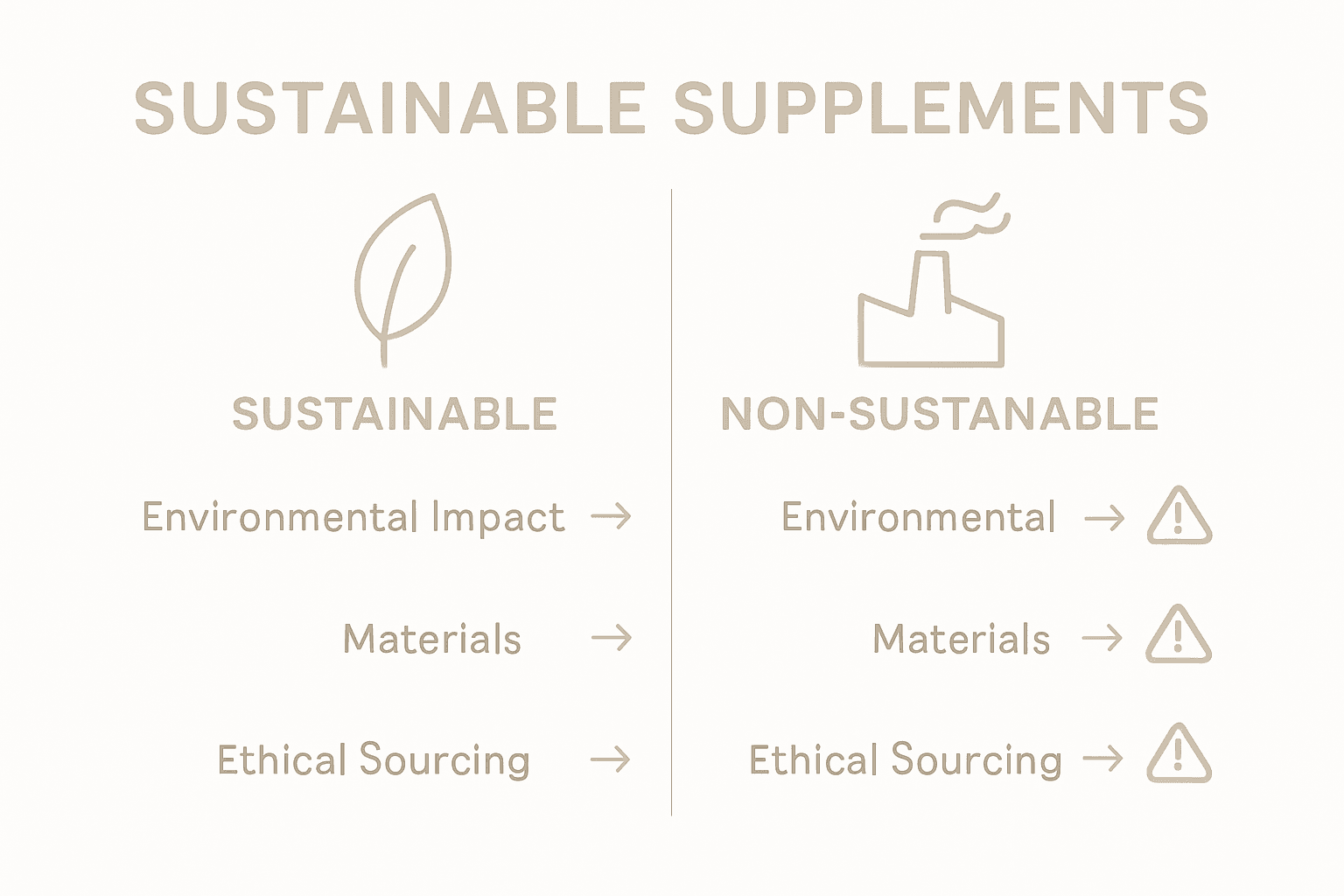
Here’s a comparison of sustainable and non-sustainable supplement practices:
| Aspect | Sustainable Supplements | Non-Sustainable Supplements |
|---|---|---|
| Ingredient Sourcing | Ethical, regenerative farms | Unsustainable, unregulated sources |
| Production Emissions | Reduced via renewable energy | High due to fossil fuel reliance |
| Packaging | Recyclable or biodegradable materials | Single-use or non-recyclable plastics |
| Social Responsibility | Supports fair labor and local economy | May overlook worker welfare |
Pro Tip for Sustainable Supplement Selection: Research brands that provide clear documentation about their sustainability practices, including detailed information about ingredient sourcing, manufacturing processes, and environmental commitments before making your purchasing decisions.
Types of Sustainable Supplements Explained
Sustainable supplements represent a progressive approach to nutritional wellness that prioritizes both human health and environmental preservation. Eco-friendly supplement innovations have emerged across several key categories, each designed to minimize ecological impact while delivering targeted nutritional benefits.
Plant-based supplements form a significant category of sustainable nutritional products. Plant-based omega-3 alternatives derived from sustainably farmed algae provide an excellent example of this approach, offering critical fatty acids without depleting marine ecosystems. These supplements typically encompass several key types:
- Algae-derived omega-3 supplements
- Vegan protein powders from pea, hemp, or rice sources
- Herbal and botanical extracts with minimal processing
- Mushroom-based immune support supplements
- Organic vitamin and mineral complexes
Additionally, sustainable supplements increasingly incorporate innovative packaging solutions and production methods. Plant-based supplement strategies now include recyclable containers, carbon-neutral manufacturing processes, and transparent supply chain management. These approaches ensure that nutritional products not only support individual wellness but also contribute positively to broader environmental conservation efforts.
Pro Tip for Sustainable Supplement Selection: Always research the sourcing and manufacturing practices of supplement brands, prioritizing companies that demonstrate genuine commitment to environmental sustainability and transparent production methods.
Environmental and Ethical Impacts of Supplements
The supplement industry’s environmental footprint extends far beyond simple nutritional support, encompassing complex ecological and ethical considerations that impact global sustainability. Supplement sourcing practices reveal significant variations in how companies approach environmental responsibility, with some brands demonstrating remarkable commitment to reducing their ecological impact.
Environmental impacts of supplement production involve multiple critical dimensions:
- Raw material extraction and agricultural practices
- Energy consumption during manufacturing
- Packaging material selection
- Transportation and distribution carbon emissions
- Waste management and recycling strategies
Ethical considerations go beyond environmental concerns, addressing human welfare throughout the supply chain. Third-party certification standards play a crucial role in ensuring supplements meet rigorous quality and safety benchmarks while promoting responsible production practices. These certifications help consumers identify brands committed to transparent, sustainable, and socially responsible manufacturing.

#Nutribliss recognizes that conscious consumers increasingly demand supplements that align with broader environmental and ethical principles. By prioritizing brands that demonstrate comprehensive sustainability approaches, individuals can support nutritional wellness while contributing to global environmental conservation efforts.
Pro Tip for Ethical Supplement Selection: Investigate supplement brands that provide detailed documentation about their environmental practices, including specific information about ingredient sourcing, manufacturing processes, and corporate sustainability commitments.
For quick reference, here are third-party certifications that ensure supplement sustainability and ethics:
| Certification Name | Primary Focus | Consumer Benefit |
|---|---|---|
| USDA Organic | Organic, non-GMO ingredients | Reduces chemical exposure |
| Fair Trade Certified | Worker rights, fair wages | Supports ethical labor practices |
| NSF International | Product purity and labeling | Ensures ingredient transparency |
| B Corp | Social, environmental impact | Verifies corporate responsibility |
Health Benefits and Consumer Safety Concerns
Dietary supplements represent a complex intersection of potential wellness benefits and critical safety considerations. Nutritional supplement research demonstrates that while these products can provide essential nutrients, consumers must approach them with careful understanding and informed decision-making.
The potential health benefits of supplements are significant, encompassing various wellness objectives:
- Addressing nutritional deficiencies
- Supporting immune system function
- Enhancing athletic performance
- Managing specific health conditions
- Promoting overall metabolic health
However, consumer safety requires comprehensive evaluation. Supplement interaction guidelines emphasize the critical importance of understanding potential medication interactions, possible side effects, and individual health contexts. Consulting healthcare professionals becomes paramount, as individual physiological differences can dramatically impact supplement effectiveness and safety.
#Nutribliss recognizes that responsible supplement consumption demands rigorous personal research, professional medical consultation, and a nuanced understanding of individual health requirements. Transparency, scientific validation, and personalized approach are key to maximizing nutritional benefits while minimizing potential risks.
Pro Tip for Safe Supplement Use: Always discuss your supplement regimen with a qualified healthcare provider, providing a complete overview of your current medications, health conditions, and wellness goals to ensure safe and effective nutritional support.
Risks of Non-Sustainable Supplement Choices
Non-sustainable supplement choices carry profound implications that extend far beyond individual consumer health, impacting global ecological systems and long-term environmental sustainability. Sustainability challenges in supplement production reveal critical risks associated with unchecked manufacturing practices that contribute to broader environmental degradation.
The potential negative consequences of non-sustainable supplement choices include:
- Accelerated climate change through inefficient production methods
- Biodiversity disruption from unregulated raw material extraction
- Increased carbon emissions from non-efficient manufacturing processes
- Depletion of natural resources
- Potential contamination of ecosystems
Eco-friendly supplement alternatives demonstrate that responsible production can dramatically mitigate these environmental risks. The supplement industry’s environmental footprint involves complex interactions between sourcing, manufacturing, packaging, and distribution, each representing potential areas for sustainable intervention.
#Nutribliss recognizes that consumer choices have transformative power in driving industry-wide sustainability practices. By prioritizing supplements produced with environmental consciousness, individuals can simultaneously support their personal wellness and contribute to global ecological preservation.
Pro Tip for Sustainable Supplement Selection: Research supplement brands that transparently communicate their environmental practices, providing detailed information about their sustainability commitments and ecological impact reduction strategies.
Embrace Sustainable Wellness with Nutribliss
The challenges discussed in “Why Sustainable Supplements Matter for Wellness” highlight the need for supplements that support not only your health but also the planet. If you are seeking to reduce your environmental footprint while enhancing your wellness, sustainable supplement choices are essential. Key concerns such as ethical ingredient sourcing, eco-friendly manufacturing, and transparent supply chains matter deeply when choosing your daily nutrition. Nutribliss understands these goals and offers a wide range of products aligned with these values.
Explore our thoughtfully curated selection of Fitness Supplements that combine effective formulations with sustainability efforts. Our commitment ensures that you receive high-quality supplements supported by science and responsible production.

Take the next step to better your health and the environment today at Nutribliss.us. Visit our Nutribliss Supplements collection to find the perfect sustainable options tailored for your wellness journey. Act now to support your body and the planet with every purchase!
Frequently Asked Questions
What are sustainable supplements?
Sustainable supplements are nutritional products designed with a focus on environmental impact, ethical sourcing, and social responsibility. They aim to benefit individual health while preserving ecological resources.
Why is sourcing important for sustainable supplements?
Sourcing is crucial because sustainable supplements should come from ethical, regenerative agricultural practices that minimize environmental harm and support local communities.
How do sustainable supplements benefit health and the environment?
Sustainable supplements provide essential nutrients while also promoting ecological conservation, reducing carbon footprints, and ensuring fair labor practices in their production processes.
What are the key differences between sustainable and non-sustainable supplements?
Sustainable supplements prioritize ethical sourcing, reduced emissions, recyclable packaging, and fair labor practices, while non-sustainable options often rely on unregulated sources, contribute to higher pollution levels, and may neglect worker welfare.