

TL;DR:
- Zinc supplement prices are mainly driven by formulation quality, marketing, and dosing misconceptions, not the raw material cost. Better-absorbed forms like zinc bisglycinate cost more but provide more effective benefits, making higher prices justified. Doses above 40 mg daily offer no added advantage and can cause harmful deficiencies, highlighting the importance of choosing verified, bioavailable options.
Zinc supplement pricing is driven by formulation quality, bioavailability differences, and marketing premiums far more than by the raw cost of zinc itself. Many people searching for answers to why are zinc supplements so high are actually paying for poorly absorbed forms or unnecessary high doses that deliver little extra benefit. Market analysis from 2026 shows quality zinc supplements priced between $3.85 and $15.65, which means the gap between cheap and expensive options is real but not always justified. Understanding what drives that gap puts you in control of your spending.
Why are zinc supplements so high in cost?
The short answer is that zinc raw material is inexpensive. Branding, added ingredients, and third-party verification drive most of the retail price. A supplement company can source zinc oxide for pennies per serving, then charge a premium by wrapping it in a sleek bottle with a certification seal. The raw material cost and the shelf price are two very different numbers.
The role of zinc in wellness makes it a high-demand ingredient. Zinc supports immune function, wound healing, protein synthesis, and testosterone production in men. That demand creates a crowded market where brands compete on perception rather than performance. When consumers cannot easily evaluate absorption rates or ingredient quality, marketing fills the gap and prices climb.
Regulatory bodies like the FDA do not require supplement manufacturers to prove efficacy before selling. That gap in oversight means quality varies widely across price points. Third-party testing is the most reliable way to verify that a product contains what it claims, and brands that invest in it pass that cost to the consumer.
How zinc supplement forms affect price and absorption
The chemical form of zinc is the single biggest factor separating a useful supplement from an overpriced one. Common forms include zinc oxide, zinc gluconate, zinc citrate, zinc picolinate, and zinc bisglycinate. Each has a different absorption rate, and that difference directly affects the value you get per dollar.

Zinc oxide is the cheapest form and the most common in budget supplements. The problem is low bioavailability, meaning your body absorbs very little of the zinc listed on the label. You pay less per capsule but absorb a fraction of the dose. Zinc bisglycinate, a chelated form, offers approximately 43% greater bioavailability than zinc gluconate and significantly more than zinc oxide. That superior absorption justifies a higher price per capsule.
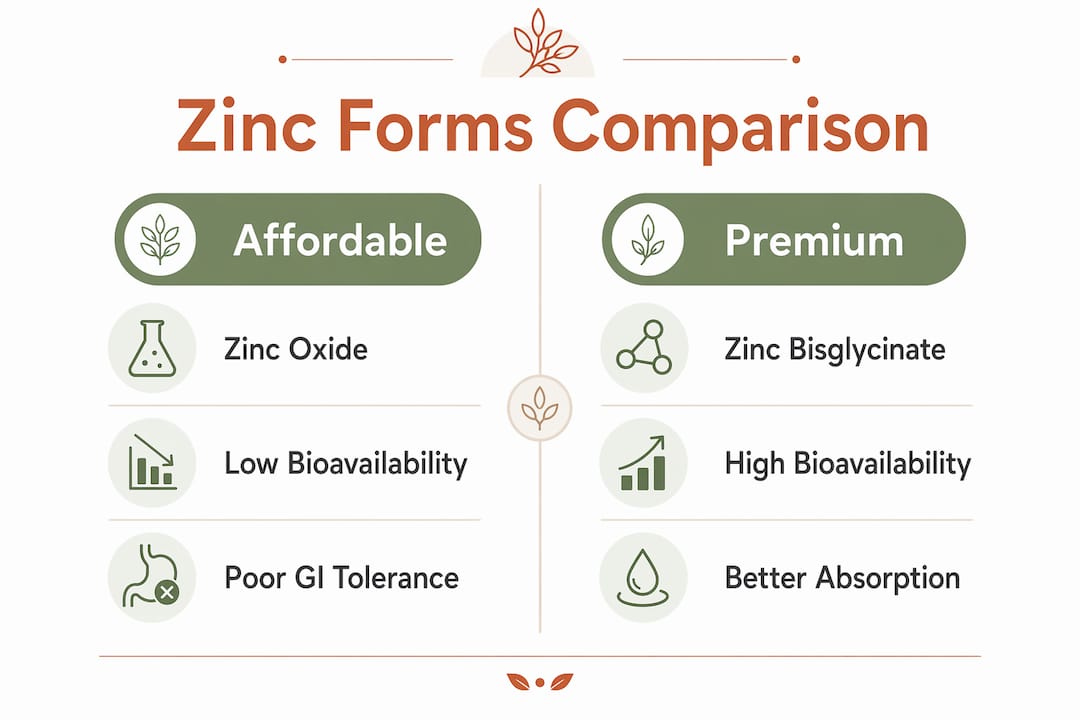
Here is a practical comparison of the most common zinc forms:
| Zinc form | Bioavailability | GI tolerance | Typical cost range |
|---|---|---|---|
| Zinc oxide | Low | Poor | Lowest |
| Zinc gluconate | Moderate | Moderate | Low to moderate |
| Zinc citrate | Moderate to high | Good | Moderate |
| Zinc picolinate | High | Good | Moderate to high |
| Zinc bisglycinate | Highest | Best | Moderate to high |
The takeaway is clear. A $12 bottle of zinc bisglycinate delivers more usable zinc per serving than a $5 bottle of zinc oxide. Paying more for a well-absorbed form is not a marketing trick. It is basic biochemistry.
Pro Tip: Check the “other ingredients” section of any zinc label. If zinc oxide is the primary form in a product priced above $10, you are paying a brand premium for a low-quality ingredient.
Does taking more zinc actually cost you more without helping?
Higher doses do not mean better results. The recommended upper daily limit for zinc is 40 mg per day for adults. Doses between 150 mg and 450 mg per day are linked to serious adverse effects, including copper deficiency, which then requires additional supplementation and medical attention. That chain of costs adds up fast.
Many supplement brands sell 50 mg or even 100 mg zinc products and market them as “high potency.” The reality is that your body cannot use that excess zinc. It gets excreted or, worse, it interferes with copper absorption. Copper deficiency causes fatigue, nerve damage, and immune suppression. Treating those effects costs far more than the supplement savings.
Common dosing scenarios worth knowing:
- Daily maintenance: 8–11 mg for most adults through diet and a low-dose supplement
- Immune support during illness: 15–25 mg for short-term use, typically 5–7 days
- Therapeutic use: Up to 40 mg under medical supervision only
- Vegetarians and vegans: May need up to 50% more zinc due to phytates in plant foods blocking absorption
Pro Tip: Before buying a high-dose zinc product, consult a healthcare provider. A simple dietary assessment often reveals you need far less than the label suggests.
Market dynamics and marketing that inflate zinc prices
The supplement industry is built on perception. A zinc product with a celebrity endorsement, a proprietary blend name, and a glossy label can retail for three times the price of an identical formulation from a generic brand. Raw zinc price is a minor part of supplement cost. The rest is packaging, marketing spend, retail margins, and brand positioning.
Proprietary blends are a common pricing tactic. A manufacturer adds small amounts of vitamin C, B6, or copper alongside zinc, calls it a “zinc complex,” and charges a 40% premium. Some of those additions are genuinely useful. Copper, for example, helps offset zinc’s tendency to deplete copper stores. But many blends add ingredients with no proven synergy, purely to justify a higher price.
Third-party certifications like NSF International, USP, or Informed Sport do add real value. Reputable brands invest in costly third-party tests that confirm ingredient quality and potency. That testing cost is legitimate. The problem is that some brands display certification-style badges that are not from accredited bodies. Reading the fine print matters.
A useful way to evaluate any zinc supplement before buying:
- Does the label name the specific zinc form (bisglycinate, picolinate, citrate)?
- Is the elemental zinc content listed separately from the compound weight?
- Does the product carry a verifiable third-party certification?
- Are added ingredients explained with a clear rationale?
- Is the dose within the 8–40 mg range for your use case?
If a product fails two or more of these checks, the price premium is likely marketing, not quality.
How to choose an effective and affordable zinc supplement
The best zinc supplement for you depends on three factors: form, dose, and verification. Zinc bisglycinate or zinc picolinate are the best zinc forms to take for most people because they absorb well and cause minimal stomach upset. Zinc citrate is a solid middle-ground option at a lower price point. Zinc oxide is worth avoiding unless it is the only option available.
Zinc’s role in performance extends beyond immunity. It supports muscle repair, hormone regulation, and cognitive function, which makes it especially relevant for active adults and men tracking testosterone levels. The best zinc supplement for men typically falls in the 15–30 mg elemental zinc range using a chelated form, taken with food to reduce GI discomfort.
A practical checklist for zinc supplement shopping:
- Do choose chelated forms (bisglycinate, picolinate) for better absorption
- Do verify third-party testing credentials before buying
- Do match the dose to your actual dietary gap, not the highest available option
- Don’t assume a higher price means higher quality without checking the form
- Don’t buy products where zinc oxide is the primary form at a premium price
- Don’t take doses above 40 mg daily without medical guidance
Nutribliss formulations follow these principles directly. Transparent labeling, verified ingredients, and science-backed dosing are the standard, not the exception. That approach means you pay for what actually works, not for marketing overhead.
Key takeaways
Zinc supplement prices are high primarily because of formulation quality, marketing premiums, and dosing misconceptions, not because zinc itself is expensive.
| Point | Details |
|---|---|
| Form determines value | Zinc bisglycinate absorbs 43% better than gluconate, making it worth a higher price. |
| Dose has a ceiling | Taking more than 40 mg daily adds risk, not benefit, and increases total spending. |
| Marketing inflates price | Branding and proprietary blends often account for more cost than ingredient quality. |
| Third-party testing matters | Verified certifications from accredited bodies confirm potency and safety. |
| Vegetarians need more | Plant-based diets may require up to 50% more zinc due to phytate interference. |
The real cost of zinc confusion
Most people I talk to about zinc supplements have the same frustration. They spent $15 on a bottle, took it for a month, felt nothing, and concluded supplements do not work. What actually happened is they bought zinc oxide at a dose their body barely absorbed. The supplement did not fail. The purchasing decision did.
The supplement industry has a transparency problem. Brands know that most consumers read the front label and stop there. “50 mg Zinc” sounds impressive. It is not, especially if that zinc is oxide and your body absorbs 10% of it. The back label tells the real story, and very few people read it.
My honest recommendation is to treat zinc like any other health investment. Spend five minutes checking the form, the dose, and the certification. A $10 bottle of zinc bisglycinate at 15 mg will outperform a $6 bottle of zinc oxide at 50 mg every single time. The cheaper option is not cheaper when you factor in what you actually absorb.
For anyone following a plant-based diet, the math changes further. Phytates in legumes, grains, and seeds bind zinc and reduce absorption significantly. That group genuinely needs either a higher dose or a more bioavailable form, and that reality should drive the purchase decision, not a front-label claim about potency.
The #nutribliss approach to supplements is built on this kind of transparency. Knowing what you are buying and why it works is not optional. It is the whole point.
— GAURAV
Nutribliss zinc supplements: quality without the guesswork
Nutribliss builds its supplement line around the same principles covered in this article: verified forms, transparent labeling, and doses grounded in evidence rather than marketing.

The science behind superfoods collection at Nutribliss reflects that commitment directly. Every formulation is designed to deliver what the label promises, using forms your body can actually absorb. If you have been paying premium prices for supplements that underdeliver, the Nutribliss catalog is worth a close look. Quality zinc supplementation does not have to mean overpaying. It means paying for the right thing.
FAQ
Why does zinc supplement price vary so much?
Price variation reflects differences in zinc form, dose, branding, and third-party testing costs. Raw zinc is inexpensive, but chelated forms, certifications, and quality manufacturing add legitimate costs.
What is the best form of zinc to take for absorption?
Zinc bisglycinate is the best-absorbed form, offering approximately 43% greater bioavailability than zinc gluconate and significantly more than zinc oxide.
Is 50 mg of zinc too much to take daily?
For most adults, 50 mg daily exceeds the recommended upper limit of 40 mg and offers no added benefit. Doses above 40 mg can deplete copper and cause gastrointestinal side effects.
What is zinc supplement good for?
Zinc supports immune function, wound healing, protein synthesis, hormone regulation, and cognitive function. It is especially relevant for active adults, men monitoring testosterone, and people on plant-based diets.
How do I know if a zinc supplement is high quality?
Look for a named chelated form on the label, elemental zinc content listed separately, and a verifiable third-party certification from an accredited body like NSF International or USP.