

Every American athlete knows how a tough workout in hot weather can leave you feeling drained and off balance. Getting your electrolyte levels right is more than just picking a sports drink—it involves understanding your own physiology, the demands of your training, and how your diet shapes recovery. This guide walks you through personalized strategies for tracking, supplementing, and monitoring electrolyte balance so you can boost performance and maintain long-term wellness.
Table of Contents
- Step 1: Assess Your Electrolyte Needs
- Step 2: Select Suitable Supplements And Foods
- Step 3: Adjust Hydration For Electrolyte Absorption
- Step 4: Monitor Your Physical Response
- Step 5: Verify Balance With Simple Self-Checks
Quick Summary
| Key Insight | Explanation |
|---|---|
| 1. Assess your individual needs | Identifying your unique electrolyte needs is crucial for optimal health and performance. |
| 2. Choose nutritious food sources | Incorporate whole foods rich in potassium, magnesium, and calcium while considering supplements. |
| 3. Hydrate effectively for absorption | Develop a hydration strategy that supports electrolyte balance during activities for better absorption. |
| 4. Monitor physical responses | Pay attention to your body’s signals, noting symptoms to detect electrolyte imbalances early. |
| 5. Conduct simple self-checks | Regularly assess your hydration and mineral status with straightforward self-evaluations. |
Step 1: Assess your electrolyte needs
Understanding your unique electrolyte requirements is crucial for maintaining optimal athletic performance and overall health. Measuring electrolyte balance involves recognizing your individual physiological needs, activity levels, and potential risk factors.
To effectively assess your electrolyte needs, consider these key evaluation methods:
- Track your daily physical activity and sweat loss intensity
- Monitor your diet and typical sodium, potassium, and magnesium intake
- Evaluate any underlying health conditions that might impact electrolyte balance
- Consider your age, weight, and metabolic rate
Blood tests provide the most accurate snapshot of your current electrolyte status. Athletes and highly active individuals should focus on key markers like sodium, potassium, calcium, and magnesium levels. These tests can reveal subtle imbalances before they become problematic.
Your assessment should also account for specific factors that influence electrolyte needs:
Here is a summary of how key factors affect your electrolyte needs:
| Factor | Impact on Electrolyte Requirement | Why It Matters |
|---|---|---|
| Exercise Intensity | Increases with duration/intensity | More sweat leads to higher mineral loss |
| Climate/Environment | Hot, humid raises requirements | Faster dehydration and salt depletion |
| Dietary Patterns | Poor diet raises imbalance risk | Low-nutrient diets lack essential minerals |
| Health Conditions | Certain illnesses affect absorption | Some conditions shift sodium or potassium |
| Age and Metabolic Rate | Needs fluctuate with metabolism | Older adults may process minerals slower |
- Exercise duration and intensity
- Climate and environmental conditions
- Personal hydration habits
- Dietary patterns
Electrolyte needs are not one-size-fits-all - they’re as unique as your individual physiology.
Pro tip: Consider keeping a detailed journal tracking your workouts, hydration, and any physical symptoms to help fine-tune your electrolyte strategy.
Step 2: Select suitable supplements and foods
Selecting the right electrolyte sources is crucial for maintaining optimal performance and health. Balancing dietary sources with targeted supplementation helps ensure your body receives essential minerals for peak function.
Your electrolyte strategy should incorporate nutrient-dense whole foods:
- Fruits like bananas, oranges, and watermelon (potassium)
- Leafy greens and nuts (magnesium)
- Dairy products and fortified plant milks (calcium)
- Lean proteins and whole grains (sodium and trace minerals)
Supplement selection requires careful consideration of your individual needs. Athletes with high-intensity training or those experiencing significant sweat loss might benefit from targeted electrolyte supplements. Look for products that provide a balanced mix of sodium, potassium, magnesium, and calcium.

Compare popular electrolyte sources and their benefits:
| Source Type | Key Minerals Provided | Unique Benefits |
|---|---|---|
| Fresh Fruits | Potassium, magnesium | Hydrating and high in fiber |
| Leafy Greens | Magnesium, calcium | Antioxidants and vitamins |
| Dairy/Plant Milks | Calcium, potassium | Good for bone health |
| Supplements | Balanced minerals blend | Customizable for heavy sweat |
| Whole Grains | Magnesium, trace sodium | Support steady energy release |
When choosing supplements, prioritize these key factors:
- Check ingredient transparency
- Verify third-party testing
- Match supplement to your specific activity level
- Consider your overall dietary intake
Not all electrolyte supplements are created equal - quality and composition matter significantly.
Pro tip: Rotate between food sources and supplements to maintain diversity in your electrolyte intake and prevent potential mineral imbalances.
Step 3: Adjust hydration for electrolyte absorption
Optimizing your hydration strategy is critical for ensuring efficient electrolyte absorption and maintaining peak performance. Proper fluid intake supports electrolyte balance by helping distribute minerals effectively throughout your body.
To maximize electrolyte absorption, implement these targeted hydration techniques:
- Drink water consistently throughout the day
- Consume electrolyte-enhanced beverages during intense activities
- Monitor urine color as a hydration indicator
- Avoid excessive plain water that might dilute electrolyte concentrations
Hydration timing plays a crucial role in mineral absorption. During high-intensity workouts or in hot environments, your body loses electrolytes through sweat at an accelerated rate. This means you’ll need a more strategic approach to fluid replacement that goes beyond simple water consumption.
Consider these key hydration principles:
- Drink 16-20 ounces of fluid two hours before exercise
- Consume 7-10 ounces every 10-20 minutes during activity
- Replace lost fluids within two hours after completing exercise
- Choose beverages with balanced electrolyte profiles
Electrolyte absorption is a dynamic process that requires personalized attention and consistent monitoring.
Pro tip: Experiment with different hydration strategies during training to discover your body’s unique fluid and electrolyte requirements.
Step 4: Monitor your physical response
Tracking your body’s signals is essential for maintaining optimal electrolyte balance and preventing potential performance disruptions. Recognizing subtle symptoms of electrolyte imbalance can help you proactively adjust your nutritional strategy.
Pay close attention to these critical physical indicators:
- Muscle cramps or unexpected weakness
- Persistent fatigue or reduced exercise tolerance
- Irregular heartbeat or heart palpitations
- Sudden headaches or dizziness
- Changes in cognitive function or mental clarity
- Unexpected muscle twitches or tremors
Physical tracking requires consistent self-awareness and documentation. Consider maintaining a daily log that captures your symptoms, activity levels, hydration intake, and overall energy performance. This systematic approach will help you identify patterns and correlate specific symptoms with potential electrolyte disruptions.
Document your observations using these strategies:
- Record daily energy levels on a scale of 1-10
- Note any physical discomfort or unusual sensations
- Track workout performance and recovery times
- Photograph or write down visible physical changes
Your body communicates through symptoms - learning its language is key to optimal performance.
Pro tip: Use a smartphone app or fitness tracker to help quantify and track your physiological responses more accurately.
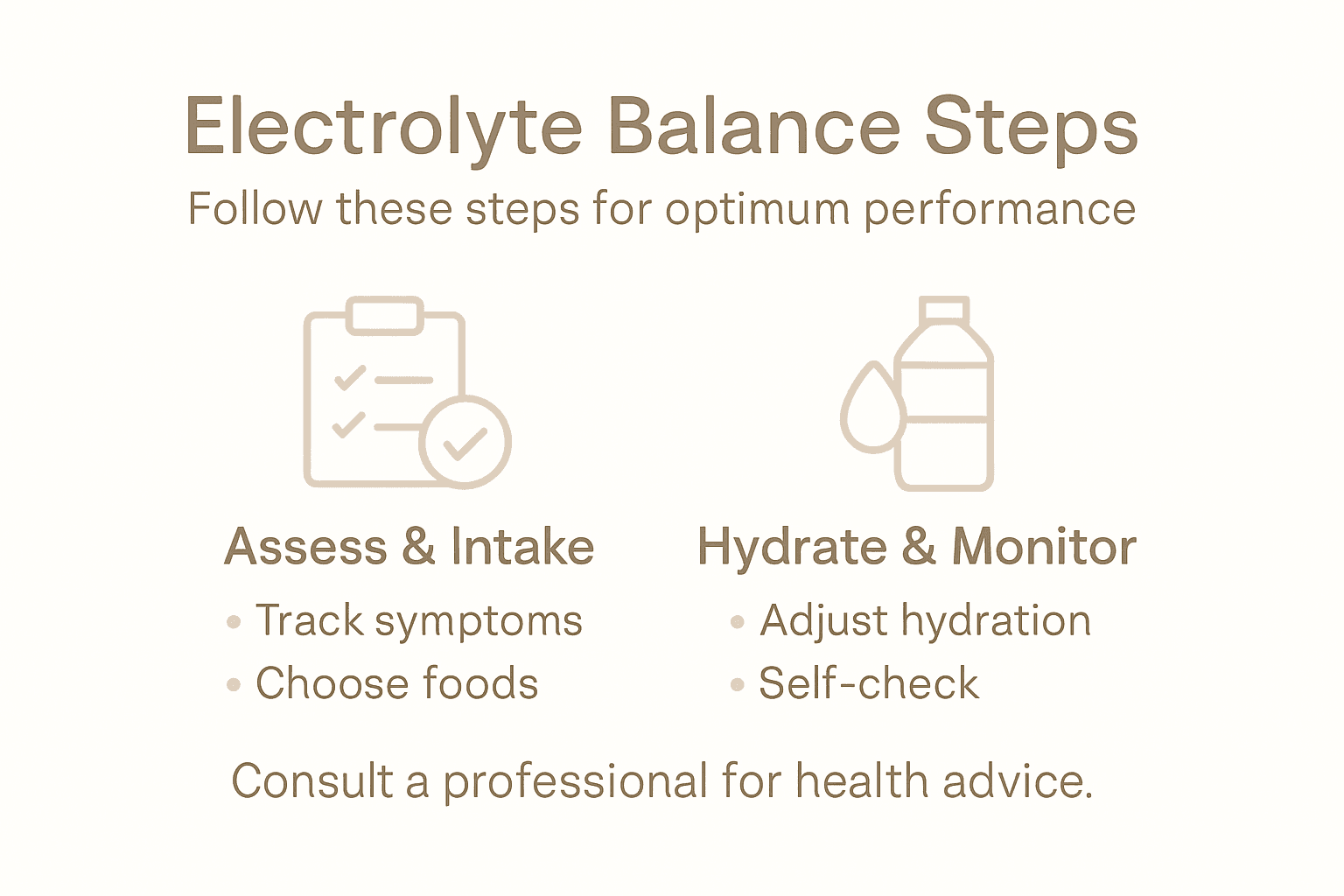
Step 5: Verify balance with simple self-checks
Effective electrolyte management requires regular self-assessment using practical, accessible techniques. Simple home monitoring strategies can help you track your body’s mineral balance without complex medical interventions.
Implement these straightforward self-checks to gauge your electrolyte status:
- Observe urine color (pale yellow indicates good hydration)
- Check skin elasticity and turgor
- Monitor blood pressure and resting heart rate
- Assess muscle cramping frequency
- Track daily energy levels
- Evaluate recovery time after workouts
Physical indicators provide valuable insights into your electrolyte balance. Your body communicates through subtle signals that, when carefully observed, can reveal underlying mineral deficiencies or excess. Pay attention to how you feel during different activities and note any consistent patterns of fatigue, weakness, or unexpected physical responses.
Conduct these systematic self-assessments:
- Take morning baseline measurements
- Record daily hydration intake
- Note any unusual physical sensations
- Compare weekly performance trends
Your body is constantly communicating - learning its language is the key to optimal performance.
Pro tip: Create a simple smartphone spreadsheet to consistently track and analyze your physiological responses over time.
Take Control of Your Electrolyte Balance for Peak Performance
Maintaining the right electrolyte balance is essential to prevent muscle cramps, fatigue, and irregular heartbeat as highlighted in the article “How to Balance Electrolytes for Optimal Performance.” If you find yourself struggling with dehydration symptoms or unsure about your personalized electrolyte needs, you are not alone. Many athletes and active individuals face these challenges because electrolyte management is not one-size-fits-all. At Nutribliss.us, we understand the importance of tailored supplementation that supports your hydration and electrolyte absorption goals.

Explore our carefully curated selection of electrolyte supplements and mineral-rich health products designed to complement your lifestyle and specific activity level. With transparent ingredient lists and science-backed formulations, you can confidently optimize your mineral intake. Don’t wait until muscle weakness or fatigue slow you down - start fine-tuning your electrolyte strategy today by shopping at Nutribliss.us. Discover how easy it is to combine nutritious foods and precision supplements to boost your performance and wellness now.
Frequently Asked Questions
How can I assess my electrolyte needs for optimal performance?
To assess your electrolyte needs, track your daily physical activity, sweat loss intensity, and dietary intake of sodium, potassium, and magnesium. Consider maintaining a journal to capture your workouts, hydration, and any symptoms you experience to tailor your approach effectively.
What foods can help balance my electrolytes?
To balance your electrolytes, incorporate nutrient-dense whole foods like bananas and leafy greens, which provide potassium and magnesium. Aim to consume a variety of these foods daily to ensure you meet your mineral requirements and support overall health.
How should I adjust my hydration for better electrolyte absorption?
To enhance electrolyte absorption, consistently drink water throughout the day and include electrolyte-enhanced beverages during intense activities. Make it a habit to drink 16-20 ounces of fluid two hours before exercising to prepare your body effectively.
What symptoms indicate an electrolyte imbalance?
Watch for symptoms like muscle cramps, persistent fatigue, or dizziness, as these may signal an electrolyte imbalance. Stay vigilant about noting how you feel during workouts, and consider tracking any physical discomfort in a daily log for better awareness.
How can I monitor my electrolyte balance at home?
You can monitor your electrolyte balance at home by checking urine color, skin elasticity, and daily energy levels. Conduct these self-assessments regularly to recognize any trends or changes in your body’s mineral status and adjust your strategy accordingly.
What are practical self-checks to verify my electrolyte levels?
Practical self-checks include observing urine color, assessing muscle cramping frequency, and tracking your daily energy levels. Perform these checks consistently to identify potential imbalances and make timely adjustments to your hydration and nutrition.